
Travel Tips and Mistakes for Budapest and New York
Learn essential travel tips and mistakes to avoid on public transport in Budapest and New York for a smoother, cheaper trip.
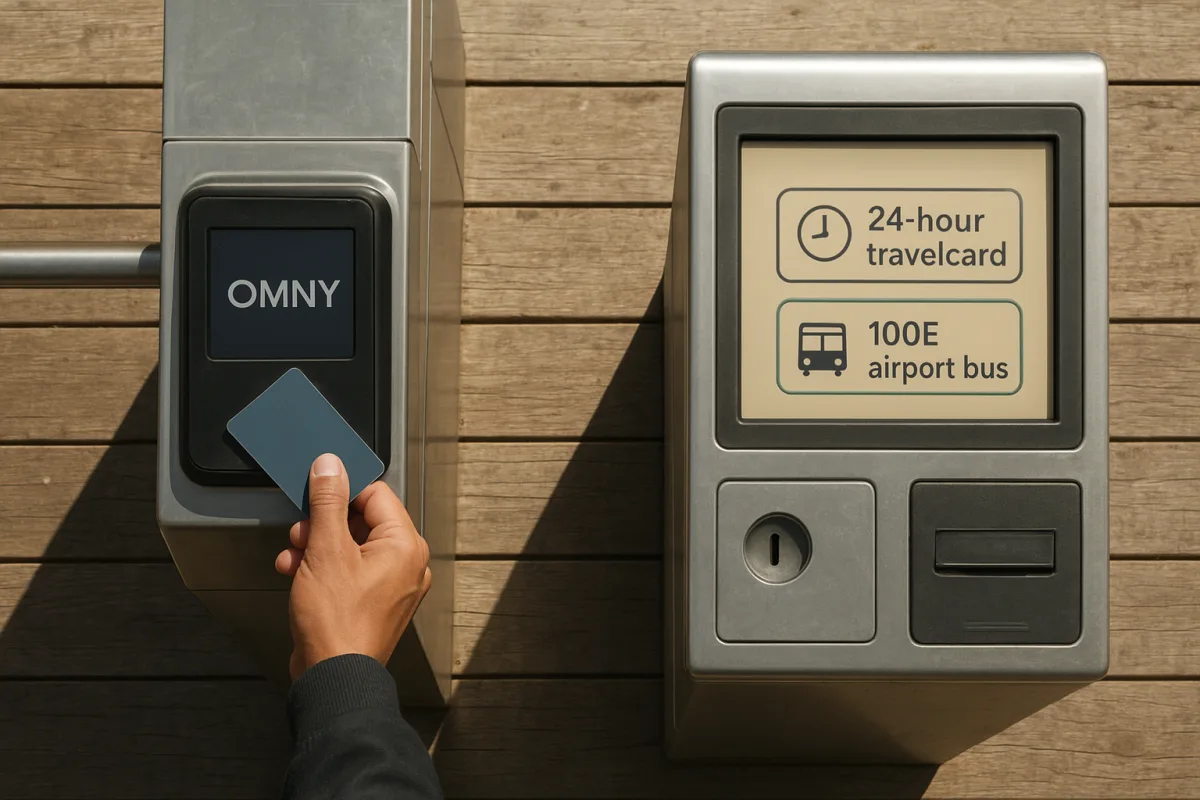
The travel mistake both cities punish: paying without understanding the system
Budapest and New York are cities where a visitor can spend more than necessary without making a dramatic mistake. The costly errors are often ordinary ones: boarding before validating, taking a taxi for a subway-length trip, or buying the first theatre seat offered.
The useful way to plan both cities is to separate price from rules. A fare is not simply what appears on the ticket machine. It has conditions: where it works, when it starts, whether transfers count, and what happens if an inspector decides it is invalid.
That distinction matters more in Budapest, where visitors frequently complain about ticket inspections, than in New York, where the modern payment system rewards repeat use. The two networks handle tourist uncertainty in almost opposite ways.
Budapest’s system expects passengers to have the correct ticket, validated at the correct moment. New York’s OMNY system is designed to recognise repeated rides, but only if the traveller keeps using the same payment method.[1]
Budapest: the cheap journey that becomes an expensive one
The Wolters World travel channel identifies Budapest ticket inspections as one of the complaints tourists remember most. The issue is not that Budapest transport is unusually hard to use, but that a ticket in a pocket is not necessarily a valid ticket.
A standard single ticket costs 500 HUF when bought in advance, or 700 HUF onboard. It covers one uninterrupted journey, with transfers permitted only between metro lines inside the paid area, rather than between trams, buses and metro services.
For a short stay, the more forgiving choices are time-based tickets. A 30-minute ticket costs 600 HUF and a 90-minute ticket costs 850 HUF, with unlimited transfers during their validity period.
That makes the 30-minute ticket a practical choice for a journey involving a tram and metro connection. It costs only 100 HUF more than a single ticket, but removes the need to decide whether a transfer is permitted.
The 24-hour travelcard costs 2,750 HUF and the 72-hour version costs 5,750 HUF. Both allow unlimited travel, so they suit visitors making multiple cross-city trips rather than someone staying near one neighbourhood and mostly walking.
The break-even arithmetic is simple, even if the local currency initially looks intimidating. At 500 HUF per advance-purchase single ticket, the 24-hour pass begins to make sense at six rides, while the 72-hour pass overtakes single tickets at roughly 12 rides.
A pack of ten single tickets costs 4,500 HUF, or 450 HUF each. That is the lowest routine per-ride price, but it works best for travellers who understand the validation process and do not expect to transfer freely.
The BudapestGO app is the sensible starting point for route planning and ticket purchases. It reduces the need to decipher a machine while a tram is approaching, though an app purchase does not excuse a traveller from following the ticket’s activation rules.
Validation is not a technicality
The important step is to validate a paper ticket at the beginning of the journey. On metro services, that often means using the validating equipment before entering or at the station entrance. On trams and buses, it means doing it as soon as boarding.
A ticket bought ahead of time but left unvalidated is not a bargain. It is evidence that the passenger paid for a potential ride but did not complete the requirement that makes that ride legitimate.
Inspectors can be in plain clothes, with reports particularly flagging the M3 and M4 metro lines. The Wolters World channel’s practical advice, to buy a 24- or 72-hour pass if it will reduce stress, is sound for visitors making frequent journeys.
The penalty numbers require particular care because late-2026 reporting is not entirely consistent. One set of published guidance lists a 15,000 HUF penalty when paid immediately, 30,000 HUF within 30 days, and 50,000 HUF after 30 days.
That structure is unusual because paying immediately is cheaper than paying later. It is the opposite of the grace period many travellers may expect, and it makes arguing, delaying, or assuming an online payment will be discounted a poor strategy.
Other current guidance quotes a 16,000 HUF fine for an unvalidated ticket. It also notes a reduced 7,500 HUF penalty if the passenger buys a monthly pass on the day of the offence and presents it within two days.
Those apparently competing figures may reflect different categories or updated rules, rather than a reliable menu of options. The practical instruction is clearer than the fine print: validate before travelling and check BKK’s current penalty table before departure.
The airport creates a separate trap. The 100E airport bus requires its own 2,500 HUF ticket, even if a visitor has bought a normal 24-hour or 72-hour Budapest travelcard. “Unlimited transport” does not automatically mean every airport service.
The Budapest Card starts at 17,990 HUF for 24 hours and combines transport with attraction discounts. Unless those included discounts match a planned itinerary, it is not automatically better value than a 2,750 HUF travelcard and separately purchased admission.
Budapest’s other price problem: pay in forints
The Wolters World channel also warns that Budapest’s unfamiliar currency can make it hard to spot a poor deal. That is less a reason to carry large amounts of cash than a reason to make one rule before the trip: pay in HUF.
When an ATM or card terminal offers to convert a charge into dollars, euros or another home currency, decline the conversion and let the card provider process the transaction in forints. Dynamic currency conversion usually gives the merchant’s less favourable exchange rate.
Use an ATM rather than an exchange office if cash is needed, and ignore unsolicited “helpers,” especially around late-night ATMs in District VII. Keep the transaction private, decline assistance, and do not hand a bank card to anyone offering to make the machine easier.
The same discipline applies to taxis. Reports warn of unlicensed cabs around Keleti station, airport arrivals and major hotels, with inflated journeys reportedly reaching 100,000 HUF instead of a more typical 3,000 to 10,000 HUF range.
Book a recognised operator such as Bolt, Főtaxi or City Taxi, rather than accepting an approach from a driver. The benefit is not merely safety: a booked trip establishes the route, driver and expected price before luggage is in the boot.
New York: make the fare cap work for you
New York’s error is usually the reverse of Budapest’s. Visitors often avoid the subway because it seems confusing, then spend money and time in traffic. The Creative Travel Guide channel correctly advises against treating taxis as the default transport system.
As of 2026, a subway or local-bus ride costs $3. OMNY, the contactless tap-and-go payment system, has fully replaced MetroCard, and it caps qualifying subway and local-bus spending at $35 in a seven-day period.[1]
The cap is not a pass purchased at the start of the week. It is a running limit applied by OMNY. Tap the same contactless bank card, phone wallet or wearable each time, and the system tracks eligible rides toward the maximum.[1]
Switching between a physical card, a phone and another card can defeat the point because OMNY sees different payment credentials. Pick one method for the week, make sure it works before a long day out, and use that same device consistently.
At $3 per ride, the $35 cap matters to visitors taking several trains each day. It removes the need to calculate whether a multi-day pass would have been better, but it does not turn every form of transport into unlimited travel.[1]
Express buses cost $7.25, and commuter-rail fares rose by 4.5 percent in 2026. Those services sit outside the simple local subway-and-bus calculation, so do not assume that tapping through the subway cap covers an airport or suburban excursion.[1]
For distances greater than a mile, the subway is generally the fastest and most reliable tourist option, according to NYC Travel Guide. For short hops of fewer than 15 blocks, walking usually makes more sense, particularly when station access would take longer than the journey.[1]
Buses are useful for crosstown trips, when the subway’s north-south pattern is inconvenient. They remain subject to traffic, however, and taxis and ride-hailing vehicles face the same problem, especially through Midtown at busy periods.[1]
That is not theoretical. During September 2026’s UN General Assembly gridlock-alert days, Midtown traffic reportedly fell below four miles per hour. A cab can feel private and direct, but it cannot bypass a street network moving at walking pace.
Spend less time in Times Square, including on Broadway
The Creative Travel Guide channel’s warning about Times Square applies beyond restaurants and souvenir shops. See it after dark if it interests you, then use it as a transport hub rather than the place where every meal, purchase and evening plan happens.
Broadway is the useful exception because the Times Square TKTS booth can be a money-saving stop. The Theatre Development Fund-operated booths sell same-day tickets at discounts of up to 50 percent, although available shows and opening hours vary.
That is a discount system, not a guarantee for a particular production. A visitor who needs one show on one night should buy directly from the official show seller. A flexible traveller can wait, compare listings, and accept what is actually available.
Digital lotteries are another route, with productions including The Book of Mormon sometimes offering tickets from $49. Rush tickets are sold at box-office opening for selected shows, while standing-room tickets can appear when a performance is sold out.
The choice is really about certainty. Full-price tickets buy a specific date and seat. Lotteries and rush tickets trade certainty for a lower price, so they suit travellers who can build a second-choice plan around a museum, neighbourhood dinner or another performance.
Broadway Week, scheduled twice yearly, offers two-for-one deals, with the next stated period in January 2027. TDF membership, student and military offers, group rates for parties of ten or more, and official show social channels can add further options.
The same city-planning principle applies outside the theatre. Group sights by neighbourhood, rather than taking repeated taxis between Central Park, the Brooklyn Bridge, Chinatown and Midtown. Leave time to walk, and step aside before checking directions on a crowded pavement.
Frequently Asked Questions
What are common travel mistakes in Budapest and New York?
A frequent error in both cities is paying without fully understanding the fare system, such as boarding public transport before validating a ticket in Budapest or not using the same OMNY card for rides in New York. Visitors also often pay full prices for taxis or Broadway shows without checking for cheaper alternatives like official taxi services or discount ticket options. These mistakes can lead to unnecessary expenses or fines.
How do I avoid fines on Budapest public transport?
To avoid fines, always validate your paper ticket at the start of your journey—before entering metro stations or immediately upon boarding buses and trams. Unvalidated tickets can lead to penalties of 15,000 HUF if paid immediately, increasing to 30,000 HUF within 30 days and 50,000 HUF thereafter. Buying a monthly pass on the day of the offense and presenting it within two days can reduce the fine to 7,500 HUF.
How does the OMNY fare cap work in New York City?
The OMNY system in New York City tracks your subway and local bus rides using the same card or phone payment method. When you use the same OMNY card or device consistently, you benefit from a $35 weekly fare cap, meaning you won’t pay more than that amount for unlimited rides within the week. Using different payment methods can prevent the cap from applying.
What should I know about validating tickets in Budapest?
Validation is mandatory and must be done at the beginning of your journey. For metro lines, use the validating machines before entering or at the station entrance; for buses and trams, validate immediately after boarding. Failure to validate a ticket renders it invalid and can result in a fine higher than the cost of the ride itself.
How can I save money on public transport in Budapest and NYC?
In Budapest, purchasing time-based tickets (30 or 90 minutes) or 24- and 72-hour travelcards can be more economical for multiple trips, while blocks of ten single tickets offer a lower per-ride cost if you understand the validation rules. In New York City, consistently using the same OMNY payment method allows you to benefit from the $35 weekly fare cap, reducing overall transport costs. Additionally, checking for discounts on Broadway tickets can save money on entertainment.
How we researched this
This article was assembled from 2 video sources across 2 channels, 1 cited reference.
Nothing here is based on hands-on testing. Where a figure or finding appears, it belongs to the source cited beside it, and the writing says so rather than implying otherwise. Every source is listed below so you can check it.
Sources
What Tourists HATE about Budapest — Wolters World
10 Things you should NEVER do in New York City — Creative Travel Guide
How to Get Around NYC: What Every Option Actually Costs in 2026 — NYC Travel Guide
Watch Travel Tips and Mistakes for Popular Cities on Youtube
Also from the sources
Related Articles
Dublin Travel Guide: Itinerary, Budget & Getting Around
Plan your Dublin trip with this travel guide covering a 2-day itinerary, budget tips, transport options, and must-see attractions.

Travel Safety and Consumer Issues: Building Your Timeline
Learn travel safety and consumer issues tips, including how to document disputes and protect yourself from hidden cameras and fare abuses.

Travel Dos and Don'ts in European Cities: Essential Tips
Discover essential travel dos and don'ts in European cities, including budgeting, safety, and booking tips for a smooth trip.
Cheap Broadway Tickets New York: Discounts, Lotteries & Tips
Learn how to get cheap Broadway tickets in New York with tips on lotteries, rush tickets, TKTS discounts, and planning your theater night wisely.