
Dublin Travel Guide: Itinerary, Budget & Getting Around
Plan your Dublin trip with this travel guide covering a 2-day itinerary, budget tips, transport options, and must-see attractions.
Dublin Travel Guide: A Practical Two-Day Plan, Costs and Pitfalls
First: decide how long Dublin deserves
The practical mistake is treating Dublin only as an airport stop before “real Ireland.” Camden David’s Dublin guide argues for slowing down in the city itself, rather than filling every morning with a long excursion and returning exhausted each night.
Two nights is the sensible minimum. It gives you one day for Trinity College, the historic centre and the cathedral quarter, then a second day to cross the Liffey and spend time in working neighbourhoods rather than repeating the Temple Bar circuit.
Dublin is divided by the River Liffey. Most visitor sights, polished shopping streets and central hotels sit south of it, while the north side is worth deliberately including for Smithfield and independent food stops recommended by Camden David.
Do not book a rental car merely for central Dublin. The core sights in this itinerary link together on foot, and public transport covers longer hops. Save a car for the point when you actually leave Dublin and can stay elsewhere in Ireland.
When to go, and what to book before landing
The supplied 2026 research does not provide seasonal hotel prices or crowd statistics, so do not assume a cheaper month will automatically make Dublin inexpensive. Instead, book around the timed attractions that can shape your day.
The Book of Kells Experience is the one reservation to make first. Trinity College’s official pricing starts at €26 for self-guided Book of Kells entry with an audio guide, while a guided campus tour plus the experience starts at €39. [1][2]
A 45-minute Trinity Trails walking tour starts at €18, and the app-based self-guided campus option is €6.50, neither including Book of Kells admission. The €65 premium package adds a 60-minute campus tour and Book of Kells entry. [1][2]
Those options matter because the campus itself is free to enter. Exotic Vacation found more value in walking Trinity’s courtyards and watching student life than in paying separately for a guided tour and audio guide, a useful distinction for a short budget-conscious visit.
Book the earliest or final available Book of Kells slot. Exotic Vacation reports that mid-afternoon crowds make it difficult to see the manuscript at leisure. Camden David also recommends moving briskly through the introductory galleries if the library is your priority.
Manage expectations around the Long Room. Its architecture remains a reason to visit, but nearly 200,000 books were removed for restoration, according to Exotic Vacation. The room currently has a more open appearance and includes the suspended Gaia artwork.
For a classic Dublin attraction, pre-book the Guinness Storehouse as well. Exotic Vacation describes it accurately as a seven-floor branded museum in the former 1904 fermentation building, not a working brewery tour with production lines.
Its standard entry was reported as about $26 by Exotic Vacation, including a pint at the Gravity Bar. Treat that as an indication rather than a current euro quote, and check the official booking calendar before paying, since attraction prices change.
Arriving and getting around without overspending
Once in town, start on foot. Camden David found the central visitor area compact enough to walk across easily, from Trinity College through Temple Bar to the cathedral district. Walking also makes the distinction between Temple Bar district and its eponymous pub clearer.
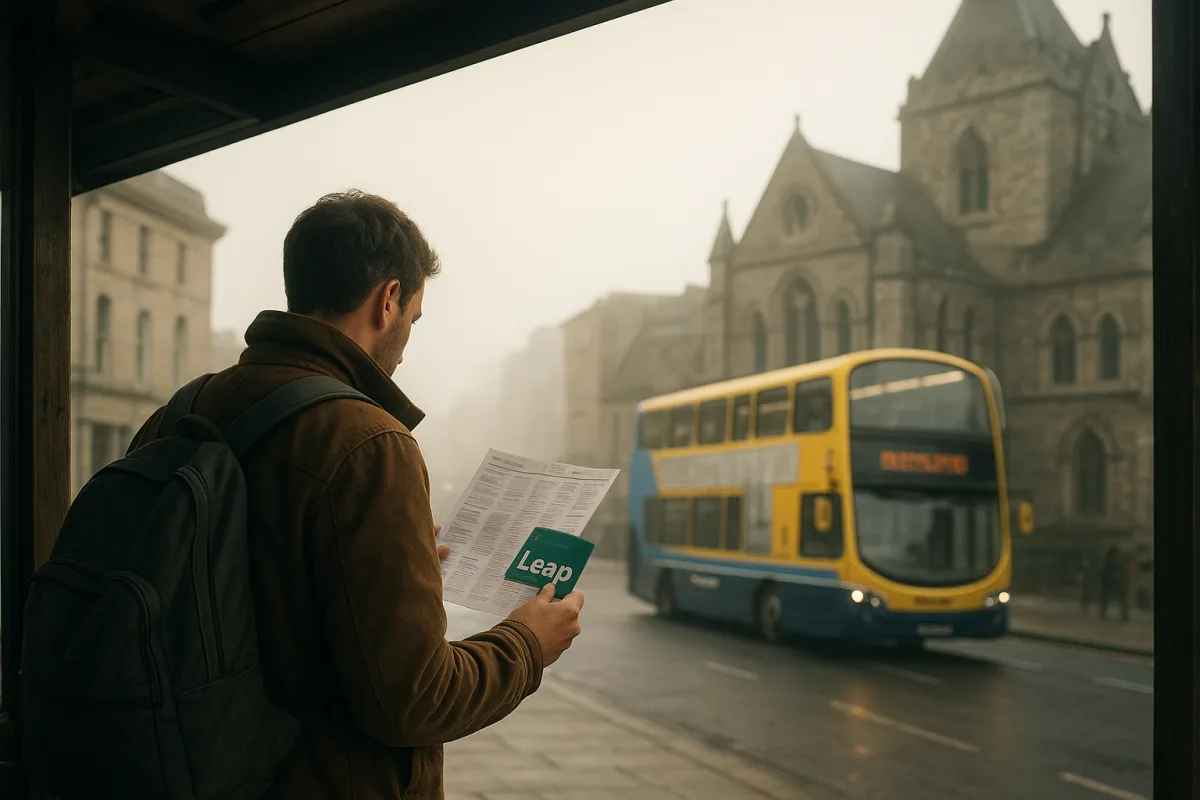
Use public transport for rain, luggage days and journeys beyond the centre. Dublin’s network includes Dublin Bus and Go-Ahead buses, the Red and Green Luas tram lines, plus DART and commuter rail services. [3][4]
For most independent visitors, a standard TFI Leap Card is better value than a Visitor Card. Adult Leap fares are €2 for a 90-minute trip, then cap at €6 daily and €24 weekly. [3][4]
The Leap Visitor Card costs €8 for one day, €18 for three days or €24 for seven days, with unlimited travel. It works best only when you expect enough journeys to exceed the ordinary card’s caps or want the simplest possible setup. [3][4]
Cash fares cost more and require exact change, as neither drivers nor machines provide change. Contactless bank cards and phones are accepted, but the Leap Card remains the lower-cost choice for repeated travel. [4][5]
Download TFI Go or TFI Live for real-time information before relying on a bus. The research brief does not establish late-night frequencies, so do not assume a particular last service. For a late return, price a licensed cab through Free Now, Uber or Bolt.
Where to sleep and what a day costs
Choose accommodation by the first morning, not by a vague idea of “city centre.” Staying near Trinity or Grafton Street keeps the major sights close, while Smithfield is useful if you want The Cobblestone’s traditional-music sessions without a long ride home.
The 2026 budget range for a hostel dorm is €25 to €45 a night. A B&B or three-star hotel is estimated at €90 to €160, while luxury hotels begin around €330 and can reach €850 or more. [11][13]
On a budget, plan breakfast at €5 to €12, lunch at €8 to €18 and dinner at €12 to €25. With €10 to €20 for activities and €5 to €10 for transport, the reported total is €60 to €90 a day. [11][12]
A mid-range day of €200 to €280 includes €55 to €90 in meals, €30 to €50 in activities and €30 to €50 for transport. That transport figure plainly assumes taxis or private travel, not simply the €6 Leap daily cap. [11][13]
Build a special dinner into the plan rather than accidentally paying premium prices in Temple Bar. Camden David recommends Uno Mas for Spanish cooking and value, while Variety Jones is the deliberate splurge, a Michelin-starred but informal restaurant where the cost is correspondingly higher.
For lower-key eating, Camden David points to The Fumbally on the south side for breakfast or lunch, and Brindle Coffee and Wine for assemble-your-own picnic-style plates. Neither recommendation comes with verified current menu prices, so check menus before committing.
Day one: historic centre, then the cathedral quarter
Start at Trinity College when the campus is quietest. Walk the free courtyards first, including the Campanile, then use your timed Book of Kells ticket. This order stops a ticketed exhibit from consuming a whole morning.
Walk west through Temple Bar around lunchtime. The district’s cobbled lanes are worth seeing, but the famous red Temple Bar pub is only one business within it. Camden David’s distinction is helpful when maps and social posts blur the two.
For lunch, Exotic Vacation recommends The Porterhouse near Parliament Street, where its lamb stew was about $21. The price reflects a central location, so treat it as a location-and-atmosphere meal rather than a benchmark for inexpensive Dublin food.
Continue to St James’s Gate for the Guinness Storehouse. Allow time for the exhibits and for a potentially busy Gravity Bar. Exotic Vacation waited roughly 15 minutes for window space, so do not schedule a tightly timed dinner immediately afterward.
Finish the afternoon at St Patrick’s Cathedral, which Exotic Vacation says closes at 5 p.m. Its reported entry was about $11, and the worthwhile details include Jonathan Swift’s tomb, medieval tiles and the Door of Reconciliation.
If time permits, continue to Christ Church Cathedral. Exotic Vacation reports adult entry at about $14, including an audio guide and crypt access. The crypt’s unusual mummified cat and rat, plus the story of St Laurence O’Toole’s stolen heart, justify using the audio guide.
For the evening, cross the river to Smithfield and The Cobblestone. Exotic Vacation identifies this family-run pub as a venue for informal traditional-music sessions, with musicians playing in the front bar rather than performing from a formal stage.
Day two: spend time beyond the postcard circuit
Begin north of the Liffey at Elliot’s bakery. Camden David recommends arriving before 10 a.m., because it is popular with locals and the selection can diminish. It is a practical breakfast stop before exploring a less visitor-saturated side of central Dublin.
Coffee-focused travellers should make time for Unfiltered, which Camden David singles out for specialty coffee and an owner-led attention to water chemistry and flavour. It suits someone who wants a coffee stop as an activity, rather than only caffeine between sights.
Use the rest of the morning to walk the south-side streets you missed on day one, then spend an unhurried lunch at The Fumbally. Camden David describes it as community-oriented, with a café, market element and baked goods, rather than a formal tourist restaurant.
This second day is intentionally not packed with distant “must-sees.” Camden David’s central point is sound: Dublin rewards wandering its compact neighbourhoods, cafés, bookshops and parks more than trying to use the city as a nightly base for every Irish landmark.
If you prefer a paid historical add-on, choose it based on interest and budget. The €18 Trinity Trails tour suits campus context, the €26 Book of Kells ticket suits independent visitors, and the €65 premium bundle suits travellers who value a guided experience. [1][2]
End with Brindle Coffee and Wine if you want a quieter small-plates stop. Camden David describes it as a neighbourhood market-café where visitors can build a cheese-and-charcuterie-style plate, making it a better fit for grazing than for a formal dinner reservation.
Avoid the predictable hassles
Dublin’s petty-crime risk should be handled calmly rather than dramatically. Pickpocketing and phone snatching are reported around Grafton Street, Henry Street, O’Connell Street and busy nightlife areas, especially late on Saturdays. Keep a phone out of back pockets. [7][8]
Decline unsolicited offers around transport hubs and ATMs. The reported scams include fake charity collectors, counterfeit tickets or guides, “free gift” approaches and overpriced souvenirs in the Temple Bar area. Use official attraction sites and established ticket channels. [7][8]
Do not accept a ride from an unlicensed driver who approaches you. App-booked trips through Free Now, Uber or Bolt provide a quoted or traceable fare and reduce the risk of inflated taxi charges. [7][8]
Ireland has no COVID-19 travel restrictions as of the August 2026 research briefing. Dublin and nearby counties do have a Water Conservation Order from August 26 through September 30, restricting hosepipe uses such as car washing and filling pools. [9][14]
That restriction is unlikely to affect a standard city break, but it is relevant if your accommodation advertises outdoor amenities. Save 112 in your phone for emergencies, and use ordinary city precautions when walking home after pubs or music sessions. [9][14]
Frequently Asked Questions
How many days should I spend in Dublin?
Two full days is the sensible minimum to explore Dublin properly. One day can cover Trinity College, the historic centre, and the cathedral quarter, while the second day allows time to explore north of the River Liffey and working neighbourhoods beyond the typical tourist circuit.
What is the daily budget for visiting Dublin?
For a hostel-based trip, budget between €60 and €90 per day, excluding flights. For a mid-range stay including hotels, restaurant meals, and occasional taxis, expect to spend between €200 and €280 daily.
How do I get around Dublin cheaply?
Walking is the best way to explore Dublin’s compact centre. For longer trips, use public transport with a standard TFI Leap Card, which caps adult fares at €6 per day. This is generally more cost-effective than the Leap Visitor Card, which costs €8 for unlimited travel in one day.
When should I book the Book of Kells tickets?
Book your Book of Kells tickets ahead of time and choose either the earliest or the final timed entry slot. Mid-afternoon visits tend to be crowded, making it harder to view the manuscript at leisure.
Is it worth renting a car in Dublin city?
No, renting a car for central Dublin is not recommended. The main sights are walkable and public transport covers longer distances efficiently. A car is better saved for travel outside the city when staying elsewhere in Ireland.
How we researched this
This article was assembled from 2 video sources across 2 channels, 14 cited references.
Nothing here is based on hands-on testing. Where a figure or finding appears, it belongs to the source cited beside it, and the writing says so rather than implying otherwise. Every source is listed below so you can check it.
Sources
27 Tips I Wish I Knew Before Visiting Dublin, Ireland — Camden David
2 Days in DUBLIN Ireland: Everything You Need to Know — Exotic Vacation
Trinity College Dublin & The Book of Kells: 2026 Visitor Guide
Book of Kells Experience | Trinity College Dublin | Official Site
Reiseplanung Dublin – Routen, Anreise, Kosten 2026 | dublin.de
Watch Travel Tips and Guides for Dublin, Ireland on Youtube
Also from the sources
Related Articles
Travel Tips and Guides for Armenia and Indonesia
Get practical travel tips and guides for Armenia and Indonesia covering itineraries, budgets, visas, and transport advice for a smooth trip.
Underrated Travel Destinations Logistics and Budget Tips
Explore underrated travel destinations in 2026 with practical logistics, budget advice, and transport tips for a smooth trip.
Mexico City Travel Safety Tips and Warnings for Tourists
Get essential Mexico City travel safety tips, neighborhood advice, and warnings to help tourists navigate the city safely in 2026.
Travel Guides for European Cities: Tips, Budgets & Logistics
Get practical travel guides for European cities with tips on budgets, accommodations, transport, and sightseeing for Edinburgh, Kraków, Provence, and more.