
Underrated Travel Destinations 2026
Explore underrated travel destinations in 2026 with tips on logistics, budgeting, and getting around for a smoother off-the-beaten-path trip.
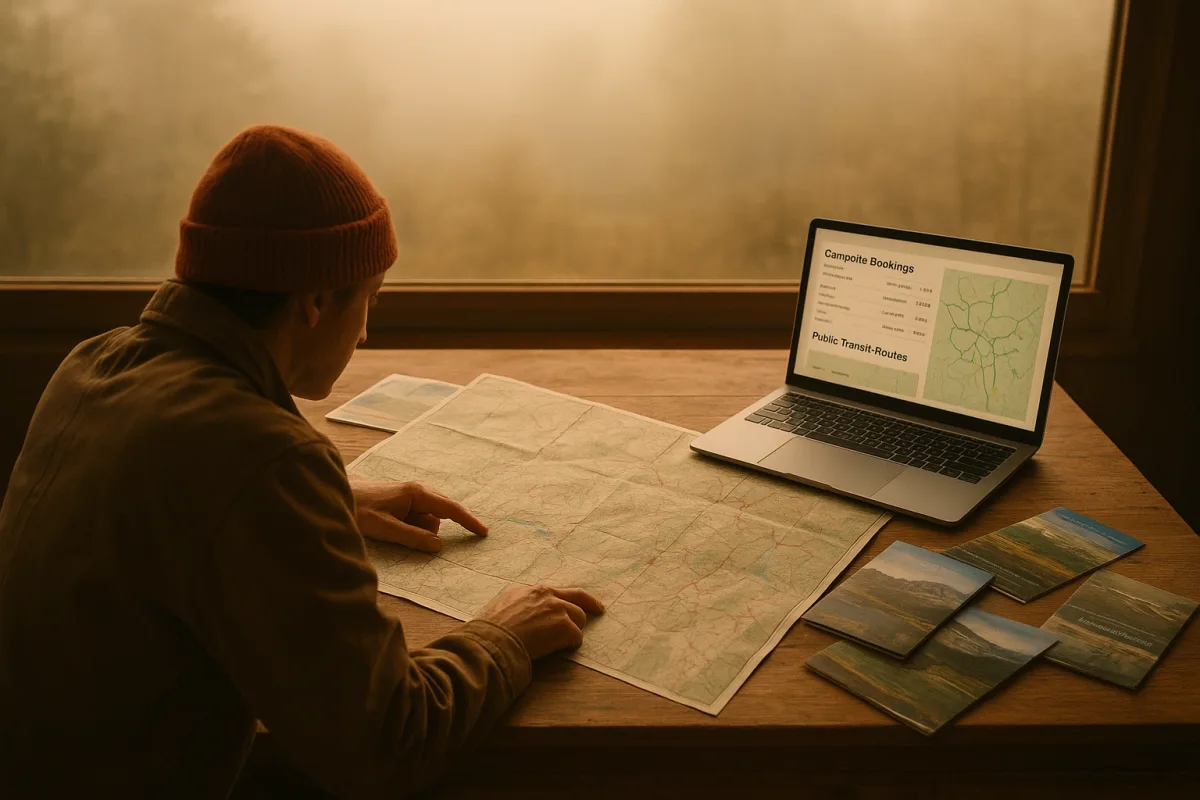
Underrated Travel Is Becoming a Planning Style, Not a Destination Category
The shift is real, but “hidden gem” is the wrong measure
Travel media is moving away from the familiar city-break loop and toward places framed as overlooked, peripheral or simply less discussed in English-language travel coverage. The evidence is not one viral video or a tourism-board slogan. Several different channels are using the same editorial logic.
Discovery Destination has produced both a 25-place and a 100-place roundup built around “underrated” destinations. Its selections range from Tbilisi and Salento to Taman Negara, the ruins of Ani, Tinos and smaller US towns including Lanesboro, Minnesota.
Meanwhile, Kara and Nate built a major episode around reaching Moldova during the Mongol Rally, presenting the border crossing itself as part of the story. Lost LeBlanc’s overland Africa series treats Eswatini as a destination worth detouring into, rather than merely a map curiosity between South Africa and Mozambique.
That convergence matters. It suggests that the new travel aspiration is not necessarily isolation. It is the feeling of having a specific reason to go somewhere that does not appear automatically in a first-time itinerary.
There is thin evidence, however, that every destination branded “underrated” is genuinely uncrowded. Torres del Paine, Nusa Penida, Tbilisi and Salento are already well established on many international routes. A place can be overlooked by one audience and heavily visited by another.
For trip planning, the useful distinction is not famous versus unknown. It is whether a place has enough transport, accommodation and booking infrastructure for independent travel, without the density of visitors that makes every day feel pre-scripted.
Why this is happening now
The format fits how people now research trips. A traveller can watch a road route through Eswatini, save a list containing Turkey’s Ani ruins and Malaysia’s Taman Negara, then check flights and maps immediately. Video turns a vague location into a plausible project.
It also reflects frustration with the practical costs of the classic hotspots. When accommodation, timed entries and restaurant reservations dominate a short break, a secondary city or regional park can look less like compromise and more like an alternative model of travel.
There is also a storytelling reason. Paris, Bali and Santorini require a new angle every time. Moldova’s difficult border formalities, Eswatini’s mountain roads or a trail system in Patagonia naturally supply narrative, uncertainty and a sense of progression.
The catch is that content makes a place legible faster than infrastructure can adapt. A video may show a quiet viewpoint, but it cannot guarantee an available bus seat, working cash machine, open trail or hotel room during a local holiday.
Discovery Destination’s list format is especially useful as a map of this appetite, but not as a booking guide. It identifies possible starting points, such as Taman Negara’s rainforest trails or Tinos’s marble villages, without doing the unglamorous work of verifying access.
That work is increasingly the traveller’s job. The practical skill is not finding an obscure name. It is checking which parts of a destination must be pre-booked, whether public transport is usable, and what happens when weather or a border disrupts the plan.
The new offbeat itinerary is often a regional add-on
Eswatini is a good example of the difference between a compelling detour and a standalone easy trip. Lost LeBlanc approaches the kingdom overland from South Africa, using mountain roads near Pigg’s Peak and presenting the border crossing as part of a longer southern Africa route.
That is probably the sensible shape of the trip for most independent travellers. Eswatini is small, and South African road, flight and car-rental infrastructure does much of the logistical heavy lifting. Do not assume, though, that the border is frictionless.
The country’s official name is the Kingdom of Eswatini, and its currency is the lilangeni, which is pegged one-to-one with the South African rand. Rand is therefore useful for a cross-border itinerary, though visitors should still carry a mix of payment options. [2]
Visa-free entry is limited to specific nationalities, including citizens of the United States, United Kingdom, Germany and Italy. Other travellers may need to arrange a visa in advance, a detail easily lost when a destination is described casually as simple to enter.
A road trip also demands more fuel discipline than an edited driving sequence suggests. Lost LeBlanc’s team enters Eswatini concerned about range after passing the last South African filling station, a reminder that a smaller country does not automatically mean denser services.
Plan Eswatini for dry-season road travel if scenery and driving are the priority, rather than treating it as a guaranteed year-round add-on. Check official entry and security guidance shortly before departure, including the US State Department’s current advisory information. [1]
Moldova offers a different version of the same trend. Kara and Nate’s route makes Chisinau look accessible after the team clears the Romanian border, but their experience was shaped by travelling in a US-registered former school bus, not by ordinary tourism.
Their group needed physical vehicle registration and Moldova-valid insurance, and initially faced refusal at the border. That is a useful warning for anyone driving an unusual vehicle, but it should not be generalized into a typical experience for passengers arriving by air.
Do not confuse difficult transport with adventurous travel
The Mongol Rally is compelling because its transport is deliberately impractical. Kara and Nate bought a retired Colorado school bus, drove it across the United States, shipped it over the Atlantic and then took it from Prague toward Central Asia.
That makes good viewing, but it is not a cost-efficient way to discover lesser-visited Europe. Shipping a US school bus to Europe in 2026 is estimated at roughly $4,800 to $11,000 by roll-on/roll-off service, or $8,000 to $20,000 by container.
Those figures are shipping only. Customs duty can be about 10 percent of the vehicle’s cost, insurance and freight value, then VAT applies by country, including 19 percent in Germany and 22 percent in Italy, calculated after duty.
Registration may be harder still. A US bus generally lacks the Certificate of Conformity needed for straightforward EU registration, potentially requiring national approval, modifications and inspections. Insurance can also be scarce and expensive for vehicles that do not fit local standards.
The lesson for an independent trip is straightforward: hire locally, use trains and buses, or choose a vehicle already registered where you will drive. The bus is the project, not a shortcut to Moldova.
This distinction will matter as travellers chase less conventional routes. Remote destinations do not always require complicated expeditions. Often the better plan is a normal flight into a regional capital, a local rental car, and enough time for slower connections.
Some “underrated” places need more booking, not less
Taman Negara in Malaysia is one of the more useful names in Discovery Destination’s larger roundup because it offers a clear alternative to an urban Malaysia itinerary. The draw is rainforest travel, river transport, trails and Indigenous-community visits, not a checklist of landmarks.
Still, it is not a place to arrive assuming everything shown online will be open. The national park requires a RM1 entry permit, with extra charges for activities. Some trails have visitor caps and mandatory bookings, making spontaneous plans less dependable.
The much-photographed canopy experience also needs a reality check. Parts of Taman Negara’s canopy walkways remained closed in mid-2026, although one major walkway had reopened. Basic access exists, but facilities and trail conditions are not uniformly polished.
That does not make the park a poor choice. It changes how to plan it. Go with a flexible itinerary, confirm the current walkway and trail status directly, and give yourself a spare day rather than relying on one signature activity.
Torres del Paine is a stronger example of a place that is visually “offbeat” in global media but operationally very structured. Discovery Destination includes the park for its W Trek, O Circuit, Grey Glacier and French Valley, all of which require real planning.
Camping is allowed only in authorized sites, fires are prohibited outside designated areas, and rule-breaking can bring serious penalties. Swimming and aerial sports are also prohibited within the park, so this is not a landscape for improvising every activity. [5]
Independent hiking on the Base of the Towers and O Circuit routes is allowed with pre-booking and compliance. The O Circuit’s independent access was permitted again from January 1, 2026, reversing an earlier restriction, but regulations remain strict. [5]
Entry fees also need date-specific checking. The park’s differentiated fee system was postponed until May 1, 2026, so travellers before that change faced the prior structure. High-season CONAF access has been around US$35, but verify current rates before paying.
The practical takeaway is counterintuitive: a heavily regulated national park may be a better first “off-the-beaten-path” project than a genuinely remote one. Rules, camps and booking systems make it more predictable, provided you organize the trip well ahead.
Cities can be the most practical alternative
Not every lesser-known destination needs a car, guide or expedition budget. Tbilisi, included in Discovery Destination’s shorter list, works because it has a coherent urban core, inexpensive local transport and enough neighbourhood texture to fill several days without constant logistics.
The classic orientation route is straightforward: explore Old Tbilisi and Abanotubani’s sulphur-bath district, then take the cable car toward Narikala Fortress. The ride costs 2.5 GEL, while metro and bus travel costs 1 GEL per journey. [3][4]
That is the sort of detail missing from broad “underrated” roundups. A central Bolt taxi typically costs about 5 to 15 GEL, which means staying near Old Tbilisi, Sololaki, Rustaveli or Marjanishvili can keep daily transport costs modest. [3]
Tbilisi is therefore a better choice for travellers who want discovery without the risk of a self-drive border crossing. It is also a useful base for a wider Georgia project, though the city itself deserves time beyond the fortress-and-baths circuit.
The guidebook version of underrated travel often oversells the absence of crowds. The more valuable version is a trip where the public transport fare is clear, the weather window is understood, the required booking is made, and there is room for a missed connection.
That is where the trend becomes useful. Use the videos and listicles to widen the map, then plan with the same care normally reserved for the famous places. The less obvious destination is rarely harder because nobody goes there. It is harder because fewer practical details are repeated often enough.
Frequently Asked Questions
What are some underrated travel destinations to visit in 2026?
Underrated destinations highlighted include Tbilisi (Georgia), Eswatini (Kingdom of Eswatini), Moldova, Taman Negara (Malaysia), Torres del Paine (Chile), Salento (Italy), and smaller US towns like Lanesboro, Minnesota. These places are often featured as overlooked or less discussed in English-language travel media but may already have established visitor routes.
How do I plan logistics for underrated travel destinations?
Planning logistics requires checking transport, accommodation, and permit availability well in advance. For example, Eswatini trips are best planned as part of a southern Africa itinerary using South African transport infrastructure, while Torres del Paine requires booking campsites and trail access before arrival. Always verify visa requirements, local transport options, and seasonal conditions.
What should I know about transportation in off-the-beaten-path places?
Transport infrastructure can be limited or uneven. In Tbilisi, public transport is affordable and efficient with metro and buses costing 1 GEL per ride, and taxis via Bolt costing 5–15 GEL. In Eswatini, mountain roads require fuel planning as filling stations are sparse, and border crossings may involve delays. Overland travel may demand more preparation than popular routes.
Which underrated destinations require advance booking or permits?
Torres del Paine National Park mandates advance booking for campsites and trail access, with strict regulations on camping and fires. Taman Negara National Park requires entry permits and activity fees, with visitor caps on some trails. Visa requirements for Eswatini vary by nationality, and some travelers must obtain visas before arrival. Checking these details before travel is essential.
How we researched this
This article was assembled from 4 video sources across 3 channels, 5 cited references.
Nothing here is based on hands-on testing. Where a figure or finding appears, it belongs to the source cited beside it, and the writing says so rather than implying otherwise. Every source is listed below so you can check it.
Sources
48 Hours in Europe's Least Visited Country (Ep. 3) — Kara and Nate
This Tiny Country Is Trapped Inside South Africa — Lost LeBlanc
100 INSANELY UNDERRATED Places to Visit in the World (2026) — Discovery Destination
25 INSANELY UNDERRATED Places to Visit in the World (2026) — Discovery Destination
Public Transport in Tbilisi: Metro, Buses, Fares & Travel Cards
Watch Underrated and Off-the-Beaten-Path Destinations on Youtube
Also from the sources
Related Articles
Travel Challenges in Remote Locations
Explore travel challenges in remote locations with tips on logistics, borders, budgets, and weather for self-supported adventure trips.

Unique Unusual Travel Experiences
Explore unique unusual travel experiences with practical tips on costs, logistics, and destinations like Cappadocia, Bangkok, and Wrocław.
Travel Safety and Remote Destinations: Key Tips for 2026
Learn essential travel safety tips for remote destinations in 2026, including evacuation planning, insurance, and realistic access considerations.
Labor Day Travel Costs and Trends in 2026
Explore Labor Day travel costs and trends in 2026, including airfare, gas prices, and tips to plan your budget effectively.