
Underrated Travel Destinations Logistics and Budget Tips
Explore underrated travel destinations in 2026 with practical logistics, budget advice, and transport tips for a smooth trip.
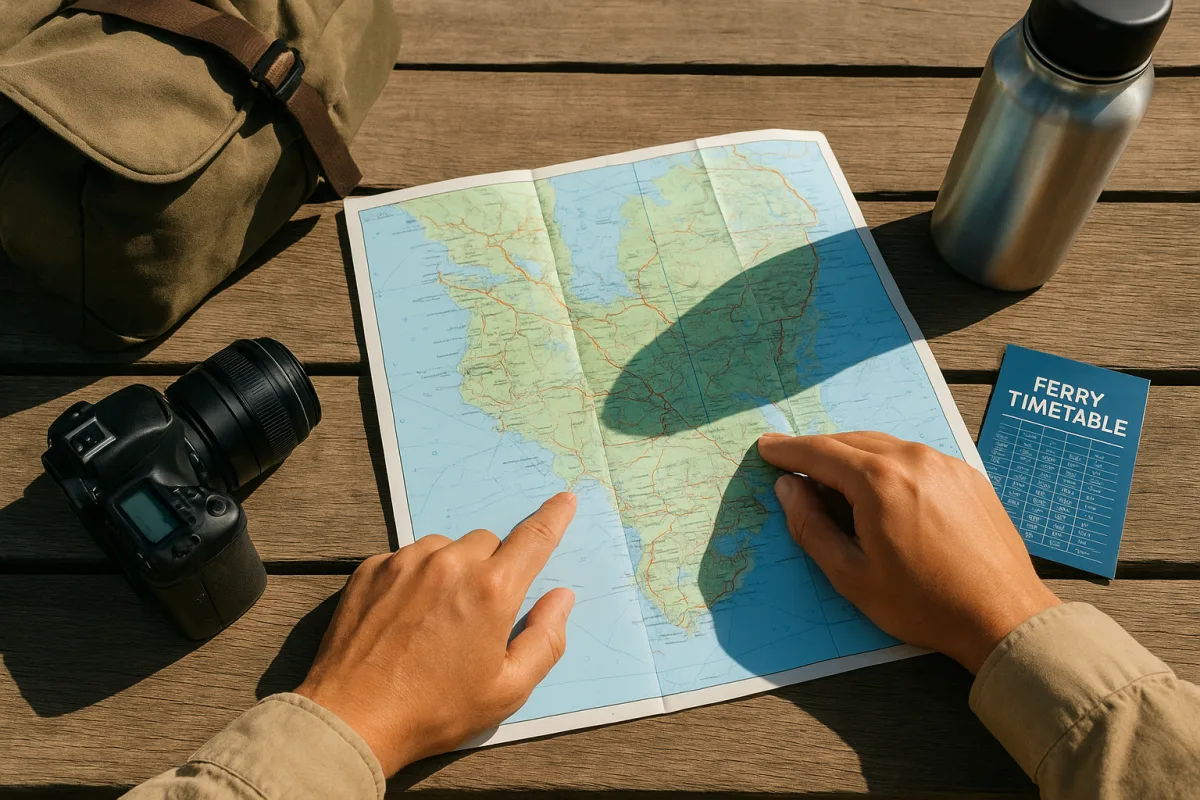
The quick list
- Best overall: Tbilisi, Georgia, for travellers who want food, history, baths and walkable city sightseeing without Western European prices.
- Best value: Siquijor, Philippines, for independent beach travellers comfortable arranging ferries and local transport.
- Best for a first Balkan trip: Pula, Croatia, for Roman history, an easy city layout and Istrian food, with peak-season crowd trade-offs.
- Best for nature without a mega-trek: Taman Negara, Malaysia, for rainforest trails and river travel on a manageable Southeast Asia itinerary.
- Best for volcano landscapes: Isla de Ometepe, Nicaragua, for hikers and slow travellers who can cope with lake-ferry logistics.
- Best splurge outdoors: Torres del Paine, Chile, for serious hikers willing to reserve accommodation and plan around harsh weather.
- Best Eastern Europe alternative: Sofia, Bulgaria, for a practical capital break, though dinner costs are higher than headline bargain claims suggest.
What “underrated” should mean in 2026
The useful question is not whether a place has escaped social media entirely. It is whether it gives you a better trip for the time and money available than its famous neighbour. That usually means shorter queues, cheaper beds, a smaller footprint, or a reason to stay beyond one photographed landmark.
Discovery Destination’s 2026 lists range from individual monuments to entire regions, so they are not a ready-made itinerary. This shortlist narrows that sprawl to seven destinations with distinct practical roles: two cities, two tropical islands, two national parks and one small Croatian urban stop.
Do not treat “lesser known” as a promise of emptiness. Pula and Torres del Paine already receive substantial visitor traffic. Their value lies elsewhere, in compactness and landscape respectively, while Tbilisi, Siquijor, Ometepe and Taman Negara require more self-directed planning.
Comparison table
| Destination | Best trip length | Layout and getting around | Cost signal | Best time to target | Main trade-off |
|---|---|---|---|---|---|
| Tbilisi, Georgia | 3 to 4 nights | Old town is walkable, hills and outer districts require metro, taxi or Bolt | Sofia-style bargain assumptions do not apply here, but it remains generally cheaper than Western European capitals | May to June, September to October | Urban traffic and uneven pavements |
| Siquijor, Philippines | 3 to 5 nights | Small island, scooter or hired driver is the practical default | No reliable all-in daily figure supplied | February to May for drier conditions | Ferry schedules determine the itinerary |
| Pula, Croatia | 2 to 3 nights | Compact center, most key sights walkable | Croatia is usually better value outside summer | May, June, September | Arena access can change around events [5] |
| Taman Negara, Malaysia | 2 to 3 nights | Park base, trails and river boats | Low-cost Malaysia, but guided trips and transfers add up | February to September | Remote compared with Kuala Lumpur |
| Isla de Ometepe, Nicaragua | 3 to 4 nights | Two-volcano island, scooter, bicycle, taxi or driver needed | Often good value, but ferry and transport time are the price | November to April | Rough lake crossings and limited public transport |
| Torres del Paine, Chile | 4 to 8 nights | Long distances, shuttle links and booked trekking sectors | The highest-cost option here | November to March, with weather flexibility | Reservations, wind and strict rules [7] |
| Sofia, Bulgaria | 2 to 3 nights | Compact center with metro and trams | Dinner with a drink is typically €15 to €23, about $16.50 to $25.30 [3] | May, June, September | Not as cheap as bargain headlines imply |
Tbilisi, Georgia: the strongest all-round city choice
Discovery Destination’s 25-place roundup identifies Tbilisi’s practical core clearly: Old Tbilisi, the Narikala Fortress above it, the Abanotubani sulphur-bath district and the ridge-top Mtatsminda area. That is enough for a satisfying three-night break without building an itinerary around long day trips.
The city works for travellers who like to alternate sightseeing with meals and cafés. Start in the old town, walk to the baths and fortress, then use a ride-hailing car for Mtatsminda or more distant neighbourhoods. The steep lanes around Narikala are scenic but not ideal for limited mobility.
Georgia is outside the Schengen Area, which makes Tbilisi useful for travellers already close to their 90-day Schengen limit. That flexibility is practical in 2026, when U.S. visitors to Schengen Europe face biometric registration through EES and an expected ETIAS authorization later in the year. [1][4]
The trade-off is that Tbilisi is a working capital, not a polished open-air museum. Traffic, hill climbing and patchy sidewalks are part of the deal. It is a better fit for a city-first trip than for someone seeking the frictionless, resort-like rhythm of a Greek island.
Siquijor, Philippines: best value if you can handle ferry logistics
Discovery Destination’s shorter 2026 list makes a persuasive case for Siquijor’s variety: Cambugahay Falls near Lazi, Paliton Beach in San Juan, Salagdoong Beach in Maria, old churches, caves and marine sanctuaries. On a small island, that mix is meaningful because it reduces time lost to long overland transfers.
The island is best approached as a three- to five-night stop after Dumaguete, Bohol or Cebu rather than a one-night detour. Ferries decide when you arrive and leave, so schedule the crossing before committing to a tightly timed onward flight.
A scooter gives the most freedom, but it is not a requirement for every traveller. A hired driver for a loop day makes better sense for pairs, families or anyone unwilling to ride on unfamiliar roads. Base in San Juan for beach access and a wider choice of accommodation.
Siquijor’s disadvantage is the absence of a dense town centre. You are choosing scattered waterfalls, beaches and roadside meals over museums, architecture and late-night city life. Discovery Destination’s list rightly frames it as an island for moving between natural stops, not for ticking off landmarks on foot.
Pula, Croatia: a short, smart alternative to Dubrovnik
Discovery Destination highlights Pula Arena, Forum Square, the Temple of Augustus and the Arch of the Sergii. They are tightly grouped, which makes Pula unusually efficient for travellers with only two or three nights on the Istrian Peninsula.
The Arena is the reason to come, but it should not be romanticised as an empty Roman relic. Peak-season crowds affect the experience, while concerts and film screenings can temporarily restrict access. Authorities cap event attendance at 8,000 because heavy equipment creates conservation concerns. [5]
That makes May, June or September more sensible than the busiest summer weeks. You can still enjoy warm weather and outdoor dining, but have a better chance of ordinary sightseeing access. Check the Arena’s event calendar before booking a non-refundable hotel.
Pula is not a replacement for a full Dalmatian island holiday. It is a compact base with Roman sights and an urban harbour, rather than a beach resort. Choose it over Dubrovnik when you value an efficient layout and Istria’s food scene more than dramatic walled-city views.
Taman Negara, Malaysia: rainforest without the Patagonia commitment
Discovery Destination’s 100-place list points to the elements that make Taman Negara practical: the canopy walkway, Bukit Teresek, river travel on the Tahan River, Lata Berkoh cascades and Orang Asli village visits. This is a compact nature stop rather than an expedition requiring weeks of preparation.
Allow two nights at minimum. That gives room for a short trail, a river outing and a night-walk or guided activity, while a one-night visit can feel dominated by the journey from Kuala Lumpur. It fits naturally after a few city nights, not before an early international departure.
The U.S. State Department’s current advisory is Level 1, exercise normal precautions, for Malaysia. The separate warning about kidnapping risk concerns eastern Sabah maritime areas, not Taman Negara, but it is a useful reminder not to generalise conditions across a country. [1]
Taman Negara suits travellers who want a rainforest experience without committing to difficult multi-day hiking. It does not suit anyone expecting polished infrastructure at every turn. Boats, guides and weather can shape the schedule, and the best approach is to leave an extra half-day free.
Isla de Ometepe, Nicaragua: choose it for slow travel, not convenience
Discovery Destination’s 75-place list describes Ometepe through its two volcanoes, Concepción and Maderas, plus the San Ramón waterfall and Ojo de Agua spring pools. That geography is the point: this is an island where days are built around volcano views, swimming and rural roads.
Three nights is the useful minimum because the ferry crossing and onward transfer consume time at both ends. Four nights allows one volcano-focused day, one swimming or cycling day and enough slack for weather or ferry changes.
Ometepe compares well with Siquijor for people who want an island that feels rural rather than beach-club oriented. Its roads and distances make it less immediately easy, however. A scooter helps, while taxis or pre-arranged drivers are the safer option for visitors not used to riding.
The guidebook version of Ometepe can overemphasise volcanic ascents. Concepción is a serious undertaking, not an obligatory half-day activity. Travellers who prefer a lower-effort stay can concentrate on Ojo de Agua, villages, lake views and the gentler approaches around Maderas.
Torres del Paine, Chile: magnificent, but not the budget pick
Discovery Destination includes the W Trek, O Circuit, Base Torres viewpoint, Grey Glacier, French Valley and Lake Pehoé. That is an accurate outline of why Torres del Paine is famous, but it is not an overlooked, inexpensive add-on to a Chile itinerary.
Book campsites or refugios before committing to transport. Independent hiking restrictions were lifted in January 2026, but hikers must still use designated campsites, observe fire rules and follow leave-no-trace requirements. Rangers enforce those rules. [7]
The season also matters more here than at any other option in this roundup. November through March gives the longest days, but it does not eliminate severe weather. A November 2025 storm caused five hiker deaths, and conditions can shift quickly even on established routes. [7]
Chile carries a Level 2 advisory, exercise increased caution, with crime, unrest and health issues noted by U.S. authorities. [1] That does not make Patagonia off limits, but it does argue for buffer days around flights and buses, especially if a trekking itinerary depends on fixed reservations.
Sofia, Bulgaria: good value, with realistic expectations
A short Travel Off Path report calls attention to an Eastern European city with fourth-century fortresses, cheap dinners and long visa-free access for Americans. Sofia is worth considering, but the $15 dinner figure needs a correction before it becomes a budgeting rule.
Independent 2026 cost research puts a typical Sofia dinner with a drink at €15 to €23 per person, roughly $16.50 to $25.30. [3] That can still be excellent value compared with many European capitals, but it is not the same as a reliably $15 night out.
Sofia works for a two- or three-night trip built around a compact centre, Orthodox architecture, Roman-era remains and quick metro journeys. It is less visually cohesive than Prague or Budapest, which is exactly why it rewards travellers who care more about everyday urban life than postcard perfection.
Bulgaria is in the Schengen system, so U.S. travellers are generally allowed up to 90 days in any 180-day period without a visa. EES biometric registration begins from April 2026, and ETIAS is expected later in the year with a €20 fee. [1][4]
Who each option suits
Tbilisi suits first-time independent travellers who want a compact city with enough variety for a long weekend. It is the most balanced choice when food, history and easy urban wandering matter equally.
Siquijor suits beach travellers who are happy to organise a ferry, rent a scooter or pay for a driver. It is better for three quiet days than for a tightly scheduled Philippines highlights trip.
Pula suits travellers combining several Istrian stops, or anyone who wants Roman architecture without committing to Dubrovnik prices and crowds. Avoid building the trip around unrestricted Arena access during major event dates.
Taman Negara suits visitors to Malaysia who want rainforest, river travel and guided nature activities without doing a demanding trek. It works especially well as a two-night break from Kuala Lumpur’s heat and density.
Isla de Ometepe suits patient travellers who enjoy rural transport, volcanic scenery and unscheduled afternoons. It is a poor match for anyone who dislikes ferries, rough roads or building a day around limited connections.
Torres del Paine suits committed hikers with the budget for reservations, transfers and weather delays. It is the biggest landscape experience here, but also the least forgiving choice for a spontaneous or low-cost itinerary.
Sofia suits travellers looking for a practical Balkan capital at a reasonable, rather than rock-bottom, price. Budget realistically for meals, and treat its value as a result of lower overall city costs, not a universal $15 dinner.
Frequently Asked Questions
What are the best underrated travel destinations with easy logistics in 2026?
Tbilisi, Georgia, is the strongest all-round city choice with a compact old town and inexpensive regional transport, making it suitable for a low-friction city break. Pula, Croatia, offers a compact center that is mostly walkable, ideal for a short visit. However, Siquijor and Isla de Ometepe require more self-directed planning and acceptance of slower ferry connections.
How to plan transportation and budget for underrated travel spots in 2026?
For cities like Tbilisi and Pula, walking combined with local transport or ride-hailing services works well, but budget expectations should be realistic—dinner costs in places like Sofia and Tbilisi are higher than some headline claims suggest. For islands such as Siquijor and Isla de Ometepe, plan for ferry schedules and scooter or driver rentals, which affect itinerary timing and costs.
Which underrated destinations in 2026 require ferry or scooter rentals?
Siquijor, Philippines, and Isla de Ometepe, Nicaragua, both require ferry travel to reach and rely on scooter rentals or hired drivers for getting around locally. These logistics add complexity and should be factored into trip planning.
What are the main travel trade-offs for underrated destinations in 2026?
Trade-offs include urban traffic and uneven pavements in Tbilisi; ferry schedules limiting flexibility on Siquijor; restricted access to Pula’s Arena during events; remoteness of Taman Negara compared to major cities; rough lake crossings and limited public transport on Isla de Ometepe; and the need for reservations and weather flexibility in Torres del Paine.
How to navigate entry requirements and transport options for underrated 2026 trips?
U.S. travelers to Europe should prepare for the EU’s Entry and Exit System requiring biometric data and the ETIAS authorization launching in late 2026, which involves a fee and pre-travel approval. For non-Schengen countries like Georgia, visa-free entry is generally available, offering flexibility. Local transport varies by destination, so researching ferry schedules, scooter rentals, and ride-hailing availability is essential.
How we researched this
This article was assembled from 5 video sources, 1 published article, 7 cited references.
Nothing here is based on hands-on testing. Where a figure or finding appears, it belongs to the source cited beside it, and the writing says so rather than implying otherwise. Every source is listed below so you can check it.
Sources
50 INSANELY UNDDERATED Places to Visit in the World (2026) — Discovery Destination
100 INSANELY UNDERRATED Places to Visit in the World (2026) — Discovery Destination
75 INSANELY UNDERRATED Places to Visit in the World (2026) — Discovery Destination
10 INSANELY UNDERRATED Places to Visit in the World (2026) — Discovery Destination
25 INSANELY UNDERRATED Places to Visit in the World (2026) — Discovery Destination
This Underrated Eastern European City With 4th-Century Fortresses, $15 Dinners, And 1-Year Visa Free Visits For Americans Is Breaking Tourism Records — Travel Off Path
Cheapest European Cities to Visit in 2026 (Ranked by Actual Flight + Hotel Cost) | Wildly Blog
Do US Citizens Need a Visa for Europe? ETIAS is Coming in 2026
Torres del Paine Travel Tips 2026: Essential Planning & Practical Advice
Watch Underrated Travel Destinations for 2026 on Youtube
Also from the sources
Related Articles
Travel Tips and Guides for Armenia and Indonesia
Get practical travel tips and guides for Armenia and Indonesia covering itineraries, budgets, visas, and transport advice for a smooth trip.
Underrated Travel Destinations 2026
Explore underrated travel destinations in 2026 with tips on logistics, budgeting, and getting around for a smoother off-the-beaten-path trip.
Travel Challenges in Remote Locations
Explore travel challenges in remote locations with tips on logistics, borders, budgets, and weather for self-supported adventure trips.

Unique Unusual Travel Experiences
Explore unique unusual travel experiences with practical tips on costs, logistics, and destinations like Cappadocia, Bangkok, and Wrocław.