
Mexico City Travel Safety Tips and Warnings for Tourists
Get essential Mexico City travel safety tips, neighborhood advice, and warnings to help tourists navigate the city safely in 2026.
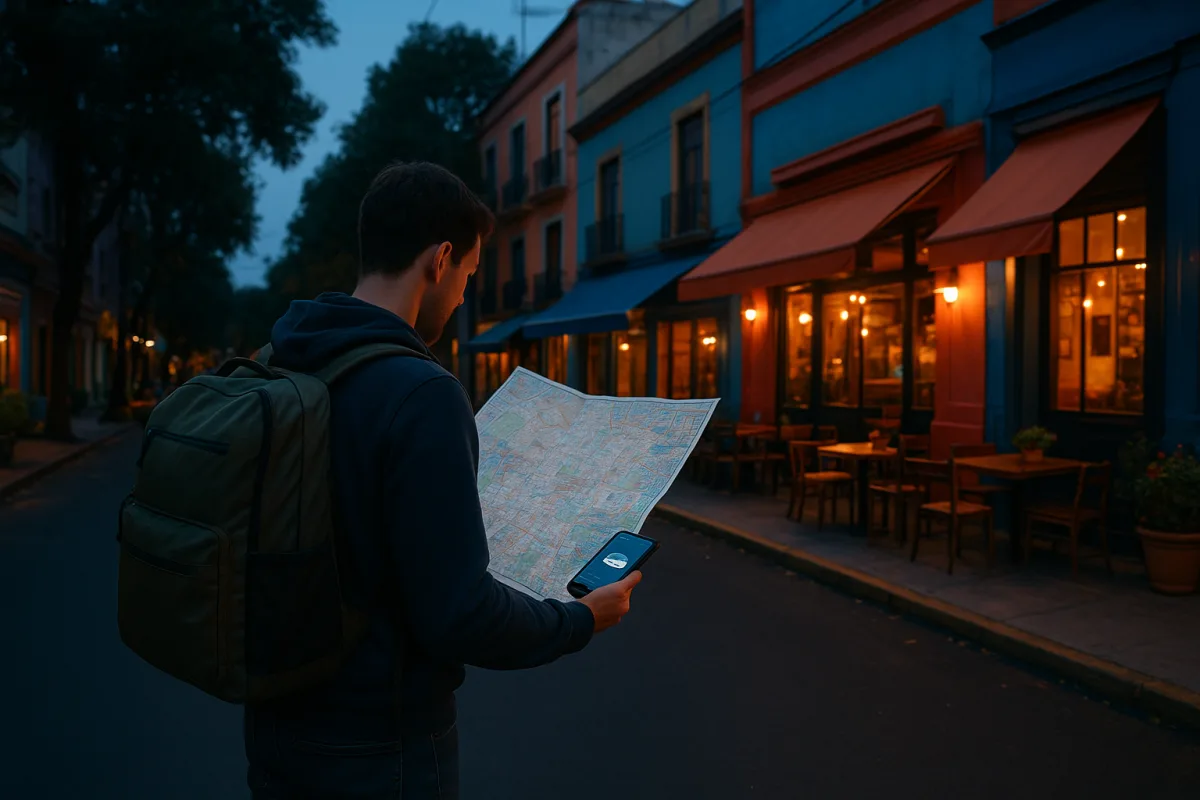
The useful way to understand safety in Mexico City
Mexico City is too large for a blanket verdict. The practical question is not whether the whole capital is “safe” or “dangerous,” but whether your route connects places built for visitors, at a sensible hour, using transport you control.
That distinction matters because the city spans 16 boroughs and nearly 1,500 square kilometres, according to the first-timer guide from Happy to Wander. A restaurant recommendation in Roma Norte and a market stall in Tepito may be only a few kilometres apart, but they are not comparable travel environments.
The useful system is a three-part chain: where you sleep, where you spend the day, and how you return. If all three links are predictable, Mexico City is manageable for a first visit. If one becomes improvised, risk rises quickly.
Start with a neighbourhood where you can walk to breakfast, coffee, parks and dinner. Roma Norte, Condesa, Polanco, Coyoacán and San Ángel are repeatedly identified as lower- to moderate-risk visitor areas, with more hotels, restaurants and routine police presence. [3][5][6]
That does not mean they are crime-free. It means the everyday problem is more likely to be a phone lifted from a café table, a bag opened in a crowd, or a questionable taxi, rather than the organized-crime concerns associated with particular districts. [6][10]
Centro Histórico belongs in the second link, the daytime sightseeing district. It is an essential first-timer stop because the major sights are tightly packed, but its crowds, street vendors and busy transit connections make it a place to arrive with a plan.
Happy to Wander recommends seeing the Zócalo, the Templo Mayor archaeological site, the Metropolitan Cathedral and Palacio de Bellas Artes in the central core. The advice to go on a weekday morning is practical, not merely aesthetic: the centre becomes more crowded and harder to navigate later.
The Zócalo itself covers roughly 57,000 square metres, according to Happy to Wander. It is surrounded by major institutions, but it is also a working public square, often hosting demonstrations, security barriers, vendors and large gatherings.
A first visit works best as a linear walk. Begin at Templo Mayor and its museum, continue through the Zócalo and cathedral, then walk west via Avenida Francisco I. Madero toward Palacio de Bellas Artes. Avoid treating the surrounding lanes as a shopping scavenger hunt.
Happy to Wander is right to qualify Avenida Francisco I. Madero. It is historically important and passes the tiled Casa de los Azulejos, but much of it is busy retail rather than an intimate local discovery. See it because it connects places, not because it deserves half a day.
Plan an exit before dusk. If you finish at Bellas Artes, order an app car from a clear hotel or restaurant entrance, or take the Metro only if you are comfortable with crowds and are not carrying valuables openly.
Why Tepito is not a first-timer attraction
Tepito is the clearest example of why Mexico City safety must be read block by block. It lies close to the historic centre, but proximity does not make it a sensible extension of a Zócalo walking route.
Drew Binsky’s video from Tepito presents its market economy, boxing culture, religious shrines and long-established residents alongside its reputation for counterfeit goods, drugs and gangs. That mix is real enough to make simplistic descriptions inadequate, but it does not make the area visitor-friendly.
The video’s central safety condition is also its limitation: filming took place with local connections, a bodyguard and people who knew the streets. An escorted media visit is not evidence that an independent traveller can safely reproduce the route.
Recent reporting supports caution. El País reported that operations focused on La Unión Tepito and La Anti-Unión Tepito led to around 50 arrests in a month during August 2026, with authorities targeting organized crime in Tepito and nearby central districts. [2]
That police activity should not be misread as proof the area is now safe, or as proof it is uniformly violent. There are no detailed, publicly available 2026 crime statistics that establish Tepito’s actual neighborhood-level crime rate or tourist victimization rate.
In other words, uncertainty is itself the planning signal. You do not need to solve Tepito’s reputation, decide whether every warning is exaggerated, or seek out its market because it appears in a dramatic travel video. There are better first-day uses of your time.
Tepito’s commercial appeal is low prices and the possibility of finding almost anything. The downside is that counterfeit trade, crowding, unfamiliar side streets and an area affected by active criminal groups turn a bargain hunt into a poor risk-reward calculation.
Skip it unless you have a compelling local reason and a trusted, current connection. The same conservative approach applies to Doctores, Iztapalapa and isolated streets in Centro Histórico after dark, all regularly flagged for greater caution in visitor safety guidance. [3][4]
This is not a judgement on residents. A neighborhood can contain families, small businesses, gyms, markets and religious life while also being a place where outsiders lack the local knowledge needed to assess a situation. Those facts can coexist.
Transport is the safety tool that determines the day
The most important Mexico City travel skill is choosing transport by context rather than ideology. The Metro is cheap and extensive, ride-hailing is more controlled than street taxis, and walking is excellent when it connects active streets within one established neighbourhood.
The Metro fare is 5 pesos, according to Expat360, which makes it one of the cheapest ways to cover long distances. [15] It is a good daytime choice for travellers with light bags who already know their station, exit and onward walking route.
The catch is density. Pickpocketing and petty theft are common concerns in crowded Metro stations, markets and central pedestrian corridors, so a phone in a back pocket and an unzipped daypack are poor habits. [3][15]
Set up a payment method and download offline maps before you need them. At busy stations, keep your bank card, passport and main cash separate from the phone you need for navigation, then step aside before checking directions.
Do not use the Metro as a test of bravado during rush hour. If the platform is packed, you are tired, or the journey requires several unfamiliar changes, paying for an Uber or DiDi is a practical upgrade rather than a travel failure.
Street taxis are where the guidance becomes firmer. Multiple safety sources advise visitors to prefer ride-hailing apps because unauthorized taxis carry risks including scams and express kidnapping, even though such incidents are not the routine experience of most visitors. [3][10][15]
App-based trips create a record of the driver, car and route. Confirm the licence plate before entering, wait inside a hotel or restaurant where possible, and do not accept a driver who asks you to cancel the trip and pay privately.
Airport pickups can be confusing because of continuing disputes over ride-hailing access and designated collection points. El País reported legal and operational friction around requesting Ubers at Mexico City airport, so check the app’s current pickup instructions after landing. [15]
For a first trip, build days geographically. Spend one day in Centro Histórico, another in Roma Norte and Condesa, another in Coyoacán and nearby museums. Fewer cross-city journeys mean fewer decisions in crowds and less dependence on late-night transport.
A first itinerary that does not waste the city
Roma Norte is a useful arrival-day district because it lets you learn the city at walking speed. Have coffee, eat a proper meal, identify a nearby convenience store and test your data connection before relying on it for a long journey.
Happy to Wander highlights the area’s food and café culture, while also recommending a food tour for travellers who value stories and introductions to particular vendors. That is a reasonable first-day spend if unfamiliar street-food choices feel intimidating.
The price range is wide. Group food tours in Roma Norte can start around US$25 and run to US$89, while a four-hour Sabores Mexico walking tour is listed at about US$110. [8][9] Private tours cost more, from US$150 for a half-day. [8]
Those prices buy guidance and multiple tastings, not a necessary meal. Eat independently if your budget is tighter, but choose busy stalls with high turnover, order cooked food hot, and use the same ordinary food-safety judgement you would in any large city.
Reserve Centro Histórico for an early morning, then pick a single paid interior rather than racing through every landmark. The Templo Mayor museum gives the archaeological context that the plaza alone cannot, while Bellas Artes makes sense if the murals and architecture interest you.
For an evening with a clear destination, Happy to Wander recommends Friday-night lucha libre at Arena México. It is a useful example of a safer night-out pattern: book or buy a legitimate ticket, go directly, enjoy the show, then use ride-hailing home.
Keep one final safety item separate from crime: earthquakes. Mexico City has the SASMEX warning system, which can provide up to 60 seconds of notice, and visitors should note evacuation routes in hotels, museums and apartment buildings. [3]
The city is also subsiding in places by up to 14 inches, or 35 centimetres, per year, according to satellite research reported by Space.com. [7] That is not a reason to cancel, but it helps explain why infrastructure, pavements and road conditions can be uneven.
The United States currently places Mexico, including Mexico City, at Level 2, “Exercise Increased Caution,” citing crime, kidnapping and terrorism risks. [1] Treat that as a prompt for sensible logistics, not as a reason to avoid the city’s principal visitor districts altogether.
Save the key numbers before arrival: 911 for emergencies, Tourist Police at +52 55 5207 4155 or WhatsApp +52 55 4891 1166, and LOCATEL at +52 55 5658 1111. [3] A charged phone, local data and a known route home do more for a first trip than chasing supposedly dangerous neighborhoods.
Frequently Asked Questions
What are the safest neighborhoods to stay in Mexico City?
The neighborhoods considered lower- to moderate-risk for visitors include Roma Norte, Condesa, Polanco, Coyoacán, and San Ángel. These areas have more hotels, restaurants, and a routine police presence, making them suitable bases for first-time visitors. However, petty theft like pickpocketing can still occur, so caution is advised.
How can tourists get around Mexico City safely?
For simple daytime trips, the Metro is an economical option at 5 pesos, but it can be crowded and pose pickpocketing risks. When carrying bags, traveling late, or going to unfamiliar districts, it is safer to use ride-hailing apps like Uber or DiDi rather than street taxis, which have been linked to express kidnappings.
Is it safe to visit Tepito market in Mexico City?
Tepito is not recommended for casual visits by tourists due to ongoing organized crime activities, including recent arrests and weapons seizures in 2026. While police presence has increased, the lack of reliable neighborhood-level crime data and the area's reputation for counterfeit goods and gangs make it unsafe for independent travelers.
What are common travel safety tips for Mexico City visitors?
Visitors should avoid displaying valuables openly and stay alert to pickpocketing, especially in crowded places like the Metro and markets. It is advisable to use emergency numbers such as 911, Tourist Police, and LOCATEL if needed. Prefer ride-hailing apps over street taxis, and be aware of earthquake risks and city subsidence that may affect infrastructure.
When is the best time to visit Centro Histórico safely?
Centro Histórico is best visited during weekday mornings when it is less crowded and easier to navigate. Visitors should plan a linear walking route through major sights like Templo Mayor, the Zócalo, and Palacio de Bellas Artes, and avoid wandering aimlessly in surrounding lanes or staying after dusk. Leaving before dark and using app-based transport from a clear location is recommended.
How we researched this
This article was assembled from 2 video sources across 2 channels, 15 cited references.
Nothing here is based on hands-on testing. Where a figure or finding appears, it belongs to the source cited beside it, and the writing says so rather than implying otherwise. Every source is listed below so you can check it.
Sources
Entering Mexico City's Most Dangerous Hood — Drew Binsky
BEST THINGS TO DO IN MEXICO CITY (CDMX) FOR FIRST TIMERS W/ MAP | 30+ Must-Dos, Hidden Gems & More! — Happy to Wander (Travel Tips & Inspo)
Mexico City Areas Where You Should Proceed With Caution — Mexico City Travel
Is Mexico City Safe for Tourists in 2026? Crime Data & Neighborhood Guide | Safe Travel México
Mexico City is sinking up to 14 inches per year, satellite images show
Mexico City: Roma Norte Food Walking Tour – Mexico City Guide
Is Mexico City Safe for Tourists? (2026) Honest CDMX Safety Guide | Guateque Time
Is Mexico City Safe for Tourists in 2026? Safest Areas, Areas to Avoid, and Airport Tips
Watch Travel Tips and Warnings for Mexico City on Youtube
Also from the sources
Related Articles
Tepito Travel Safety: Avoid Scams and Stay Secure in 2026
Learn Tepito travel safety tips, how to avoid scams, and navigate Mexico City's market risks for a safer visit in 2026.
Travel Guides for European Cities: Tips, Budgets & Logistics
Get practical travel guides for European cities with tips on budgets, accommodations, transport, and sightseeing for Edinburgh, Kraków, Provence, and more.
Travel Safety and Remote Destinations: Key Tips for 2026
Learn essential travel safety tips for remote destinations in 2026, including evacuation planning, insurance, and realistic access considerations.
Dublin Travel Guide: Itinerary, Budget & Getting Around
Plan your Dublin trip with this travel guide covering a 2-day itinerary, budget tips, transport options, and must-see attractions.