
Travel Tips and Guides for Armenia and Indonesia
Get practical travel tips and guides for Armenia and Indonesia covering itineraries, budgets, visas, and transport advice for a smooth trip.
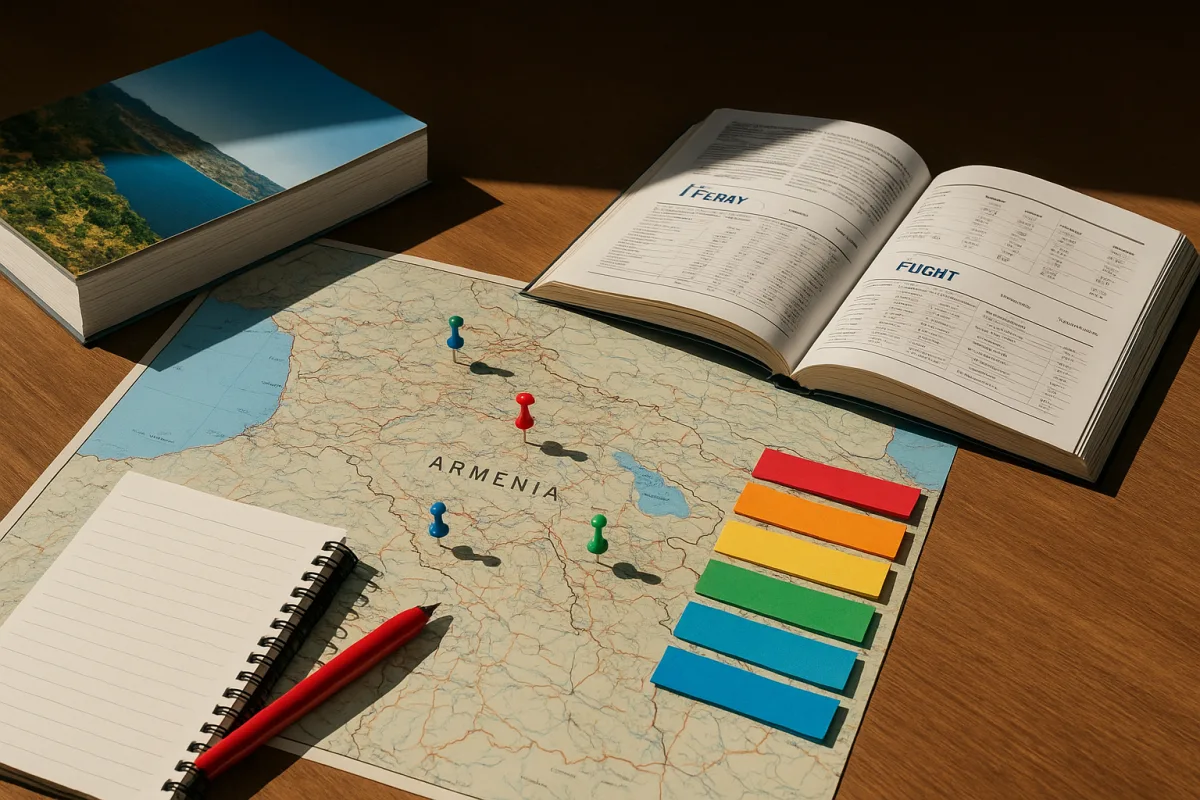
Start with the route, not the sights
Armenia and Indonesia both reward independent travel, but they ask for different levels of planning. Armenia is compact enough to use Yerevan as a base, then take day trips or rent a car for the countryside. Indonesia is an archipelago, so the route itself is the expensive and time-consuming part. Treat internal flights, ferries and boat departures as fixed points, then build accommodation around them.
For a first Armenia trip, plan to arrive in Yerevan, spend two or three nights there, then add trips to Garni Temple and Geghard Monastery, Lake Sevan, or longer journeys south towards Tatev. Creative Travel Guide recommends May to June and September to October for the comfortable temperatures and greener landscapes. July and August are hotter in the capital, though mountain areas are cooler and better suited to hiking.
For Indonesia, avoid trying to cover Java, Bali, Lombok and Komodo in a few days. Karl Watson: Travel Documentaries’ two-week route shows the practical logic of moving east: Jakarta to Malang and East Java, then Bali, Gili Trawangan, Lombok and Labuan Bajo for Komodo. It is a workable route, but transport days add up quickly. Build in buffer nights before flights and liveaboard departures.
Check Armenia’s entry rules and borders before buying onward tickets
Yerevan’s Zvartnots International Airport is the standard arrival point for most international visitors. Armenia can be entered overland from Georgia and Iran, whose borders are open around the clock, but do not plan a regional itinerary through Turkey or Azerbaijan. Those land borders remain closed. [5]
Visa rules became more flexible from 1 July 2026 to 1 July 2027. Citizens of 113 countries who hold valid residence permits in eligible countries can stay visa-free for up to 180 days. That is particularly useful for long-term travellers based in Europe, the Gulf or elsewhere with qualifying residency, but it is not a blanket exemption for every passport holder. [5] If you need a visa, Armenia’s official e-visa system says processing generally takes three to four working days, so do not leave the application until the airport. [11]
There is also a safety question that should shape the itinerary. US and UK government travel advice warns against travel near the Azerbaijan border and identifies areas including parts of Gegharkunik and Syunik as needing particular caution. [1][12] That does not mean skipping Armenia’s southern monasteries automatically, but it does mean checking current advice before committing to a Tatev or border-region road trip, buying travel insurance that covers the activities you intend to do, and not treating a scenic route on a map as a casual detour.
Budget Armenia by the dram, and use Yerevan as the spending benchmark
Armenia is one of the more affordable destinations in the Caucasus if you use local restaurants and public transport rather than booking every day as a private excursion. Creative Travel Guide puts hostel dorms from about AMD 4,000 a night, budget hotels from AMD 15,000, mid-range hotels from AMD 30,000 and higher-end rooms from AMD 70,000.
Food costs make a noticeable difference. According to Creative Travel Guide, street food runs about AMD 1,000 to AMD 3,000, a casual local meal AMD 2,500 to AMD 5,000, and coffee AMD 800 to AMD 2,000. A sit-down dinner for two starts at around AMD 20,000. In practice, a budget traveller staying in dorms and eating simply can keep daily spending low, while a couple using taxis, private rooms and restaurant dinners will move rapidly into the mid-range bracket.
In Yerevan, walk the central sights rather than paying for repeated short taxi rides. Start at Republic Square, then walk north through the centre to the Cascade Complex, whose steps give city views and access to contemporary art installations. Creative Travel Guide also highlights the Cascade as one of the capital’s most recognisable landmarks. It is a more useful first-day plan than trying to see distant monasteries immediately after a flight.
For food, seek out local restaurants beyond the most tourist-focused central terraces. Armenian dishes and wine are a legitimate reason to spend an evening in Yerevan, but the practical saving is to make lunch your restaurant meal and use bakeries or street-food counters for breakfast.
Decide early whether Armenia needs a car
A rental car makes Garni, Geghard, Lake Sevan and more remote areas easier to combine. It is especially useful if you want to stop in villages, vineyards or trailheads rather than follow a tour timetable. But do not assume every rental desk has the same rules.
Armenian rental companies may set minimum driver ages between 19 and 22, and required driving experience ranges from five months to two years. Deposits, insurance excesses and what counts as acceptable licence documentation also vary. [6][8] A valid licence is required, and an International Driving Permit may be needed depending on the issuing country and rental-company terms. [7] Read the actual company conditions before booking a non-refundable fare, especially if you are under 25.
The country’s roads are generally passable, according to Armenia’s Rescue Service, but mountainous terrain still calls for conservative driving and extra time. [13] The available reporting does not support a blanket claim that rural roads are either excellent or terrible. Treat road conditions as route-specific, avoid driving unfamiliar mountain roads after dark, and carry enough fuel and water before leaving larger towns.
Without a car, use shared minibuses, known locally as marshrutkas, for longer journeys, and book organised day tours for places where connections are inconvenient. Creative Travel Guide specifically recommends shared minibuses and tours for remote monasteries and mountain regions. Garni Temple and cliff-carved Geghard Monastery make the simplest first day trip from Yerevan. Lake Sevan is another straightforward excursion. Tatev is farther away and deserves either an overnight stop or a deliberately long day, especially if you want to ride the Wings of Tatev aerial tramway.
In Indonesia, book the difficult transport before the cheap rooms
Indonesia can look inexpensive on accommodation websites, then become costly once flights, ferry connections and national-park excursions are added. Lombok is the easier-value destination: TripPick’s 2026 estimates put budget travel at about $24 a day, mid-range travel at $55 and luxury travel at $170. [2] Those figures should be read as on-the-ground daily costs, not a promise that every island-hopping day will fit the average.
East Java is a good example of where travelling with another person cuts the real cost. Karl Watson: Travel Documentaries reports paying IDR 850,000, about US$47, for a three-hour transfer from Malang Airport to the Bromo area, then splitting it between two travellers. The same channel reports a seven-hour Tumpak Sewu to Ijen transfer at IDR 1.3 million, about US$73. Solo travellers can do these legs independently, but a small group tour can make more financial sense when private-car transfers are the main expense.
Trains can be attractive on Java, but do not assume last-minute availability during holiday periods. Karl Watson: Travel Documentaries found the overnight train to Malang sold out months ahead and flew instead. Book popular rail legs early, particularly around Indonesian public holidays, and price the flight before assuming the train will be cheaper.
In Jakarta, the channel suggests avoiding Monday if museums and major attractions are central to your plan, because it found much of the city closed that day. For city transport, its travellers used a reloadable public-transport card borrowed from their hostel and topped it up themselves. That is the sort of small logistical task worth sorting on arrival rather than relying exclusively on taxis.
Treat Lombok scooter hire as transport, not a casual activity
Lombok works best when you slow down and use a scooter to reach beaches and inland villages. Karl Watson: Travel Documentaries hired scooters near the port, left large backpacks in storage with the rental provider, and rode with day bags only. That is sensible on roads where luggage affects balance and limits what you can carry.
The channel’s Kuta to Tetebatu leg was 58 km and took roughly 90 minutes, while the port-to-Kuta run was about 75 km. Those distances look short, but they are not quick urban rides. Leave daylight time, fill up before heading into quieter areas, and do not plan a beach sunset immediately after a long transfer.
Around Kuta, Tanjung Aan Beach is a practical beach stop, though Karl Watson: Travel Documentaries found it much busier than expected on a Sunday afternoon. If you want the quieter version promised in guidebooks, go on a weekday or arrive earlier. Tetebatu, near Mount Rinjani, is the better counterweight to the coast. The channel found a staff-led village and rice-field walk more useful than attempting to find every waterfall and path independently. A local guide can turn an otherwise vague inland stop into a half-day that includes village context, rice fields and waterfalls.
For packing, a small wardrobe is genuinely useful in Indonesia’s humid climate, particularly when moving by scooter, ferry and plane. Merino wool’s breathability, moisture-wicking properties and odour resistance make it practical for repeated wear in warm conditions. [9][10] It will not eliminate the need for rain protection or a change of clothes after a wet hike, but it can reduce the volume of luggage.
Do not treat Komodo as a cheap add-on from Lombok
Komodo National Park is where Indonesia’s cost estimates become unreliable unless you separate ordinary accommodation from boat-based sightseeing. Budget estimates sit around $85 to $110 a day, but mid-range estimates can reach about $220 a day and luxury travel about $680 a day. [3][4] The disagreement is meaningful, not a rounding error. A basic room in Labuan Bajo and a shared boat may fit the lower range, while private cabins, better boats, park fees, diving, transfers and premium meals push costs sharply upward.
The contrast with Lombok matters. Lombok’s quoted luxury estimate is $170 a day, while Komodo’s can be $680. [2][3] Do not carry over a Bali or Lombok budget and assume it will cover a Komodo liveaboard.
Park rules also need attention before booking. The mandatory entrance fee is IDR 250,000, and the park has imposed a daily visitor quota of 1,000 since April 2026. [3] Treks require ranger accompaniment, some non-standard activities need a SIMAKSI permit, and drone use is restricted. [3] Ask an operator, in writing, what fees, permits, meals, cabin type, snorkelling gear and transfers are included. An unusually cheap trip may be excluding mandatory charges or cutting corners on safety.
Strong currents are a real marine risk, and Komodo dragons are not an attraction to approach for a photograph. Use licensed operators, follow ranger instructions, and walk away from anyone suggesting that fees, rangers or wildlife rules are optional. The practical appeal of Komodo is extraordinary landscapes and wildlife, but the trip works only when the operator, permits and safety standards are built into the budget from the start.
Frequently Asked Questions
What are the best travel tips for visiting Armenia and Indonesia?
For Armenia, use Yerevan as a base and plan day trips or rent a car for countryside excursions. Visit key sites like Garni Temple, Geghard Monastery, and Lake Sevan, ideally in May-June or September-October for comfortable weather. In Indonesia, focus on a practical route moving eastward (Java to Bali, Lombok, Komodo), allowing buffer days for transport since internal flights and ferries are fixed points. Avoid trying to cover too many islands in a short time.
How do I plan an itinerary for Armenia and Indonesia?
In Armenia, start with two to three nights in Yerevan, then add day trips or longer journeys south. For Indonesia, follow a logical eastward progression: Jakarta to East Java, then Bali, Gili Trawangan, Lombok, and Labuan Bajo for Komodo, building accommodation around transport schedules. Include buffer nights before flights and liveaboard departures to avoid rushed connections.
What should I know about visas and entry rules for Armenia?
From July 1, 2026, to July 1, 2027, citizens of 113 countries holding valid residence permits in eligible countries can stay visa-free for up to 180 days. Armenia’s land borders with Georgia and Iran are open 24/7, but borders with Turkey and Azerbaijan remain closed. If a visa is required, use Armenia’s official e-visa system, which typically processes applications in three to four working days.
How can I budget my trip to Armenia and Indonesia?
In Armenia, budget travelers can find hostel dorms from about AMD 4,000 per night and casual meals for AMD 2,500 to AMD 5,000. Using local restaurants and public transport keeps costs low, while taxis and private rooms increase expenses. In Indonesia, daily costs vary by region; for example, Lombok’s budget is around $24/day and mid-range about $55/day, while Komodo National Park is more expensive, with mid-range costs near $220/day.
What are the best ways to get around in Armenia and Indonesia?
In Armenia, renting a car is useful for reaching remote sites but check rental company rules carefully, as age and driving experience requirements vary. Roads are generally passable but mountainous terrain requires caution. Without a car, use shared minibuses (marshrutkas) or organized tours. In Indonesia, internal flights, ferries, and boats are the main transport modes between islands, so plan routes and accommodations around these fixed schedules.
Sources
2 Weeks In INDONESIA 🇮🇩 Ep 2 - Lombok + Komodo — Karl Watson: Travel Documentaries
INDONESIA 🇮🇩 What you NEED to know before you go — Karl Watson: Travel Documentaries
Things to Know Before you go to Armenia — Creative Travel Guide
How Much Does Lombok Cost? 2026 Budget Guide — From $24/day | TripPick
How to Visit Komodo National Park on a Budget 2026 — Komodo Travel
Car Rental Terms and Conditions in Armenia | Caravan Rent a Car
Roads are passable in the Republic of Armenia • Rescue Service
Watch Travel Tips and Guides for Armenia and Indonesia on Youtube
Also from the sources
Related Articles
Underrated Travel Destinations Logistics and Budget Tips
Explore underrated travel destinations in 2026 with practical logistics, budget advice, and transport tips for a smooth trip.
Dublin Travel Guide: Itinerary, Budget & Getting Around
Plan your Dublin trip with this travel guide covering a 2-day itinerary, budget tips, transport options, and must-see attractions.
Travel Guides for European Cities: Tips, Budgets & Logistics
Get practical travel guides for European cities with tips on budgets, accommodations, transport, and sightseeing for Edinburgh, Kraków, Provence, and more.
Italy Travel Itinerary: Food, Cities, and Getting Around
Discover Italy travel itinerary tips comparing Cagliari and Pisa, regional foods, city highlights, and budget-friendly logistics.