
Airline Service Enhancements and New Flight Routes in 2026
Discover upcoming airline service enhancements and new flight routes, including seatback screens and premium cabin upgrades for 2026.
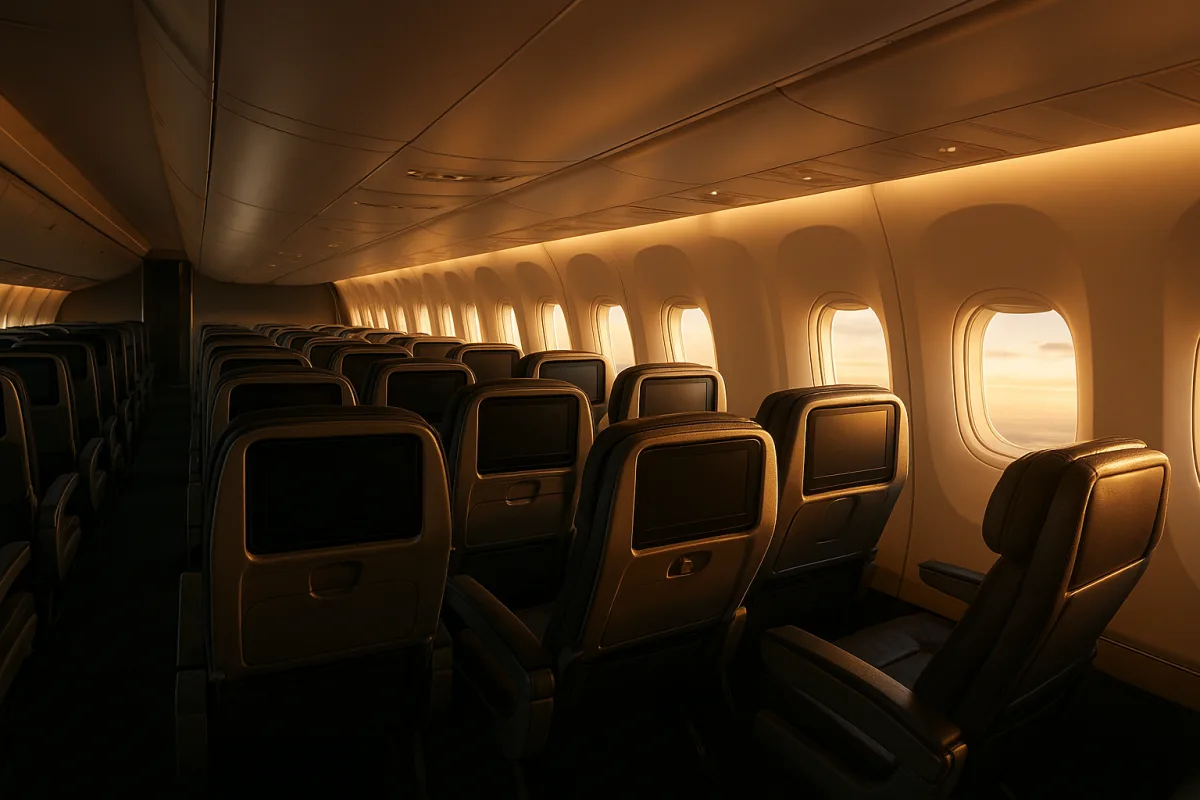
The shift is real, but it is not a return to the old airline model
For much of the last decade, U.S. airlines treated the onboard product as a cost to remove. Screens disappeared, coach catering narrowed, and passengers were directed toward their own phones, headphones and credit cards.
That approach is changing. The evidence is not one airline unveiling an expensive new suite, it is several carriers improving different parts of the same journey: American is adding coach snacks and restoring screens, Delta is rebuilding business-class service, and United and Alaska are putting screens into newer aircraft.
CN Traveler reports that United has been fitting screens across its fleet since 2022, including 13-inch economy displays on new Boeing 787-9s. Alaska, historically a bring-your-own-device airline, introduced its first seatback screens on Dreamliners entering long-haul service from Seattle.
American’s decision is the clearest reversal. Its plan covers more than 800 narrowbody aircraft, with new deliveries beginning in 2028 and retrofits continuing into the early 2030s. Every seat is due to receive a 4K screen, along with USB-C charging and Bluetooth connectivity. [9]
This is not generosity. Airlines are competing harder for passengers who can choose between a basic fare, extra-legroom economy, domestic first class, or an international business-class ticket. A better standard cabin helps sell the higher tiers.
It also reflects an awkward fact about the supposedly phone-first cabin. Personal-device entertainment depends on working Wi-Fi, a charged battery, an app that behaves, and enough bandwidth for everybody else trying to do the same thing.
Why screens are coming back
CN Traveler cites JD Power research finding that seatback screens add 60 to 90 points to airline satisfaction scores measured on a 1,000-point scale. That is a substantial gain for an amenity airlines once considered expendable.
The practical case is straightforward on a six-hour transatlantic flight or a domestic crossing from New York to Los Angeles. A screen works from pushback, does not consume your phone battery, and is not affected by whether you remembered a charging cable.
Wireless entertainment has improved, but the connectivity it relies on remains inconsistent. The Points Guy reports that rising demand for onboard streaming can slow connections and cause outages, even as airlines move toward newer satellite-based systems. [1]
The problems are particularly visible on some long Pacific routes. Aviospace reports satellite-capacity constraints affecting United’s Wi-Fi on services including San Francisco to Singapore and Los Angeles to Hong Kong. [2]
That does not mean all airline Wi-Fi is poor, or that every Pacific flight has the same issue. It does mean a carrier cannot reliably present Wi-Fi streaming as a complete replacement for built-in entertainment across its network.
The commercial logic has shifted, too. Modern screens can receive content wirelessly from an onboard server, reducing some of the wiring and installation complexity that made older systems expensive. They also create advertising and retail opportunities.
American has not published what its fleetwide screen installation, maintenance or content programme will cost. That is worth stating because a multi-year retrofit across 800-plus aircraft sounds precise, but its financial implications remain undisclosed. [9]
For trip planning, the timeline matters more than the announcement. A passenger flying American domestically in 2026 or 2027 should still assume personal-device entertainment on most narrowbodies, not a Delta-style screen at every seat.
American is also putting attention back into coach
American’s more immediate change is smaller: from early October 2026, it is adding complimentary Goldfish crackers, Tate’s Bake Shop chocolate-chip cookies and Peterson’s snack mix alongside Biscoff cookies in Main Cabin. [9]
It is not a meal service, and it will not make a short flight feel premium. But a recognisable sweet or savoury snack is more useful than another unbranded pretzel packet, particularly when an irregular operation turns a two-hour trip into four.
American already gives complimentary snacks and non-alcoholic drinks in coach on flights longer than 250 miles. The revised selection is therefore an upgrade in choice rather than a newly free service. Passenger response and operational effects are not yet known.
There is a bigger gap on flights where people reasonably expect food. View from the Wing notes that American’s buy-on-board food is generally limited to selected flights over 1,100 miles, with limited stock and no Main Cabin preorder option.
That can create odd outcomes. A delayed Charlotte to Austin service may take around three hours gate to gate, yet its 1,032-mile distance can leave passengers without a substantial item for sale, never mind included food.
Alaska sets a more practical benchmark by offering food on most services over 775 miles and permitting advance reservations, according to View from the Wing. American’s new free snacks improve the baseline, but they do not solve the meal-availability problem.
For travellers booking their own itineraries, this is a reminder to distinguish snacks from food. On American, bring a sandwich for a late-afternoon domestic flight unless the booking flow specifically shows a meal available for purchase.
Delta is aiming at consistency, not just a prettier tray
At the front of the plane, Delta is preparing its most comprehensive Delta One service revision in years. Flight-attendant training begins in late August, with a rollout on long-haul departures from Los Angeles this autumn and a wider expansion in 2027. [8]
The programme combines revised meal presentation, serviceware, amenities and service sequencing. Delta has already been changing individual elements, including Spanish-influenced menus developed with chef José Andrés and seasonal menu revisions introduced from November 2025. [8]
Businessclass reports that Delta One’s updated serviceware includes Alessi pieces such as wine caddies and silver baskets. Those details matter less than the operational intent: a more coherent meal service, delivered in the same way by crews across routes. [7]
That is where premium airlines often fail. A glossy menu does not help much if a passenger gets a rushed tray immediately after takeoff when they hoped to sleep, or waits through a long service when they need to work.
View from the Wing’s reporting describes the testing as taking more than a year across Airbus A330s, A350s and Boeing 767s. Delta trialled the service on domestic and international flights of varying lengths before moving to formal training.
The catch is that service upgrades cannot fully disguise a weak seat. Delta’s A350-900 and A330-900neo suites are competitive, but its older A330s and Boeing 767-300s remain materially less appealing on overnight routes.
Delta expects its Airbus A350-1000 deliveries from early 2027 to introduce another Delta One suite, while A330-200 and A330-300 refits are due to add doors. The airline says 90 percent of widebody business seats should have doors by 2030. [8]
That leaves a long transition. If paying cash for Delta One, check the aircraft rather than relying on the cabin label. A strong meal and new bedding improve the flight, but a dated 767 seat can still be a poor use of a four-figure fare.
There is also a fare distinction coming. From January 19, 2027, Delta’s Basic Business fares will not include ticket-based Delta One lounge or dedicated check-in access, even as the airline improves the onboard product.
Route growth is more cautious than the headlines suggest
New routes are another part of the premium push, but this is where travellers should separate confirmed schedules from clever airline marketing. American has confirmed a daily seasonal Philadelphia to Porto service for summer 2027 on the Airbus A321XLR. [4]
The aircraft will have 155 seats, a layout that makes thinner European markets possible without filling a widebody. For a traveller, that can mean a direct flight to a city previously reached through London, Madrid or another major hub. [4]
Philadelphia to Vienna and Philadelphia to Reykjavik are widely expected next. FlyMag and View from the Wing have interpreted American’s promotional clues, network patterns and route-distance references as signals pointing to both destinations. [4]
Neither route was officially announced as of August 27, 2026. Do not build a non-refundable Austrian rail itinerary or Iceland car-hire plan around a flight that has not appeared in American’s booking system.
Vienna would fit American’s effort to use Philadelphia as a central European gateway, alongside Budapest and Prague. Reykjavik would also make strategic sense as a seasonal leisure route, and American has flown Philadelphia-linked Iceland service in the past.
But plausibility is not confirmation. American has also postponed planned Tel Aviv and Doha services until 2027, according to Business Traveller, showing that aircraft availability and operational priorities can alter even previously public network plans. [5]
The carrier has also suspended six domestic routes between August and October 2026 amid fuel-cost and operational pressures, Mighty Travels reports. [6] That does not disprove Vienna or Reykjavik, but it argues against assuming uninterrupted expansion.
American’s reported widebody shopping reinforces the point. View from the Wing says the airline is considering future long-haul aircraft while an American pilot participated in Boeing 777-9 flying. That is suggestive, not evidence of an order.
Boeing expects first 777-9 delivery in 2027 after a lengthy certification delay, and no U.S. airline has ordered the type. Any American decision would concern its 2030s fleet, not the next summer timetable.
What to do with these changes when booking
For a transatlantic trip in the next 12 months, select the actual aircraft and itinerary before assigning much value to an airline’s future product announcement. A new route or a new brand standard may not reach your specific flight.
If entertainment matters, Delta remains the safer U.S. choice for a reliable built-in screen, while United’s newer aircraft are increasingly well equipped. On American, bring downloaded films until its narrowbody retrofit begins appearing in meaningful numbers. [9]
If food matters, American’s October snack update is welcome but modest. On flights around two to four hours, especially those departing after normal meal times, pack food rather than betting on buy-on-board stock.
For business-class bookings, Delta’s Los Angeles long-haul flights are the first ones likely to receive the revised Delta One service. Compare fares carefully, because a lower Basic Business fare may no longer include lounge access from January 2027.
Finally, watch Philadelphia for summer 2027 but keep plans flexible. Porto is the route to monitor and eventually book once schedules open. Vienna and Reykjavik are sensible possibilities, yet they remain industry inference until American publishes dates, fares and aircraft.
Frequently Asked Questions
What new airline service enhancements are planned for 2026?
In 2026, American Airlines will restore free coach snacks including Goldfish crackers and cookies starting in early October. Delta is standardizing its premium-cabin service from Los Angeles on long-haul flights beginning this autumn. These changes reflect a broader trend of U.S. airlines improving onboard amenities after years of reductions.
When will American Airlines install seatback screens on narrowbody planes?
American Airlines plans to begin installing 4K seatback screens on more than 800 narrowbody aircraft starting with new deliveries in 2028. Retrofits of existing planes will continue into the early 2030s. No screens are expected fleetwide before then, so passengers flying American in 2026 or 2027 should still expect personal-device entertainment on most narrowbodies.
How is Delta improving its premium cabin service in 2026?
Delta is launching a refreshed business-class service for Delta One passengers departing Los Angeles on long-haul flights starting this autumn. However, the quality of the cabin experience will still vary depending on the aircraft type used for the flight.
Why are airlines bringing back seatback screens instead of streaming only?
Seatback screens provide a more reliable entertainment option on long flights because they do not depend on Wi-Fi connectivity, phone battery life, or passengers having the right apps. Wi-Fi streaming can be inconsistent due to bandwidth congestion and satellite capacity limits, especially on long Pacific routes. Additionally, modern seatback screens can receive content wirelessly from onboard servers, making installation less complex and offering advertising and retail opportunities.
What new flight routes are expected from American Airlines in 2027?
American Airlines has confirmed a new daily seasonal route from Philadelphia to Porto starting in summer 2027. Routes from Philadelphia to Vienna and Reykjavik have been suggested by industry analysis but have not been officially announced by the airline. These unconfirmed routes should be treated as plausible but not bookable at this time.
How we researched this
This article was assembled from 5 published articles, 9 cited references.
Nothing here is based on hands-on testing. Where a figure or finding appears, it belongs to the source cited beside it, and the writing says so rather than implying otherwise. Every source is listed below so you can check it.
Sources
The Triumphant Return of the Airline Seatback Screen — CN Traveler
American Airlines Test Pilot Flies Boeing 777X And Calls It “AAmazing”—Could A Flagship Order Be Next? — View from the Wing
Delta’s Business Class Overhaul Starts This Fall—New Meals, Serviceware And Crew Training At LAX — View from the Wing
American Airlines Adds Free Tate’s Cookies And Goldfish In Coach—A Small Upgrade Most Passengers Will Actually See — View from the Wing
American Airlines Will Announce New Flights From Philadelphia to Vienna And Reykjavik Tomorrow — View from the Wing
The 'fast, free' inflight Wi-Fi rollout hits a speedbump - The Points Guy
T-Mobile Ends Free In-Flight Wi-Fi on American and United Airlines – Archyde
American's Menu Points to Five Summer 2027 Routes - FlyMag.com
American Airlines Keeps Tel Aviv and Doha Off the Map Until 2027 - Business Traveller
Delta to Launch Refreshed Business Class Service This Fall — destination.com - destination.com
Related Articles
Airline Innovations 2026: Enhancing Passenger Experience
Explore airline innovations in 2026 improving passenger experience, from automatic check-in to biometric travel and better disruption handling.

New International Flight Routes 2027
Explore United's and Delta's new international flight routes in 2027, including nonstop Newark and JFK service to Sardinia and Sicily.
Alaska Airlines Premium Upgrades: Reserve vs Aurora Suites
Explore Alaska Airlines Premium Upgrades, comparing Premium Reserve and Aurora Suites to help choose the best option for your trip.
New Airline Routes and Travel Credit Card Updates for 2026
Explore new airline routes and travel credit card updates for 2026 to find the best options for flights and rewards.