
Italy Travel Itinerary: Food, Cities, and Getting Around
Discover Italy travel itinerary tips comparing Cagliari and Pisa, regional foods, city highlights, and budget-friendly logistics.
The decision: Cagliari or Pisa after Rome?
For travellers building a first Italy itinerary, Pisa and Cagliari solve very different problems. Pisa is the efficient Tuscan landmark stop. Cagliari is a city break with enough food, archaeology and local routine to occupy two days without stretching.
The honest comparison is not especially close if you have two nights available. Cagliari wins. It gives you a distinct regional kitchen, a functioning daily market and a compact old town. Pisa wins only when time is short, Tuscany is already on the route, and seeing the tower is non-negotiable.
That does not make Pisa a bad destination. Wolters World makes the useful point that visitors should look beyond the famous tower to the cathedral, baptistery, Camposanto and the walk along the Arno. It is just not a city that most independent travellers need to schedule for three days.
Cagliari versus Pisa, head to head
| Criterion | Cagliari, Sardinia | Pisa, Tuscany | Better choice |
|---|---|---|---|
| Best length of stay | Two nights, ideally three if adding beaches or inland Sardinia | A long day trip or one night | Cagliari |
| Core sight | Castello, the National Archaeological Museum and the Bastion of Saint Remy | Piazza dei Miracoli, especially the Leaning Tower, cathedral and baptistery | Depends on priorities |
| Food identity | Sardinian pecorino, bottarga, culurgiones, fregola, malloreddus and porceddu | Seafood risotto, spaghetti with clams, cecina and cantuccini with vin santo | Cagliari |
| Costs cited in the sources | Mains at a Castello restaurant run about $15 to $25, according to Exotic Vacation | Leaning Tower admission is €20 for adults | Pisa for a short visit |
| Crowds | A working city with a local market, although Castello is a visitor area | Heavy tour-group pressure around the Tower, especially in summer | Cagliari |
| Logistics | A walkable centre, with free lifts helping link lower Cagliari and Castello | Straightforward rail stop from Florence, then walk through Corso Italia | Pisa |
| What it does badly | Requires a separate Sardinia flight or ferry plan, so it is inefficient as a quick mainland add-on | Restaurants beside the Tower can charge more for weaker food | Cagliari |
| Best traveller | Repeat Italy visitor, food-led traveller, or anyone giving Sardinia proper time | First-time visitor based in Florence who wants an iconic sight efficiently | Depends on itinerary |
1. Time: Pisa is the efficient stop, Cagliari earns the overnight
Pisa fits neatly into a Florence itinerary. Wolters World recommends walking straight from Pisa Centrale along Corso Italia to the Arno, rather than treating the route as station, Tower, station. That adds Palazzo Blu, the Museo di San Matteo and riverfront architecture to an otherwise narrow visit.
Still, the basic Pisa calculation remains simple. See Piazza dei Miracoli, climb the tower if that matters, enter the baptistery and cathedral, then have lunch well outside the landmark zone. One night is useful only if you want an early or late visit without Florence day-trip crowds.
Cagliari needs more commitment because Sardinia is not a casual detour between Rome, Florence and Venice. In return, it feels like a destination rather than a photo stop. The itinerary presented by Exotic Vacation sensibly combines market browsing, the archaeological museum, Castello and dinner in one walkable day.
Give Cagliari two nights. Use the first full day for the old city and museum, then reserve the second for the waterfront, Poetto beach or a slower eating day. One night is possible, but it means arriving, climbing uphill and leaving before the city’s food culture has much chance to register.
2. Sights: Pisa has one great ensemble, Cagliari has a fuller story
Pisa’s central monument complex is unusually coherent. The Tower is the obvious draw, but Wolters World singles out the baptistery as the most visually rewarding building and recommends the Camposanto for its frescoes. That is enough for a satisfying half-day if you do not rush.
Book the tower before setting travel dates. Adult admission is €20, entry is timed, tickets are non-refundable and non-transferable, and booking opens 90 days in advance. Children under eight cannot climb, while visitors aged eight to 17 need an accompanying adult and pay the full adult price. [2]
For September 1 through October 2, 2026, published Tower hours are 9am to 8pm Monday through Thursday and 9am to 10pm Friday through Sunday, with final admission 30 minutes before closing. Recheck before travelling, but those late weekend slots are useful for avoiding midday heat. [2]
Cagliari’s main strength is that its sights explain Sardinia, not merely the city. The National Archaeological Museum holds material from the Nuragic civilisation, including the Giants of Mont’e Prama, monumental stone figures dating back nearly 3,000 years, according to Exotic Vacation.
Castello, the fortified hilltop quarter built by the Pisans, is the connective tissue between those sights. Free glass lifts on the outer walls reduce the uphill work, and the Bastion of Saint Remy has a free terrace overlooking the Marina district and gulf. Exotic Vacation recommends late afternoon, which is practical as well as scenic.
Cagliari wins this round because its museum, hilltop streets and viewpoints form a complete day. Pisa remains the sharper choice for a traveller who wants a famous sight and does not need much interpretive depth around it.
3. Food: eat the region, not generic “Italian”
The useful rule for Italy is that food changes with the region, and orders work better when they follow local conventions. The Tour Guy’s food guide stresses that Roman pasta, Neapolitan pizza and Bolognese ragù are not interchangeable versions of one national menu.
In Naples, start with a margherita, tomato, mozzarella and basil, and a panino napoletano with cured meat, cheese and egg. The Tour Guy points to L’Antica Pizzeria da Michele, founded in 1870, as a classic example of the city’s pared-back pizza tradition.
Meal times matter in Naples. Lunch commonly starts around 1:30pm, while dinner may begin at 7:30pm at pizzerias and later in Vomero. Tipping is modest, usually a €0.50 to €1 rounding-up at a pizzeria or €2 to €3 in a trattoria. [4]
Rome is where to order the four classic pastas properly: carbonara, cacio e pepe, amatriciana and alla gricia. The Tour Guy describes amatriciana as tomato, guanciale and Pecorino Romano, while carbonara relies on egg, pecorino and guanciale rather than cream.
Bologna is the stop for tagliatelle al ragù, not “spaghetti bolognese,” plus mortadella and tortellini in broth. The Tour Guy also highlights the Quadrilatero market streets and regional combinations such as Parmigiano Reggiano with Modena balsamic, including in gelato.
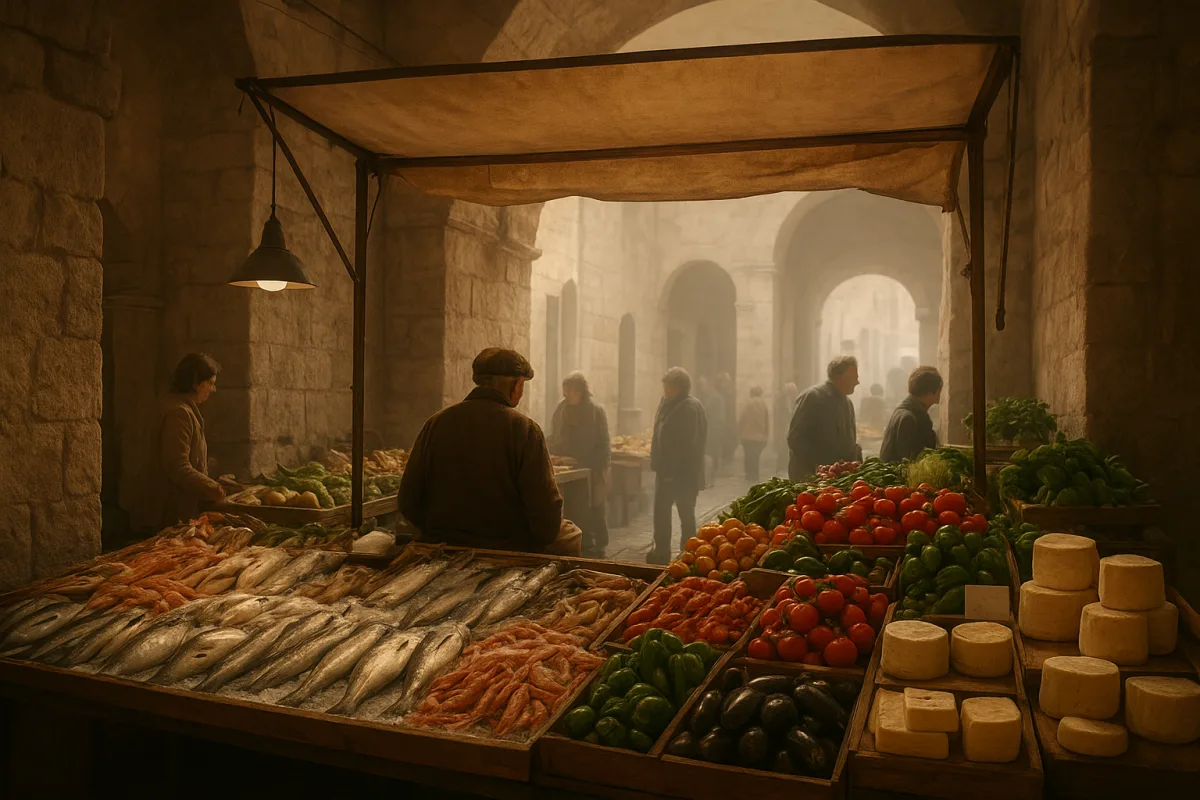
Cagliari offers the most different food experience of the two cities being compared. At its temporary market site in Piazza Nazzari, San Benedetto Market’s vendors continue to sell fish, Sardinian cheeses, cured meats and bottarga during renovation works. The market has been relocated since March 2025 and is expected to return in 2027. [3]
Go early. Officially reported hours are 7am to 2pm Monday to Friday and 7am to 3pm Saturday, with Sunday closure. [3] The market is a better breakfast-and-provisions stop than a formal meal, particularly if you are planning a picnic or buying edible souvenirs.
For lunch, Exotic Vacation reports $15 to $25 mains at Ristorante Pani e Casu in Castello, including culurgiones, hand-braided pasta filled with potato, pecorino and mint, and fregola with seafood. That price is for the main dish, not a complete lunch with drinks, coperto or dessert.
At dinner, the same channel recommends Sa Domu Sarda, a Michelin Guide-listed osteria on Via Sassari, for culurgiones, malloreddus alla Campidanese and porceddu, Sardinia’s slow-roasted suckling pig. Finish with seadas, fried cheese-filled pastry served with honey.
Pisa can eat well, but it requires walking away from the Tower. Wolters World warns that restaurants with a direct tower view tend to cost more and may deliver poorer food. Look for seafood risotto, spaghetti with clams, stockfish stew and cecina, Tuscany’s chickpea flatbread.
Cantuccini and vin santo are Pisa’s easy dessert order. The almond biscuits are intentionally dry and traditionally dunked in sweet dessert wine. Pisa dining usually follows a 1pm to 3pm lunch window and dinner after 8pm, while coperto is normally listed on the menu. [5]
Cagliari wins the food round because the local ingredients are more distinct and the market gives the city a daily rhythm. Pisa’s food is worthwhile, but it is not enough reason on its own to choose Pisa over Florence, Lucca or the Tuscan coast.
4. Rome: where to stay for an authentic base
Rome is where accommodation can determine the shape and cost of the trip more than travellers expect. Cobblestones, heat and limited metro coverage make a supposedly central hotel less convenient than a map suggests. Rome has only three metro lines, so buses and trams matter, and both can be delayed by traffic. [1]
For an authentic-feeling base, choose Monti over sleeping directly on the Piazza Navona and Campo de’ Fiori circuit. The Tour Guy describes Monti as close to the Colosseum and Forum, with wine bars, coffee shops and smaller restaurants, but without constant landmark crowds.
The practical sweet spot is near Via Cavour for Metro B and Termini connections, or around Piazza della Madonna dei Monti for more neighbourhood atmosphere. Expect Monti three-star rooms around €150 to €230, and boutique rooms around €200 to €320, according to 2026 accommodation research. [1]
Monti’s weakness is terrain. A hotel high on the slope becomes tiresome with wheeled luggage, small children or an August afternoon. It also is not the choice for grand-hotel facilities, large lobbies and rooftop-service luxury, as The Tour Guy plainly notes.
Trastevere is the alternative for travellers who prioritise evenings over transport. The Tour Guy recommends its northern edge near the bridges, avoiding the loud Piazza di Santa Maria nightlife core. It has restaurants and bars on the doorstep, but no convenient metro station and more awkward taxi access.
The distinction matters for sleep. Research flags Trastevere for nightlife noise, while Prati and San Saba are generally quieter. [1] Pickpocketing risks are concentrated around Termini, Metro Line A, the Colosseum and Trevi Fountain, not uniformly across every residential district. [1]
For travellers willing to sacrifice atmosphere for ease, Prati is the sensible fallback. It has wider sidewalks, easier taxis and Metro Line A access from Ottaviano and Lepanto. The Tour Guy estimates roughly a 10-minute walk from Ottaviano to the Vatican Museums entrance.
Centro Storico remains the easiest first-time Rome base, but it carries the premium. Reported Centro Storico rates range from €120 to €350 nightly, with three-star hotels around €130 to €200 and four- and five-star options commonly €250 to €600 or more. [1]
Who each option suits
Choose Cagliari if you have at least two nights, enjoy markets and regional food, or want Italy beyond the standard mainland circuit. It particularly suits travellers who will fly specifically to Sardinia and want a compact city that makes the island’s history intelligible.
Choose Pisa if you are already staying in Florence, have one free day, or want the Leaning Tower without turning it into an overly ambitious city break. Book the climb early, arrive outside peak midday hours, and eat away from Piazza dei Miracoli.
Stay in Monti in Rome if “authentic” means local-scale restaurants, walkable ancient sights and an active evening without Trastevere’s heaviest nightlife. Stay in Trastevere if late dinners and bar-hopping matter more than metro access and quiet streets.
Frequently Asked Questions
What is the best itinerary for visiting Cagliari and Pisa in Italy?
For Cagliari, plan two nights to explore the old city, the National Archaeological Museum, the Castello district, and enjoy local food and markets. Pisa suits a long day trip or one night if the Leaning Tower is your priority, including visits to the cathedral, baptistery, and Camposanto.
How many days should I spend in Cagliari versus Pisa?
Cagliari deserves two nights to fully experience its food culture, archaeology, and local life, with a possible third day for beaches or inland excursions. Pisa is best for a long day trip or one night, especially if you want to avoid crowds and visit the Tower early or late.
What regional foods should I try in Sardinia and Tuscany?
In Sardinia (Cagliari), try pecorino cheese, bottarga, culurgiones (stuffed pasta), fregola, malloreddus, and porceddu (roast suckling pig). In Tuscany (Pisa), regional specialties include seafood risotto, spaghetti with clams, cecina (chickpea flatbread), and cantuccini biscuits with vin santo wine.
What are the cost differences between visiting Cagliari and Pisa?
In Cagliari, expect to pay around €15 to €25 for a main Sardinian dish at a Castello restaurant. Pisa’s main cost is the Leaning Tower admission, which is €20 per adult, while meals near the Tower tend to be more expensive and lower quality; better-value lunches are found away from the landmark area.
How do I plan logistics for traveling between Rome, Pisa, and Cagliari?
Pisa is easily reached by train from Florence and is walkable from Pisa Centrale station. Cagliari requires a separate flight or ferry from the Italian mainland, making it less efficient as a quick add-on to a Rome-Florence-Venice itinerary. In Rome, staying in neighborhoods like Monti offers a more authentic experience than the Centro Storico.
How we researched this
This article was assembled from 4 video sources across 3 channels, 6 cited references.
Nothing here is based on hands-on testing. Where a figure or finding appears, it belongs to the source cited beside it, and the writing says so rather than implying otherwise. Every source is listed below so you can check it.
Sources
Best Places to Stay in Rome Italy: The Ultimate Neighborhood Guide — the tour guy
The DON’Ts of Visiting Pisa, Italy — Wolters World
What to Eat in Italy: Best Foods and Where to Try Them — the tour guy
How to Spend 1 Day in CAGLIARI Italy | The Perfect Itinerary — Exotic Vacation
What are the best Leaning Tower of Pisa tickets and combo deals?
San Benedetto Market Cagliari | Complete Guide & Food Experience | Le Strade del Gusto
The Naples Dining Guide 2026: Best Restaurants & Food Culture
Watch Italy Travel: Food, Cities, and Itineraries on Youtube
Also from the sources
Related Articles
Culinary Travel Italy and Thailand: Food, Budgets & Tips
Explore culinary travel in Italy and Thailand with regional dishes, budgets, and dining tips for authentic food experiences.
Travel Tips and Guides for Armenia and Indonesia
Get practical travel tips and guides for Armenia and Indonesia covering itineraries, budgets, visas, and transport advice for a smooth trip.
Portugal Day Trips from Lisbon: Highlights, Costs & Tips
Discover top Portugal day trips from Lisbon with costs, transport, and highlights for Évora, Sintra, and more. Plan your perfect day trip easily.
Underrated Travel Destinations Logistics and Budget Tips
Explore underrated travel destinations in 2026 with practical logistics, budget advice, and transport tips for a smooth trip.