
Tourist Theft Prevention Tips for Popular Travel Destinations
Learn practical tourist theft prevention tips to stay safe and protect valuables in popular travel destinations.
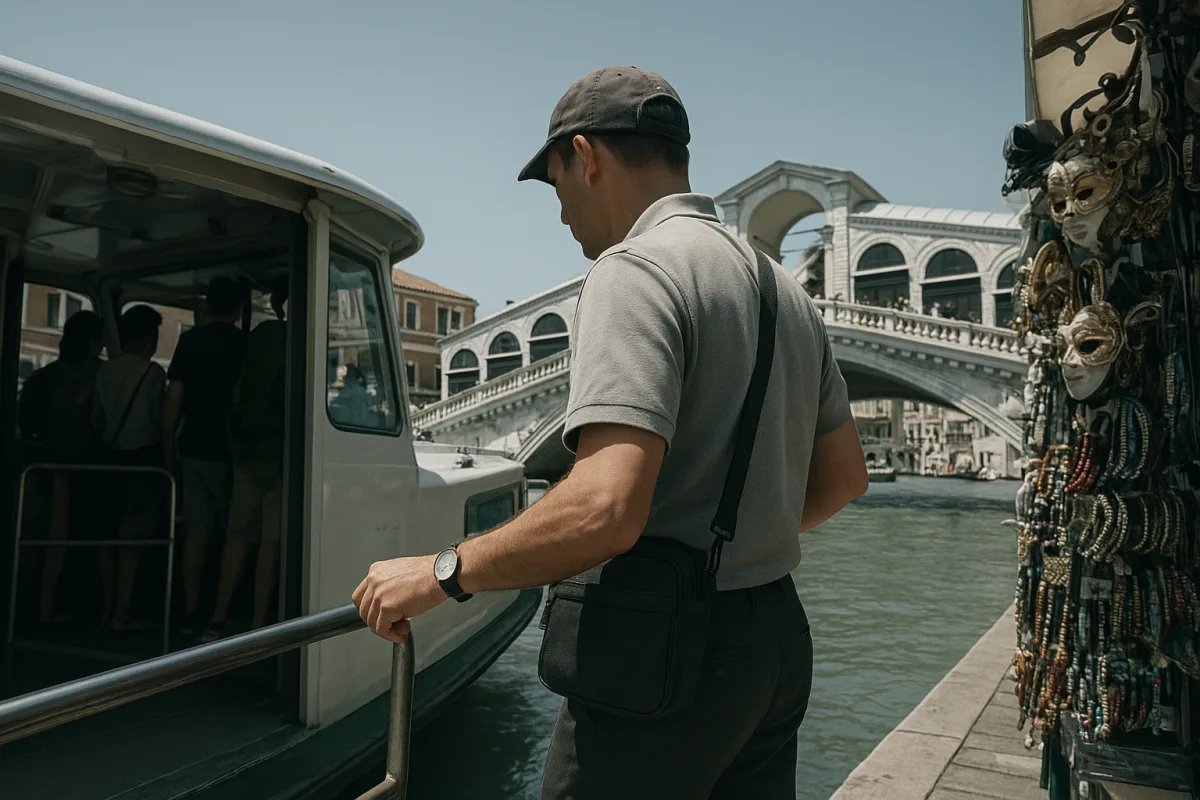
The exposure window is what thieves use
The vaporetto boarding line at Venice’s Rialto stop is a classic exposure window. You are watching the narrow gangway, holding a phone or bag, checking whether you will make the boat, and briefly not feeling where your wallet is.
Most tourist theft depends on that short gap between attention and control. A thief needs a visible target, physical access, and a distraction, whether that is a crowd, a friendly approach, a staged argument, or the pressure of an unexpected bill.
The same structure explains a stolen phone in a water-bus queue and a high-value watch taken during a hotel-room dispute in Pattaya. The values differ dramatically, but the traveler loses when access and distraction overlap.
We would plan around reducing those windows, not around trying to look tough or suspicious of everyone. Keep valuables out of sight, keep interactions brief, and know the real price before agreeing to a ride, tour, drink, or souvenir.
Venice crowds create access
Venice concentrates visitors along a few bottlenecks: Piazza San Marco, the Rialto Bridge, the walk between Santa Lucia station and St. Mark’s Square, and vaporetto lines 1 and 2. Pickpockets favor these crowded places because bodies press close together and tourists are looking elsewhere.[3]
Wolters World specifically flags the moment of getting onto a vaporetto. The risk is not only while aboard, but while you are balancing luggage, minding the water, and waiting for the gate to open.
Put a wallet in a front pocket or money belt before leaving your hotel, as Wolters World advises. A crossbody bag should stay zipped and in front of your body in a crowd, not swinging behind one shoulder where a zipper can be opened unseen.
Leave backup cards, spare cash, and documents you will not use that day at your accommodation. Wolters World recommends leaving passports in the hotel safe, though the Pattaya case below is a reminder that a hotel room is not a guarantee against theft.
Do not hand your phone to a stranger offering to photograph you on the Rialto. If you want the picture, ask another visitor who is already taking photos nearby, then put the phone away before moving through the crowd again.
The point is to make a theft take longer and look harder. A pickpocket wants the wallet that can be lifted in seconds, not a bag held against your chest while you maintain a hand over its zipper.
Distraction scams manufacture urgency
The bracelet approach works because it begins as a social exchange, not a robbery. A stranger calls you “my friend,” asks where you are from, ties a bracelet on your wrist, then demands money after creating the impression that you accepted a gift.
Reports in Venice put demands in the friendship-bracelet scam at €20 or more.[2] Do not accept the bracelet to be polite, do not debate its price, and do not reach for your wallet in front of the person demanding payment.
Walk away without engaging. That can feel rude for ten seconds, but it is cheaper than letting a stranger control both your attention and the location of your cash.
Fake petitions use a similar sequence. Someone asks you to sign or donate while an accomplice may target your pocket or bag, so decline without stopping and keep walking.[2]
Wolters World also warns about roses and other apparently free items. The item is less important than the forced interaction, which gives the seller an excuse to block your path, insist on payment, or embarrass you into handing over money.
Costumed performers around Venice can create a milder version of this surprise. Outside Carnival, a person posing in elaborate dress may expect a tip when you photograph them, Wolters World says, so ask first or take a distant street photo instead.
A QR code can be the new crowd
A printed QR code on a restaurant table, parking machine, or ticket device looks harmless because it does not involve a person standing close to you. It can still create an exposure window by sending you to a fraudulent payment page designed to collect card details.[3]
Use the official transit or attraction website you found independently, not a code pasted over a sign. Check the web address before entering card details, and avoid an accommodation listing unless you can verify the property through its established site or reputable booking platform.
Fake accommodation listings and cloned hotel websites reportedly increased in Venice during summer 2026.[3] The arrival date is when this scam becomes expensive: you may have paid in advance and still be standing outside a hotel with no room.
Artificial intelligence and stolen personal data are making travel scams harder to recognize, according to the Associated Press.[1] A polished confirmation email, familiar logo, or convincing customer-service message is no longer proof that you are dealing with the real business.
Save bookings, rail tickets, and hotel contact information offline before departure. If a message says your reservation needs urgent payment, open the company’s known website yourself or call the number already attached to your booking.
Know the difference between expensive and deceptive
A high bill is not automatically a scam. Venice’s cafés commonly charge less for an espresso consumed standing at the bar than for one served at a table, Wolters World notes, because table service is part of what you are buying.
The fix is simple: look at the menu and ask whether the posted price is for banco service or seated service before ordering. Then read the bill before tapping a card, particularly in heavily tourist-oriented areas where unauthorized items or inflated cover charges can appear.[4]
Wolters World recommends checking whether the number of dishes and drinks matches what your group ordered. Raise a specific mistake calmly, such as an extra spritz or duplicate appetizer, before you pay rather than discovering it on a card statement later.
The same approach applies to Murano. Glassblowing is a worthwhile part of a visit, but Wolters World says some free tours give you about 20 minutes of demonstration followed by a long, sales-focused stop in a gift shop.
Take the vaporetto to Murano independently if you want to explore the island and choose where to shop. That costs you transit time, but it prevents a supposedly free excursion from consuming hours and steering you toward a commission-driven purchase.
Souvenir shopping needs the same clarity. My Venice Dream estimates that about 90 percent of purported Murano glass souvenirs are mass-produced imports, so an attractive object does not automatically have the craft value its label suggests.[2]
For masks, a low-cost souvenir can be perfectly fine if you want a light decoration or a photograph. If you want a wearable Venetian mask made in Italy, buy from a specialist mask shop and expect roughly €25 to over €400, depending on materials and handwork.
Examples show the middle of that market: Venice Maschere lists a Ventolina Medium mask at €69 and Bauta masks at €62, while intricate gold-leaf and fabric pieces can run about €180 to €350. Ask where the mask was made, who made it, and whether it is intended to be worn.
Pattaya shows how value changes the stakes
On November 7, a Chinese tourist reported that his passport and diamond-set Patek Philippe PP5719G were taken from room 309 of Pattaya’s Z8 Hotel. Police arrested two suspects early on November 8 and recovered the watch, Bangkok Scoop reported.[5]
View from the Wing reported the tourist’s valuation at roughly $600,000, while Bangkok Scoop described it as a 20 million baht watch.[5] View from the Wing also noted that a silver-colored, diamond-set PP5719G can list at $725,000.
According to the police account reported by The Pattaya News, the suspects said they believed the watch was fake and claimed they were owed 2,000 baht, about $60. The tourist said 20,000 baht was demanded for the return of his belongings, and only his passport was returned after payment.[6]
The case ended with an arrest and recovery, but do not make travel plans on the assumption that every stolen luxury item comes back. Published reporting does not establish an overall recovery rate for high-value watches stolen from tourists in Southeast Asia.
It also does not establish what security procedures, if any, prevented or failed to prevent theft at this particular hotel. A room number, hotel brand, or in-room safe should not be treated as a complete security plan for a six-figure object.
We would leave a watch of that value at home for a trip centered on crowded sightseeing, nightlife, or frequent hotel changes. If you bring a valuable watch, photograph it before departure, record its reference and serial numbers, retain proof of ownership, and understand your insurance terms.
Pattaya has other pressure-based tourist disputes. Pattaya.com warns of jet-ski damage claims that can demand 10,000 to 50,000 baht, so photograph equipment before renting and use an established operator where possible.[7]
Reports have also described thefts targeting tourists in Pattaya nightclubs, including allegations involving staff or accomplices.[8] Carry one payment card, avoid displaying cash, and do not leave a phone, wallet, or watch unattended on a table while you dance or use the restroom.
What to do in the first hour after a theft
Start with the items that can cause a second loss. Freeze payment cards through your bank app or issuer, change passwords if your unlocked phone was taken, and contact your mobile carrier to suspend the line.
Then make a written list while details are fresh: time, location, route, description of the person, what was stolen, and any serial number. A precise report helps police, insurers, banks, and an embassy distinguish a theft from an unsupported claim.
Tell hotel staff immediately if the incident occurred on their property, but also report it directly to local police. In Pattaya, Tourist Police can be reached at 1155.[7]
If your passport is missing, contact your embassy or consulate promptly. Keep photographs or scans of your passport identification page, visa, travel insurance, booking confirmations, and watch or electronics serial numbers in secure cloud storage before you leave home.
A theft report may not restore a vacation day, and it may not guarantee recovery. It does reduce the chance that a stolen card, phone, passport, or luxury item turns into a larger financial problem after you have already left the city.
Frequently Asked Questions
What are effective tips to prevent theft while traveling?
Carry only the cash, card, and identification you need for the next few hours and keep valuables out of sight. Avoid distractions by refusing unsolicited items like bracelets or roses from strangers, and keep bags zipped and held in front of you in crowded places. Plan to reduce exposure windows where thieves can act, such as during boarding or photo-taking moments.
How can tourists avoid pickpocketing in crowded destinations?
Stay alert in known hotspots where crowds press close together, such as major squares, bridges, and public transit lines. Use front pockets or money belts for wallets, keep crossbody bags zipped and in front, and avoid handing your phone to strangers for photos. Keep backup cards and documents securely at your accommodation.
What are common scams targeting tourists and how to recognize them?
Common scams include friendship bracelets tied on tourists with subsequent payment demands, fake petitions soliciting signatures or donations, and strangers offering roses or other items to create forced interactions. Also watch for fake QR codes that lead to fraudulent payment sites and cloned hotel websites. Recognize these by declining unsolicited gifts or requests and verifying websites independently.
How should travelers secure their valuables in popular tourist spots?
Keep wallets and valuables in secure, hard-to-reach places like front pockets or zipped bags held close to your body. Avoid displaying luxury items openly, as high-value goods like expensive watches can attract targeted theft. Limit what you carry daily and leave unnecessary cards and documents locked safely at your accommodation.
What should I do if my property is stolen while traveling?
Report the theft immediately to local authorities and preserve any receipts and identifying details of the stolen items. If in Thailand, travelers can contact Pattaya Tourist Police at 1155 for assistance. Prompt reporting improves the chances of recovery and helps with insurance claims.
How we researched this
This article was assembled from 1 video source, 1 published article, 8 cited references.
Nothing here is based on hands-on testing. Where a figure or finding appears, it belongs to the source cited beside it, and the writing says so rather than implying otherwise. Every source is listed below so you can check it.
Sources
Venice Pickpockets & Tourist Scams - What Can You Do?, Wolters World
Trans Thai Women Stole Tourist’s $600,000 Watch Over $60 Dispute, They ‘Thought It Was Fake’, View from the Wing
Travel scams are getting harder to spot. Here's how to stay safe
Is Venice Safe? Travel Tips & Safety 2026: Pickpockets & Scams
Russian tourists have become victims of a series of thefts in Pattaya nightclubs. | Report.in.th
Watch Travel Safety and Theft Incidents in Popular Tourist Destinations on Youtube
Related Articles
Travel Dos and Don'ts in European Cities: Essential Tips
Discover essential travel dos and don'ts in European cities, including budgeting, safety, and booking tips for a smooth trip.

Travel Tips and Warnings for Popular US Destinations
Get practical travel tips and warnings for popular US destinations like Chicago and the Smoky Mountains to plan safer, smoother trips.

Off-Grid Travel Experiences: Cultural and Practical Insights
Explore off-grid travel experiences with tips on tent living, boat living, and visiting unique cultural communities.
Tepito Travel Safety: Avoid Scams and Stay Secure in 2026
Learn Tepito travel safety tips, how to avoid scams, and navigate Mexico City's market risks for a safer visit in 2026.