
Tepito Travel Safety: Avoid Scams and Stay Secure in 2026
Learn Tepito travel safety tips, how to avoid scams, and navigate Mexico City's market risks for a safer visit in 2026.
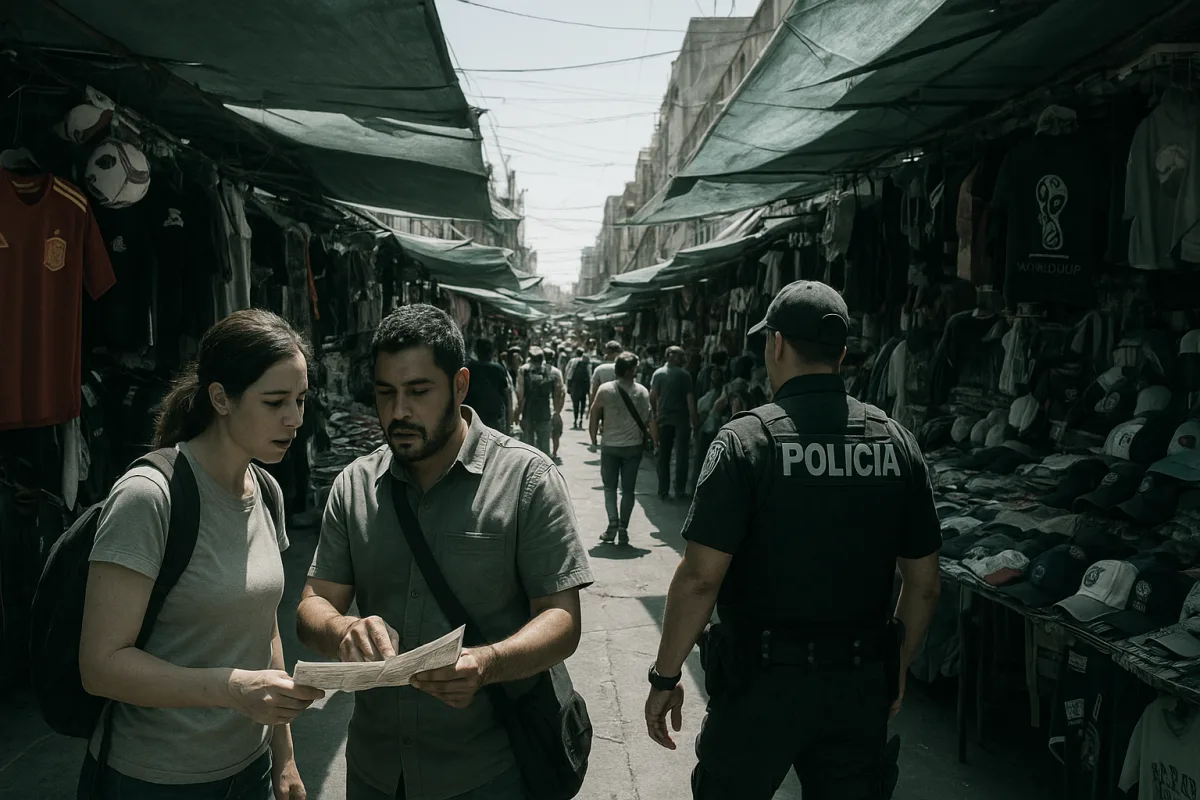
The Tepito bargain is a system, not a shopping tip
Tepito is often described as Mexico City’s market of impossibly cheap trainers, clothes, electronics and imported goods. That description is not wrong, but it skips the question a visitor should ask first: cheap compared with what, and why?
The useful safety concept here is not simply “avoid scams.” It is the counterfeit bargain system, a market arrangement in which the apparent saving can depend on informal supply chains, imitation branding, weak consumer protection and, in parts of the area, criminal control.
A traveller can knowingly buy an unbranded T-shirt for a few pesos without necessarily being deceived. The risk changes when a stall presents a fake as genuine, when the item has no meaningful return route, or when the transaction draws attention in a crowded market.
Tepito is not one uniform street market. It is a densely built neighbourhood north of Centro Histórico, with formal shops, informal stalls, homes, food businesses, religious sites and a long boxing tradition alongside a reputation for illicit trade.
The Drew Binsky channel’s walk through Tepito captures that contradiction. It shows busy clothing stalls and residents going about ordinary routines, but the filming party also relies on a locally connected escort and repeatedly discusses the danger of filming without permission.
That is not a normal tourist-shopping setup. A large, conspicuous video crew with local contacts operates differently from a solo visitor carrying a daypack, phone and passport. The video should not be read as evidence that a visitor can recreate its route safely.
What the price is really telling you
A counterfeit market works because the seller avoids costs that a legitimate retailer must carry. There is no authorised distributor, no verified chain of custody, no manufacturer warranty and often no reliable way to exchange a defective item.
The product may also be imitation rather than stolen, and quality can vary sharply. A convincing-looking branded cap may be adequate as a cheap cap. It is not equivalent to an authentic product, regardless of the logo stitched on it.
That distinction matters because “counterfeit” and “scam” are not identical. If a visitor understands they are buying an imitation at an imitation price, the immediate issue is less about deception than product quality, legal exposure and personal safety.
The scam begins when the buyer is led to believe that an implausibly cheap item is authentic, surplus stock or somehow exempt from the usual retail price. In an informal market, proving otherwise afterwards is practically impossible.
Tepito remains a major Mexican hub for counterfeit merchandise. Reporting cited by Tepito safety guides includes pirated tobacco linked to imports from China, Taiwan, Malaysia and Turkey, as well as unauthorised 2026 FIFA World Cup goods. [3]
Authorities reportedly seized more than 60 tonnes of counterfeit World Cup merchandise in March 2026. [3] That figure is useful because it shows the scale involved. These are not occasional fake football shirts on a blanket outside a museum.
For a traveller, the practical implication is simple: a branded item at a dramatically lower price is not a clever alternative retail channel. It should be assumed to be counterfeit unless there is strong, independently verifiable reason to think otherwise.
Do not ask a vendor whether an item is “real” and then rely on the answer. The question creates an awkward negotiation and does not produce evidence. Decide before entering the market whether you are willing to buy unbranded goods at all.
Who carries the risk when something goes wrong
The buyer is not the only person exposed by this economy. Tepito’s market culture supports many legitimate small traders and draws visitors interested in its cultural identity, often labelled “dark tourism” because of the barrio bravo reputation. [3]
That visitor spending can benefit food stalls, market sellers and guides. Yet it coexists with reported illicit trade and extortion, meaning an outsider cannot reliably tell which seemingly ordinary transaction sits within a vulnerable business environment.
Mexico City recorded 727 extortion investigations from January through May 2026, a 21 percent increase from the same period in 2025. La Unión Tepito and allied gangs were identified as principal perpetrators in the research brief. [3]
“Cobro de piso,” commonly translated as floor charge or protection payment, is extortion directed principally at businesses, not a standard tourist fee. A visitor should not assume that every stall is paying it, or try to investigate who is.
The travel relevance is more indirect. A market shaped by intimidation has fewer safe ways to complain, bargain aggressively, challenge a seller or retrieve property. The usual consumer instinct, arguing over a bad purchase, can be a poor calculation.
This is why the best defence is not becoming an amateur fraud investigator. Make low-stakes purchases only, decline pressure, and leave promptly if a conversation changes from selling an item to directing you toward an ATM, side street or private room.
Safety is determined by route, time and visibility
Mexico City’s 2025 homicide rate was approximately 8.5 per 100,000 residents, slightly below the figures cited for Detroit, 8.7, and Baltimore, 9.0. [2] That comparison can correct broad assumptions about the city, but it is weak route-planning advice.
Visitors do not move through an average city. They move through a specific block at a specific hour, sometimes carrying items that make them visibly wealthier than people around them. Tepito’s risks are localised and cannot be averaged away.
The U.S. Department of State places Mexico generally at Level 2, “Exercise Increased Caution,” while assigning Level 4, “Do Not Travel,” to certain states. [1] It does not issue a separate Tepito advisory, which is an absence of granularity, not an endorsement.
Local safety guidance consistently recommends daytime visits, main streets, minimal valuables, trusted ride services and avoiding Tepito after dark. [3] Those are not glamourous precautions, but each reduces one part of the exposure: isolation, visibility or escape difficulty.
For transport, book a recognised ride-hailing service from a clear pickup point outside the market rather than wandering around looking for a vehicle. Confirm the car’s registration plate in the app before entering, and do not announce how much cash you have.
Do not carry a passport in a market unless a particular travel requirement makes it necessary. Bring a payment card and a small amount of walking-around cash, then leave the passport, spare cards and bulk cash secured at your accommodation.
A cross-body bag worn in front is more useful than a loose tote or an open backpack in dense crowds. Keep the phone away when walking, particularly near market bottlenecks, and step into a legitimate café or shop if you need directions.
Photography changes the transaction
Many travellers think of a market photo as harmless documentation. In Tepito, filming can change how people interpret your presence, especially if a camera is pointed at merchandise, faces, entrances or activities that a seller does not want recorded.
Drew Binsky’s Tepito video makes this unusually clear. The presenter’s local contact says that entering calmly is less problematic than filming without permission, and the group’s visibility is managed partly through accompanying locals and security.
The sensible lesson is narrower than “never take photographs in Mexico City.” In Tepito, do not record stalls, people or side streets casually. Ask before photographing a vendor, accept “no” immediately and do not negotiate the answer.
Do not try to document counterfeits, police activity, confrontations or suspected crime. A visitor gains no practical benefit from such footage, while the people around them may interpret it as surveillance, mockery or evidence-gathering.
If a seller or bystander tells you to stop filming, stop. Put the device away, do not debate whether the street is public, and walk back toward a busy main route. Being legally correct, if that were even clear, is not the point.
What a local guide can and cannot buy you
A guide is often recommended for Tepito because the area is confusing, culturally specific and easy to misread. A reputable guide can set expectations, keep a group on established routes and explain which areas are inappropriate for visitors.
That service is not the same thing as protection. The filmed crew in the Drew Binsky report moved with people who had personal ties to the neighbourhood, which cannot be purchased simply by booking the cheapest “dangerous Tepito tour” online.
Before booking, ask where the group meets, how many people are included, whether the route remains on market streets and what happens if conditions change. Avoid an operator whose selling point is access to gangs, weapons or supposedly forbidden locations.
A responsible guide should be willing to say no to a detour, an after-dark visit or a request to photograph people. If the itinerary treats residents and illegal commerce as entertainment, choose a different activity in Mexico City.
Police patrols increased in Tepito by September 2026, following arrests that included more than 50 people linked to gangs during August. [3] Residents and merchants nevertheless remained sceptical that enforcement had reduced violence or organised-crime influence.
That uncertainty is important. A patrol car on a street does not certify the safety of the next block, and a widely publicised arrest does not make an informal market a conventional tourist retail district overnight.
The low-cost alternative that makes sense
If the goal is inexpensive clothing rather than Tepito specifically, choose a market or shopping district where the saving does not require accepting heightened risk and unclear authenticity. The best deal is often a plainly unbranded item with an honest price.
If the goal is to understand Tepito’s history, boxing culture and market life, go in daylight with a clear route, modest expectations and enough time to leave if the atmosphere feels wrong. Do not turn caution into a challenge.
If the goal is an authentic branded product, buy from an authorised retailer. The sticker price is higher because it includes a traceable supply chain, consumer recourse and a realistic chance of a return if the item fails.
Tepito can be culturally significant without being a sensible place to chase bargains. The practical travel skill is recognising that the cheapest visible price is only one cost, and sometimes it is the least important one.
Frequently Asked Questions
Is Tepito safe for tourists in 2026?
Tepito continues to experience high crime rates and gang activity despite increased police presence and arrests in 2026. Visitors face concentrated risks, especially in side streets and after dark, so safety cannot be guaranteed. Daytime visits on busy routes with precautions are advised, but Tepito remains a challenging environment for tourists.
What are common scams in Tepito market?
Common scams include the sale of counterfeit goods presented as genuine, such as fake branded clothing, tobacco, and unauthorized 2026 FIFA World Cup merchandise. Extortion targeting businesses is also widespread, though not typically directed at tourists. Petty theft and violent crime risks exist, particularly off main market routes.
How to stay safe when visiting Tepito?
Visitors should only go during daylight hours, stay on the busiest market streets, carry minimal cash, and keep valuables like phones out of sight. Using trusted ride services and considering a local guide for navigation and social etiquette can help, but guides do not guarantee safety or access to restricted areas.
What risks do counterfeit goods pose in Tepito?
Counterfeit products in Tepito lack manufacturer warranties and reliable return options, often varying widely in quality. Buying fakes can expose buyers to legal risks and poor product performance. The market’s counterfeit economy also supports illicit trade and complicates consumer protections.
Should tourists hire guides in Tepito market?
A local guide can assist with navigating the market and understanding social norms, which may improve the visitor experience. However, guides do not provide security guarantees and cannot authorize entry into side streets or filming vendors. Visitors should remain cautious and not rely solely on guides for safety.
How we researched this
This article was assembled from 1 video source, 4 cited references.
Nothing here is based on hands-on testing. Where a figure or finding appears, it belongs to the source cited beside it, and the writing says so rather than implying otherwise. Every source is listed below so you can check it.
Sources
Entering Mexico City's Most Dangerous Hood — Drew Binsky
Is Mexico City Safe in 2026? Complete Safety Guide for Travelers | Safe Travel México
Is Tepito Safe? Mexico City Neighborhood Safety Guide - TripWaffle
Watch Travel Safety and Tourist Scams on Youtube
Related Articles

Travel Safety and Remote Destinations: Key Tips for 2026
Learn essential travel safety tips for remote destinations in 2026, including evacuation planning, insurance, and realistic access considerations.
Travel Guides for European Cities: Tips, Budgets & Logistics
Get practical travel guides for European cities with tips on budgets, accommodations, transport, and sightseeing for Edinburgh, Kraków, Provence, and more.
Luxury Hotel Travel Rewards 2026
Explore luxury hotel travel rewards in 2026 and learn how $600 hotel credits truly work to reduce your travel costs.
Arabian Travel Market 2026
Explore key tourism trends, GCC visa updates, and regional travel insights from Arabian Travel Market 2026 for Gulf trip planning.