
Off-Grid Travel Experiences: Cultural and Practical Insights
Explore off-grid travel experiences with tips on tent living, boat living, and visiting unique cultural communities.
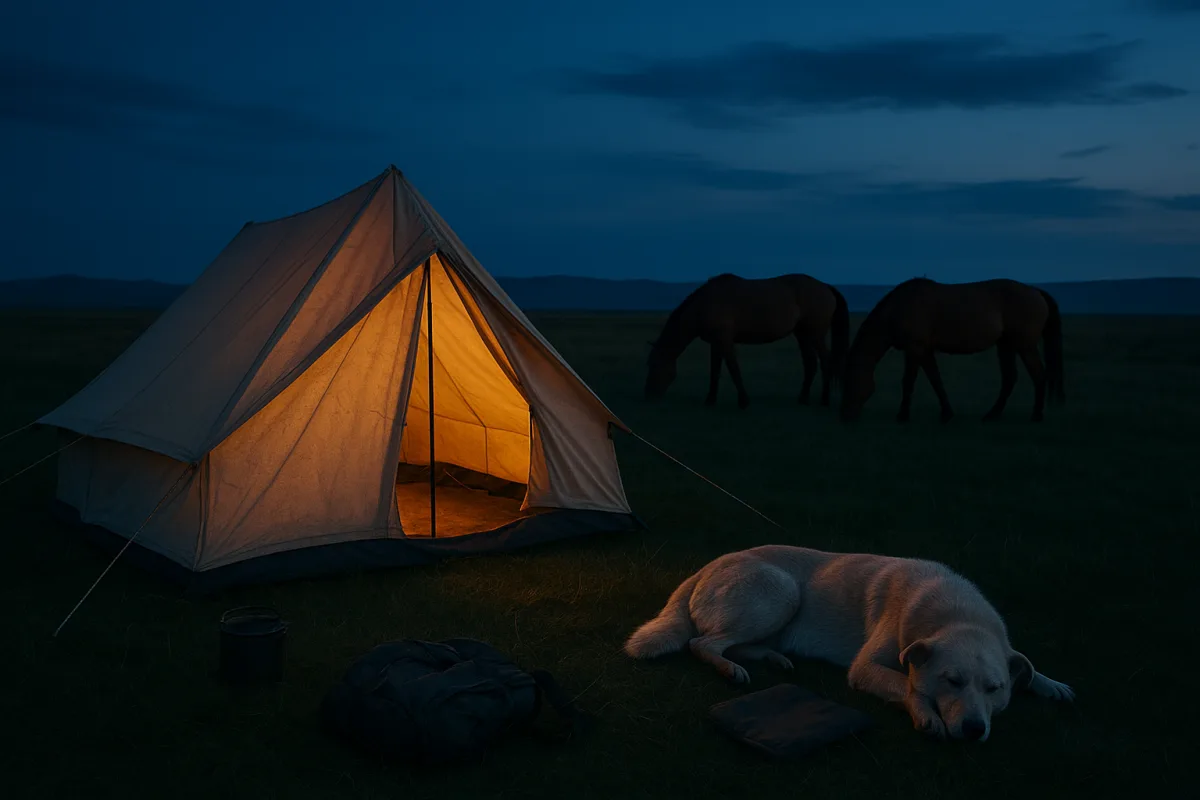
The New Off-Grid Travel Fantasy Has Three Very Different Price Tags
The shift is real, but it is mostly a shift in what travellers are looking at
Travel media is moving away from the polished cabin and the predictable city break. The newer attraction is a life with fewer systems: a canvas tent beside horses, a solar-powered boat with bicycles on deck, or a rural community that retains a language and faith uncommon elsewhere in America.
Three very different travel channels are pursuing that idea. Eva zu Beck documents settling into a tent with horses and a dog. Travel Beans follows an American couple living aboard a boat in southwest England. Yes Theory travels to Alaska to understand Nikolaevsk and nearby Old Believer settlements.
That overlap matters because these are independent channels with different audiences and formats. They are all finding an audience for practical questions that conventional travel coverage often skips: where does power come from, how do you get ashore, where do you sleep, and how much privacy does a small community deserve?
Still, there is a limit to the claim. Video views and creator interest are not housing data. The material supports a trend in aspiration and attention, not proof that large numbers of travellers are selling homes, buying boats or moving into tents.
Why this is happening now
The appeal is partly a reaction to a life mediated by screens, bookings and algorithms. In Eva zu Beck’s tent-living film, the stated goal is not extreme survival but a more analogue routine: reading, caring for animals, sleeping in canvas and spending less time online.
That is a personal motivation, not a market survey, but it helps explain the mood. Off-grid travel now sells a feeling of competence and physical immediacy, rather than simply remoteness. The work is visible: carrying water, maintaining equipment, feeding animals and adapting to weather.
Mobility is the second draw. Travel Beans’ boat-living feature shows why a floating home appeals to travellers reluctant to choose one permanent base. The owners use bicycles to extend their range ashore, while solar and wind equipment reduce dependence on marina power.
The third driver is a desire for cultural specificity. Nikolaevsk is interesting not because it is “secret”, as the Yes Theory title frames it, but because Russian Old Believer traditions remain central to local life in a small Alaska settlement.
That distinction is important for planners. An off-grid tent or boat is a lifestyle system you can buy into. A culturally distinct community is not a product or an attraction, and treating residents as scenery is the quickest way to become an unwelcome visitor.
Tent living is the cheapest-looking option, not necessarily the cheapest legal one
A tent has a low entry price compared with a houseboat or small home, but long-term living is where the simple image breaks down. The tent itself is only one component. Land access, sanitation, heating, water, storage, transport and insurance can matter more.
Eva zu Beck’s setup illustrates the difference between camping and a functioning base. Her tent contains furniture, a proper bed, books and stored belongings, while horses and a dog create daily responsibilities. It is a home arrangement supported by land and existing buildings, not a backpacking pitch.
For someone considering Alaska, the legal side needs checking before equipment shopping. Public land camping can be allowed, but extended stays are commonly restricted by site rules, distances from roads and limits on nights spent in one place.
At Hatcher Pass East Management Area, for example, camping must be in designated sites or at least half a mile from roads. Alaska state parks generally limit stays to four to 15 nights, depending on the park and the rules in force.
Denali National Park is even more specific. Winter camping is permitted from October 1 to April 14 only in one loop at Riley Creek Campground, on a first-come basis and without fees. That is seasonal camping, not permission to establish a year-round residence.
Private land is not automatically simpler. Ahtna Native Regional Corporation, for instance, offers an annual land-use permit costing $100 for a calendar year. That is a concrete access cost, but it does not substitute for checking the conditions attached to a particular parcel.
There is no identified statewide permit that authorises year-round off-grid tent living in Alaska. Add freezing conditions, snow loading, bear precautions and the need for reliable water, and the romantic “just pitch a tent” plan starts to look like a complex rural housing project.
The financing picture is thin, too. There is no useful financing data for tents used as primary residences. Assume you will need savings for gear and a substantial emergency fund, rather than expecting a conventional lender to finance an off-grid canvas home.
Boat living replaces rent with a long list of smaller bills
A boat can appear more complete than a tent because it contains its own kitchen, sleeping space and transport. But it is also a machine exposed to salt water, weather and marina rules, with maintenance that cannot be deferred forever.
The boat profiled by Travel Beans is unusually well-equipped. Its owners have 1,600 watts of solar capacity, two wind generators rated up to 450 watts each, large refrigeration, a dishwasher, workspaces and multiple cabins. That is not a budget canal-boat setup.
Their solar system reportedly covers daily electricity use much of the time, provided fuel remains available. That is useful evidence of what a well-specified vessel can do, but it should not be read as a promise that any boat can live indefinitely without shore power.
For southwest England, research estimates a broad monthly operating range of £335 to £967, excluding purchase finance. Marina berths run about £173 to £322 per month, while a swinging mooring may be around £100, though access and weather exposure differ considerably.
Budget £50 to £125 monthly for diesel, £100 to £200 for maintenance and £25 to £50 for insurance. Gas, electricity, internet and possible council tax can add another £60 to £270, depending on location and how the boat is classified.
The key lesson is that the berth, not the view, determines whether the project works. A low-cost swinging mooring can reduce monthly spending, but it may mean a tender journey, less convenience in poor weather and different access to water, rubbish disposal and shore facilities.
Buying adds another layer. Boat loans typically require 10 to 20 percent down, run for 10 to 20 years and carry roughly 6 to 10 percent interest, according to the research brief. Financing a boat as a primary residence is relatively uncommon.
Resale should also be considered before purchase. Boats depreciate unevenly by type. The research brief puts five-year retained value at roughly 70 to 75 percent for motor yachts, while some express cruisers depreciate around 3 to 6 percent annually.
That makes boat living most sensible for travellers who want boating itself, not simply cheaper accommodation. If the aim is an affordable stationary home, a marina berth plus repairs can be a costly substitute for an ordinary rental.
Nikolaevsk is culturally unusual, but it is not an empty map pin
Yes Theory approaches Nikolaevsk through the language of discovery, including rumours that residents are unwelcoming and isolated. The more useful travel lesson comes from what the film actually encounters: private-property signs, residents who value boundaries and a community with its own social norms.
Nikolaevsk is on Alaska’s Kenai Peninsula and is connected by North Fork Road to the Sterling Highway. That makes it rural, but not inaccessible in the way the phrase “middle of nowhere” suggests. Road access matters for supplies, services and visitor expectations.
Population estimates conflict. Alaska Demographics puts the settlement at 245 residents, while World Population Review lists 175. Both figures support the practical conclusion: this is a very small place, where casual filming, drones and unannounced visits are more conspicuous than in a city.
The community is predominantly ethnic Russian Old Believer, with Russian Orthodox traditions at its centre. The research brief notes that it joined the Russian Orthodox Church Outside Russia in May 2023, a recent detail that complicates any idea of a frozen, unchanged enclave.
Yes Theory’s conversations offer a glimpse of bilingual life, including a young resident who says Russian and English are spoken at home. One adult describes a family history shaped by escape from repression and presents freedom and peace as reasons earlier generations sought Alaska.
That history deserves more care than a treasure-hunt itinerary. If you pass through Nikolaevsk or nearby Voznesenka, use public roads, respect posted property boundaries, ask before photographing people and do not fly a drone unless you have clear permission.
The guidebook-style mistake is to frame such places as “secret” and therefore available for extraction. Their value lies in ordinary community life, not in delivering a dramatic encounter to strangers. A grocery stop, a church exterior and a respectful conversation may be all that is appropriate.
What these projects mean for a traveller planning one
Start by choosing the constraint you can live with. Tent living means weather, land rights and physical maintenance. Boat living means moorings, mechanical systems and recurring costs. Cultural travel means accepting that you may learn more by observing boundaries than by gaining access.
Then build a budget that separates the headline purchase from the total project. For boats, include berth, fuel, insurance, repairs, connectivity and tender transport. For land-based setups, include permission, water, waste disposal, heating, storage, access roads and winter contingencies.
Tiny homes sit between these options but have their own financing and resale issues. A tiny house on wheels may qualify for RV financing at roughly 7 to 12 percent interest, while non-certified units can require personal loans at around 8 to 15 percent.
A tiny home on a permanent, code-compliant foundation can potentially qualify as real property, opening FHA, conventional, VA or USDA finance for eligible borrowers. The base structure price is never the whole figure: land, foundation, delivery, utilities and permits can transform the final cost.
The same classification affects resale. The research brief estimates that tiny homes on wheels retain roughly 55 to 70 percent of value after five years, similar to RV depreciation. Foundation-based tiny homes can perform far better, but only in strong local markets and on owned land.
The trend, then, is less about escaping civilisation than choosing which dependencies to manage personally. Solar panels do not eliminate energy planning. A tent does not eliminate regulation. A culturally distinctive village does not become a tourist site because a map makes it easy to find.
Frequently Asked Questions
What are the costs and challenges of off-grid travel experiences?
Costs and challenges vary widely by type. Tent living has a low initial cost for the tent itself but requires additional expenses for land access, sanitation, heating, water, storage, transport, and insurance. Boat living involves ongoing costs such as mooring fees (£100–£322 per month), fuel, maintenance, and equipment like solar panels and wind generators. Challenges include legal restrictions, weather conditions, and the need for specialized gear and upkeep.
How do legal rules affect off-grid tent living in Alaska?
Alaska has complex and varied rules for tent living. Public lands allow camping but often limit duration and location, such as designated sites or minimum distances from roads. State parks typically restrict stays to 4–15 nights, and Denali National Park allows winter camping only in one loop from October to April. Private land use requires permits like the $100 annual permit from Ahtna Native Regional Corporation. There is no statewide permit authorizing year-round tent living, and harsh weather and wildlife add further complications.
What should travelers know about living on a boat while traveling?
Boat living replaces rent with multiple smaller bills including marina mooring fees, fuel, and maintenance. A well-equipped boat can generate much of its own power via solar and wind, but shore power is often still needed. Monthly operating costs in southwest England range from approximately £335 to £967, excluding loan payments. Boat living requires ongoing maintenance due to exposure to saltwater and weather, and financing options for boats as primary residences are limited.
How can travelers respectfully visit culturally distinct rural communities?
Travelers should recognize that culturally distinct communities, such as the Old Believer settlement in Nikolaevsk, are not tourist attractions but living cultures. Visitors must avoid treating residents as scenery or assuming privacy implies consent to film or intrude. Respect for local traditions and boundaries is essential to avoid becoming unwelcome.
What motivates people to choose off-grid travel experiences?
Motivations include a desire for a more analogue, less screen-mediated lifestyle with visible, physical work like caring for animals or maintaining equipment. Mobility is another draw, as seen in boat living, which allows changing locations without a permanent base. Additionally, some seek cultural specificity by visiting or engaging with communities that maintain unique languages and traditions. These motivations reflect personal aspirations rather than widespread lifestyle shifts.
How we researched this
This article was assembled from 3 video sources across 3 channels.
Nothing here is based on hands-on testing. Where a figure or finding appears, it belongs to the source cited beside it, and the writing says so rather than implying otherwise. Every source is listed below so you can check it.
Sources
- We found a Secret Russian town in America — Yes Theory
- Everyday life living in my tent alone (with horses & dogs) — Eva zu Beck
- Living on a Boat Was NOT What We Expected — Travel Beans
Watch Cultural and Off-Grid Travel Experiences on Youtube
Also from the sources
Related Articles
Living in a Tent and Bus Road Trips
Explore living in a tent and bus road trips with tips on costs, logistics, and seasonal travel bases for unique travel experiences.
Travel Challenges in Remote Locations
Explore travel challenges in remote locations with tips on logistics, borders, budgets, and weather for self-supported adventure trips.
Living Abroad Experiences
Explore living abroad experiences through travel stories, tent living, and working holiday visas. Learn about costs, challenges, and lifestyle trials.

Unique Unusual Travel Experiences
Explore unique unusual travel experiences with practical tips on costs, logistics, and destinations like Cappadocia, Bangkok, and Wrocław.