
Travel Safety and Remote Destinations: Key Tips for 2026
Learn essential travel safety tips for remote destinations in 2026, including evacuation planning, insurance, and realistic access considerations.
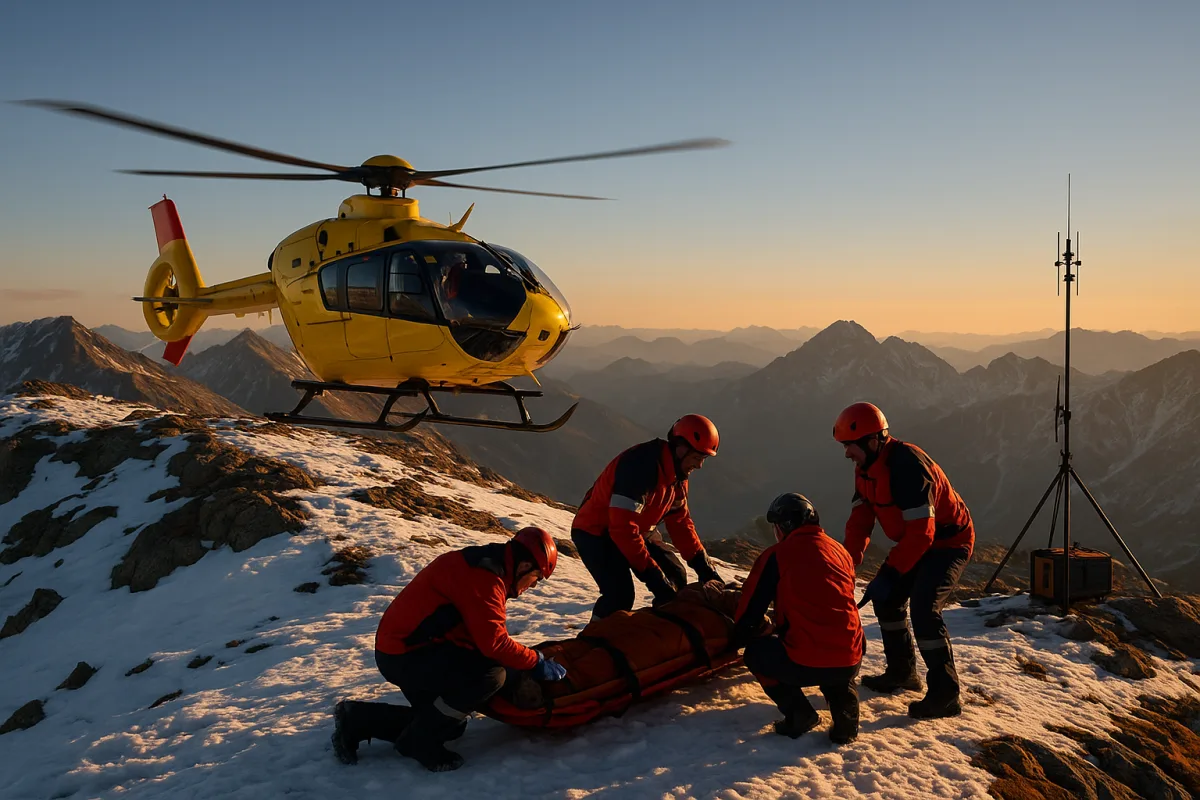
The safety number that matters is time to definitive care
“Remote” gets used loosely. It can mean a Pacific island reached by a monthly ship, an Arctic settlement with a small airstrip, or an urban district where visitors cannot safely navigate independently after dark.
For travel planning, the useful definition is simpler: a place is remote when an ordinary problem cannot be resolved quickly by ordinary local systems. A sprained ankle, lost passport, stomach illness or robbery becomes serious when transport, phone coverage and medical care fail together.
This is the number worth investigating before booking: the realistic time from incident to definitive medical care. Not the distance to a clinic on a map, and not the flight time advertised by an operator.
Definitive care means treatment equipped for the actual problem. A first-aid room can clean a cut. It cannot necessarily manage internal injuries, hypothermia, a severe allergic reaction or a complicated fracture.
That time is not fixed. It is the sum of several stages: recognising the problem, contacting someone who can respond, reaching initial help, waiting for an aircraft or vessel, and then reaching a hospital able to treat you.
A destination can look well connected in one stage and still fail in another. Longyearbyen in Norway’s Svalbard archipelago has daily flights from Oslo and Tromsø, according to CN Traveller Middle East, making it comparatively accessible for a high-Arctic destination. Its transport chain is much shorter than Kerguelen’s.
By contrast, the same publication describes Kerguelen as a French territory about 1,865 miles from Madagascar, reached on the supply vessel Marion Dufresne II from Réunion. That is not simply a long journey. It is an itinerary governed by a ship’s operational mission.
Build an evacuation chain before you build an itinerary
Start with the first link: prevention. This is the part travelers control most cheaply. Choosing the right season, carrying medication, avoiding solo hiking and knowing local restrictions reduces the chance that evacuation becomes necessary.
The second link is communication. Ask whether you will have local mobile service, satellite communication arranged by an expedition operator, a radio system, or nothing reliable at all. A phone with no signal is not an emergency plan.
Third comes immediate assistance. In a town, this may be an ambulance or clinic. On a ship, it may be the vessel’s medical team. On an isolated trail, it may be your guide, your group and whatever equipment they carried.
Fourth is extraction, the expensive and uncertain stage. Weather can ground aircraft, sea state can prevent landings, and a vessel can be days away. An evacuation policy cannot make a helicopter fly through conditions that make flying unsafe.
The final link is referral. A traveler may be taken to a local facility first, then moved again to a regional hospital. That distinction matters in places where there is some medical capacity but no specialist trauma or intensive-care service.
This is why insurance language needs reading beyond the headline limit. Look for emergency medical evacuation, repatriation, adventure-activity exclusions, geographic exclusions, pre-existing-condition rules and the insurer’s requirement to approve transport before it is arranged.
For South Georgia, the UK government’s travel advice stresses that visitors need appropriate insurance and that medical facilities are limited. Serious cases may require evacuation, a process shaped by weather and the availability of ships or aircraft rather than a fixed timetable. [5]
A sensible question for an expedition company is not “Are you insured?” It is: “If a passenger needs hospital care, where do they go first, who authorises evacuation, and what happens if weather delays transfer?”
If the company will not describe the chain in practical terms, that is information. Remote travel always contains uncertainty, but the operator should be able to explain who makes decisions and what resources exist.
Kerguelen: access is permission plus vessel space
The Kerguelen Islands are a useful test case because they expose the difference between a destination being theoretically visitable and being realistically bookable. CN Traveller Middle East calls them the “Desolation Islands,” with no permanent civilian population and only rotating scientific and technical personnel.
The publication’s route begins on Réunion Island, where the Marion Dufresne II sails several times a year. It gives a voyage time of around six days, but that should not be treated as a door-to-door tourist itinerary.
The 2026 research briefing qualifies that account: access requires permission from the French Southern and Antarctic Lands administration, known as TAAF, and sea voyages generally take 10 to 14 days. [4]
That difference is not a minor scheduling quirk. The shorter figure may describe one sailing leg under favourable circumstances, while the longer estimate reflects the operational reality of a research and supply route, stops and a constrained schedule.
There is no public, standardized tourist package or fixed fare to quote responsibly for Kerguelen. The research briefing says travel is bespoke, dependent on official approval and normally oriented around research or professional travel rather than independent tourism. [4]
So the practical 2026 budget is not “ship ticket plus hotel.” It is an unknown total made up of getting to Réunion, any required accommodation there, approved transport, insurance, specialist clothing and contingency time, with key transport costs not publicly disclosed.
French environmental rules also shape where visitors may go. Some zones are off limits because of nature-reserve protections, so a traveler cannot assume that arrival grants free movement across the islands. [4]
The conditions explain why the evacuation chain is weak. Kerguelen has a cold oceanic climate, average temperatures around 4.9°C, frequent strong winds and large waves, according to the research briefing. Those conditions affect landings, small-boat transfers and rescue options.
The right time to go is therefore not a month chosen for photographs. It is whichever officially approved sailing and permit window exists, with enough spare days on either side that a delayed voyage does not destroy an onward itinerary.
South Georgia: the ship is transport, accommodation and rescue platform
South Georgia is more commercially accessible than Kerguelen, but it is not independent travel in the normal sense. CN Traveller Middle East says visitors arrive by expedition ship, generally on cruises departing Ushuaia in Argentina, because the island has no airport.
That fact changes how to compare trips. The ship is not merely the way in. It is your bed, dining room, communications hub, zodiac-launch platform, medical starting point and, if conditions deteriorate, the only immediate shelter.
South Georgia’s appeal is obvious, including vast king-penguin colonies, elephant seals and the historic whaling station at Grytviken. But the British government’s advice is more useful than a wildlife checklist when choosing an operator.
It advises travelers to obtain comprehensive insurance and notes limited medical facilities. [5] A serious emergency may mean stabilisation on board or at a basic facility, followed by a delayed transfer rather than a same-day hospital admission.
Ask whether your cruise fare includes landings, waterproof boots, cold-weather equipment and medical consultation, then separate those inclusions from the bigger financial exposure: cancellation cover and evacuation cover. A headline cruise fare is not the full safety budget.
The research briefing also notes harsh, partly unmapped terrain, ongoing glacial retreat and ecological changes. It does not establish that recent climate change has produced a new, measurable travel-risk pattern, so avoid claims that a particular season is now “safe.”
Instead, treat weather flexibility as part of the purchase. A South Georgia itinerary should have scheduled contingency, clear landing criteria and no promise that every planned site will be reached. Sea-based travel has to adapt to sea conditions.
A different kind of remoteness in Tepito
Tepito in Mexico City is not geographically remote. It sits in one of the world’s largest metropolitan areas. Yet it can be operationally remote for an unfamiliar visitor because normal tourist assumptions about filming, wandering and asking for help do not apply reliably.
Drew Binsky’s video from the neighborhood is revealing for that reason. The visit took place with a locally connected guide, a bodyguard and a large accompanying group, while the host repeatedly discussed the risks of filming without permission.
That is not a replicable independent itinerary. An escorted media visit demonstrates the value of local relationships, but it does not prove that a solo traveler can obtain the same protection by simply arriving in daylight.
Mexico City has no formal tourist ban or permit requirement for Tepito, and the U.S. State Department rates Mexico City overall at Level 2, “Exercise Increased Caution.” [1] The absence of a ban is not a safety endorsement.
Tepito is widely flagged by local safety guidance for robbery, pickpocketing, gang activity and violent crime. [2][3] The research briefing also records law-enforcement operations and alleged gang-member arrests in Tepito and adjacent areas during September 2026.
There are no comprehensive public figures for tourist incident rates in the neighborhood, which is exactly why travelers should not demand a falsely precise risk percentage. Incident reporting and official warnings provide a clearer signal than anecdotes.
The practical rule is daytime only, stay on populated market routes, keep phones and cameras out of sight, carry little cash, and leave rather than negotiating if a situation feels wrong. Local guides can help with context, but they are not insurance.
Drew Binsky’s footage also shows Tepito’s market economy and boxing culture, including clothing reportedly sold for 10 pesos per item. That is a local observation, not a reliable price guide for a visitor, and cheap shopping is a poor reason to accept avoidable risk.
Choose the destination by the weakest link
CN Traveller Middle East lists other routes that show how sharply the chain can vary. Quttinirpaaq National Park in Canada requires travel to Resolute Bay and then a summer-only charter flight to Tanquary Fiord.
Its limiting factor is seasonal aviation. If the charter cannot operate, there is no ordinary overland alternative. The time to definitive care depends on the aircraft, weather, park logistics and whatever support is present with the expedition.
Pitcairn has a different constraint. CN Traveller Middle East describes a route via Tahiti and Mangareva, then a 32-hour supply-ship crossing that runs only several times a year. The sea crossing, rather than airport distance, governs flexibility.
Ittoqqortoormiit in Greenland is reached by helicopter from Nerlerit Inaat Airport, itself served by small aircraft from Reykjavik. In winter, sea ice can isolate the settlement, meaning a missed connection may become more than an inconvenience.
Oymyakon in Russia demonstrates the medical version of the problem. The research briefing reports minimal local medical facilities and no clear, detailed public account of evacuation capacity for tourists. Do not substitute general Arctic imagery for a specific medical plan.
The useful rule across all of them is plain: book only when you understand who takes responsibility at each stage, what weather can stop the plan, and how long you can afford to wait if it does.
Frequently Asked Questions
What is the most important safety factor when traveling to remote destinations in 2026?
The key safety factor is the realistic time from an incident to definitive medical care, which includes recognizing the problem, contacting help, reaching initial assistance, extraction, and referral to a suitable hospital. Distance alone is not enough; the full evacuation chain and potential delays from weather or transport schedules must be considered.
How do I plan medical evacuation for remote travel in 2026?
Planning evacuation involves building a chain starting with prevention, ensuring reliable communication, arranging immediate assistance, and understanding extraction challenges such as weather and transport availability. It is important to know who authorizes evacuation and the resources available, as delays are common and insurance may require prior approval for transport.
What should I consider about insurance for remote travel in 2026?
Buy insurance only after confirming it covers the actual evacuation routes your itinerary may require, including emergency medical evacuation and repatriation. Check for exclusions related to adventure activities, geographic areas, pre-existing conditions, and insurer approval for evacuation arrangements, as local treatment may be limited and evacuation costly and complex.
How accessible are remote destinations like Kerguelen and South Georgia in 2026?
Kerguelen Islands are accessible only with official permission from the French Southern and Antarctic Lands administration and via the research vessel Marion Dufresne II, with voyages taking 10 to 14 days. South Georgia has limited medical facilities, and evacuation depends on weather and availability of ships or aircraft, making access and emergency response uncertain and slow.
What communication options are available for emergency situations in remote travel?
Communication options vary widely and can include local mobile service, satellite communication arranged by expedition operators, radio systems, or no reliable option at all. Having a phone without signal is not an emergency plan; verifying communication availability before travel is essential for timely assistance.
How we researched this
This article was assembled from 1 video source, 1 published article, 5 cited references.
Nothing here is based on hands-on testing. Where a figure or finding appears, it belongs to the source cited beside it, and the writing says so rather than implying otherwise. Every source is listed below so you can check it.
Sources
Entering Mexico City's Most Dangerous Hood — Drew Binsky
The Most Remote Places on Earth You Can Actually Visit — CN Traveler
Is Tepito Safe? Mexico City Neighborhood Safety Guide - TripWaffle
Watch Travel Safety and Remote Destinations in 2026 on Youtube
Related Articles

Travel Challenges in Remote Locations
Explore travel challenges in remote locations with tips on logistics, borders, budgets, and weather for self-supported adventure trips.

Unique Unusual Travel Experiences
Explore unique unusual travel experiences with practical tips on costs, logistics, and destinations like Cappadocia, Bangkok, and Wrocław.

Luxury Hotel Travel Rewards 2026
Explore luxury hotel travel rewards in 2026 and learn how $600 hotel credits truly work to reduce your travel costs.
Arabian Travel Market 2026
Explore key tourism trends, GCC visa updates, and regional travel insights from Arabian Travel Market 2026 for Gulf trip planning.