
Airline Innovations 2026: Enhancing Passenger Experience
Explore airline innovations in 2026 improving passenger experience, from automatic check-in to biometric travel and better disruption handling.
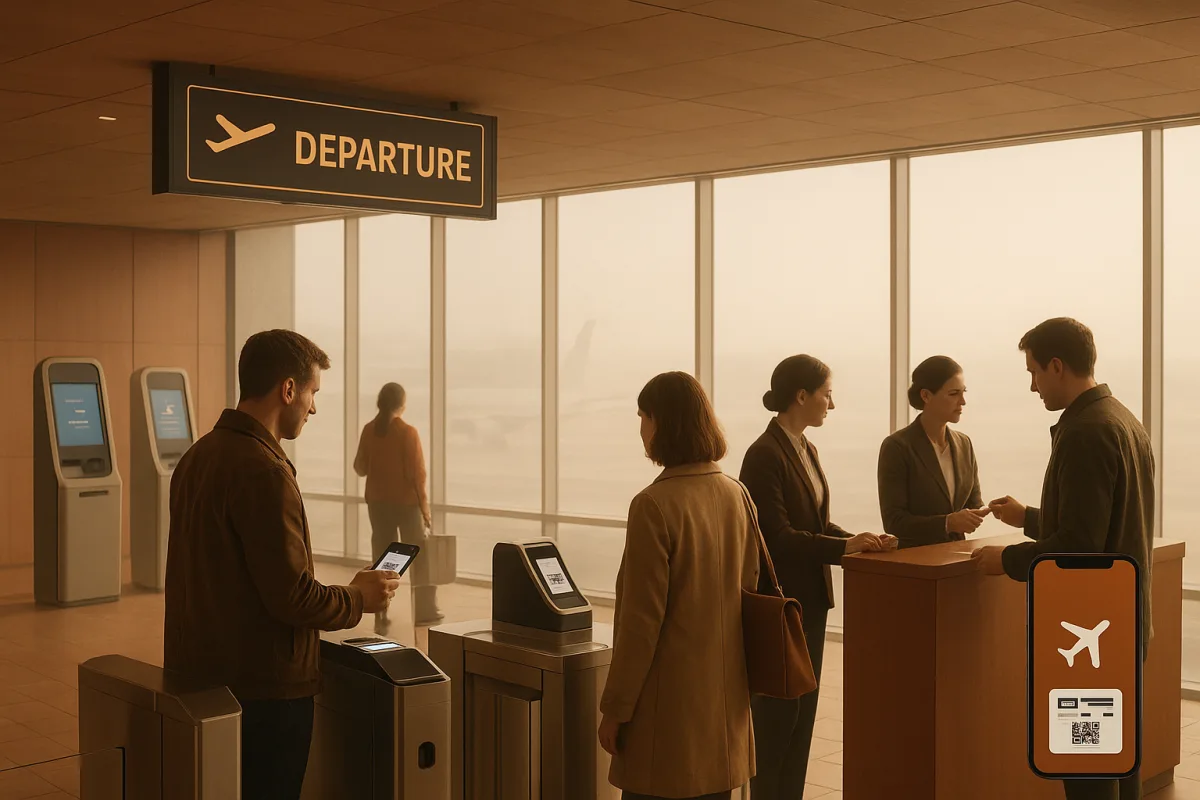
The airline improvement of 2026 is less glamorous than it sounds
Airlines are moving routine work away from airport counters and into apps, automated systems and fare bundles. The most visible result is convenience, but the commercial purpose is equally clear: reduce friction where it costs money, then sell passengers choices around space, flexibility and the rest of the trip.
This is a real industry direction rather than one carrier’s marketing campaign. Delta has offered automatic check-in for eligible domestic app users, Lufthansa Group has its own automated and online processes, EVA Air has a longer pre-departure automation window, and American Airlines is expanding biometric airport processing with the TSA. [9]
The shift does not mean the airport is becoming effortless. It means passengers need to understand which parts are automatic, which remain their responsibility, and which “conveniences” are actually paid extras. For a self-booked trip, that distinction affects both time at the airport and the final cost.
Check-in is becoming a background process
Traditional check-in made sense when passengers presented paper tickets and airlines needed a formal confirmation that someone planned to travel. Online check-in moved that task to a phone, usually 24 hours before departure, without proving that the passenger would actually reach the gate.
View from the Wing argues that the industry has kept an unnecessary ritual alive, since airlines already hold the passenger’s name, payment and often a seat assignment. The publication notes that Delta introduced automatic check-in for eligible domestic app users in 2017, while retaining acknowledgement of restricted-items rules.
That model is spreading unevenly. Lufthansa’s online check-in generally opens 30 hours before departure, while Eurowings opens it 72 hours ahead. EVA Air accepts automated check-in applications from 360 to 48 hours before departure, then sends completion notice 48 hours before the flight.
For a passenger, automatic check-in is most useful on a simple itinerary: one airline, domestic flight, confirmed seat, no visa or passport issue, and no checked-bag complication. It can put a boarding pass and upgrade-list position in place without the familiar reminder to press a button precisely 24 hours ahead.
It is less reliable on international trips. Passport validity, visa requirements, destination health rules and partner-airline reservations can all require manual review. An app may show that check-in is unavailable, but that is not necessarily a problem. It can simply mean the airline needs to inspect documents at the airport.
Dangerous-goods acknowledgements remain another practical constraint. U.S. rules require this information when a boarding pass is issued in a self-service workflow, which helps explain why airlines cannot remove every passenger interaction from the process. The question is whether the acknowledgement can be handled cleanly, rather than whether it exists.
The more ambitious version is biometric travel. American Airlines and the TSA have expanded TSA PreCheck Touchless ID to 60 U.S. airports, allowing enrolled participating travelers to verify identity through facial recognition rather than presenting a physical ID and boarding pass. [9]
IATA says contactless-travel trials in Europe and Asia-Pacific have shown that digital identity wallets can work across participating travel systems. [1] That matters because an airport journey has several handoffs: bag drop, security, lounge entry, boarding and immigration, often run by different organizations.
The evidence establishes technical momentum, but not universal passenger approval. The available research does not provide comprehensive adoption rates, error rates or a clear measure of privacy concerns. Travelers who prefer physical documents should not assume they can dispense with them everywhere.
For now, the practical move is simple. Use the app and enable notifications, but download the boarding pass to your phone wallet, carry your passport or ID as required, and leave enough time for a document-check desk on international itineraries.
Better disruption handling may matter more than a smoother check-in
The more valuable application of airline technology is not issuing a boarding pass. It is dealing with a missed connection, aircraft swap or weather delay before a queue forms at the customer-service desk.
Air Canada has described using AI and data integration to anticipate passenger needs and improve recovery during disruptions, according to reporting from APEX. [2] The useful test is whether a traveler receives a workable rebooking option before spending an hour in line, not whether the airline calls its system artificial intelligence.
This is happening now because airline operations are under pressure. Full flights leave little slack when a connection fails, passengers expect immediate updates, and call centers are expensive. A carrier that can identify disrupted customers, protect onward seats and issue a replacement boarding pass quickly has a measurable operational advantage.
Still, passengers should not mistake automated recovery for guaranteed protection. Airline systems tend to prioritize flights within their own network, and a low fare may have fewer workable alternatives. For an important wedding, cruise departure or same-day event, a longer connection remains more useful than a clever app.
Business class is improving, but delivery is slower than announcements suggest
New business-class products are central to airline competition, particularly on long-haul routes where a flat bed, direct aisle access and privacy door can determine which flight a traveler books. Airlines also use premium cabins to distinguish otherwise similar schedules.
Los Angeles is one example of the broader competitive setting. The Points Guy reports that Delta is expanding at Los Angeles International Airport with a new daily Philadelphia service from June 7, 2027, additional frequencies to seven U.S. cities, and plans for more than 200 daily departures next summer.
Delta has also opened a Delta One Lounge at LAX and added long-haul services including Hong Kong, Melbourne and Manila, according to The Points Guy. This does not prove that every premium seat is better, but it shows carriers competing through the whole premium journey, including lounges and network breadth.
The limitation is supply. Singapore Airlines has postponed its S$1.1 billion Airbus A350 cabin retrofit from the second quarter of 2026 to the first quarter of 2027, with 41 A350-900 aircraft affected by certification and supply-chain issues. [3]
That delay is a useful corrective to glossy seat renderings. A cabin may be announced years before it reaches the particular aircraft on the route you want. Even within one airline, the same flight number can use aircraft with different seats on different days or seasons.
Aircraft lessors have another reason to resist endless customization. Aviation Week reports that AerCap chief executive Aengus Kelly says highly customized interiors can add 3% to 4% to an aircraft’s price and delay delivery by as much as a year. [4]
Maintenance and cabin complexity matter after delivery as well. More doors, motors, screens, partitions and bespoke fittings create more components to certify, repair and replace. The research does not quantify the resulting effect on business-class fares, so it would be speculative to say new suites directly raise ticket prices.
For trip planning, book the aircraft before you book the brand. Check the operating aircraft and seat map, then look again a few days before departure. If a specific business-class product matters, avoid tight connections to a cruise, meeting or hotel plan that depends on getting a particular seat.
Flexibility is being sold in more forms
The new flexibility trend has two sides. Airlines are creating ways to recover value from an unused booking, change plans or buy more personal space. At the same time, they are making fare rules more segmented, which means flexibility increasingly depends on exactly what was purchased.
Transavia, for example, allows eligible customers to submit tickets for resale. The carrier can return a ticket to its sales channels, with terms allowing up to 50% of the original fare back and a full airport-tax refund, provided the resale happens and conditions are met.
Viva Aerobus has developed a similar MarketPlace concept, offering travel credit when a customer gives up an unused ticket at a price offered by the airline. View from the Wing’s account is notable because this is not a general right to sell tickets, nor an open resale market.
Most airline tickets remain non-transferable, a rule that prevents a traveler from simply handing an unusable booking to a friend. [6] These airline-controlled resale programs are therefore potentially useful, but only if the carrier chooses to buy the seat back and the booking meets its deadlines.
Some airlines are also selling physical space in economy. TAP Air Portugal sells empty adjacent seats on eligible flights, while United lets U.S. customers purchase an additional seat online. The logic is straightforward: a passenger gets room, and the airline earns revenue from a seat that might otherwise go empty.
That can suit a tall traveler on an overnight flight, someone traveling with bulky but cabin-safe personal needs, or a couple who value space more than a premium-economy meal. It is not automatically a bargain. Compare the cost of the extra seat against premium economy, exit-row seating and a different flight.
The legal baseline remains more limited than many travelers assume. American Airlines offers a full refund within 24 hours when a qualifying booking is made at least seven days before departure, and its conditions of carriage set refund rights for qualifying cancellations or significant schedule changes. [10]
The U.S. 24-hour rule typically applies to bookings made directly with the airline, not necessarily to an online travel agency purchase. [6] That matters when a third-party site is a few dollars cheaper: savings can disappear if a name correction, schedule change or voluntary cancellation becomes harder to manage.
United’s Basic Economy fares remain notably restrictive, with changes carrying fees of $99 to $149 plus any fare difference in the policy summary reported by TravelStacks. [5] That does not make the fare wrong, but it makes it appropriate only when plans are genuinely firm.
JetBlue’s refundable fares offer a very different proposition, with unlimited changes and cancellations before departure, while unused post-departure value becomes travel credit. Spirit’s Bare Fare is non-refundable and charges for changes, whereas its Standard Fare allows changes but still applies fees, according to the research brief.
The planning lesson is to price flexibility before booking. On a weekend city break with a fixed hotel and event, a basic fare may be rational. For a multi-stop international trip, a fare with no change fee can be cheaper in practice even when its initial price is higher.
Airline bundles can save money, or conceal the real price
Airlines increasingly want to sell the hotel, transfer, rental car and activities alongside the flight. EasyJet Holidays generated £250 million in pretax profit last year, nearly 38% of the airline group’s earnings, according to View from the Wing’s reporting on the IdeaWorks ancillary-revenue yearbook.
Southwest launched its in-house Getaways operation in August 2025, with more than 25 direct hotel partnerships across over 30 destinations. Its packages can include two free checked bags, five Rapid Rewards points per dollar on eligible spending, and cancellation credits valid for 18 months.
These bundles are worth checking, even for travelers who would not describe themselves as package-holiday customers. View from the Wing found instances where a Southwest flight paired with a rental car cost less than buying flights alone, while restoring the airline’s free-bag benefit.
But comparison is essential. Airline ancillary revenue across 58 carriers rose 13.4% in 2025, compared with 7.2% growth in total airline revenue. [7] Bags, seat selection, onboard sales and packages can support lower headline fares, but they can also make the final price harder to see.
A Senate report highlighted concern about airline “junk” fees, particularly charges that are difficult for travelers to avoid or understand before purchase. [8] There is no reliable industry-wide figure for how much these additions raise an average trip, so claims that unbundling always saves or always costs more go beyond the evidence.
Price the flight alone, then price the same itinerary with every inevitable extra added. Include seats if you need to sit together, checked bags, cabin-bag rules, airport transfers and hotel cancellation terms. A package is a good deal only when its final total and conditions beat the alternatives.
Private aviation shows where convenience has a hard price
At the far premium end, private-flight apps are applying familiar travel-booking logic to charter aircraft. Brett Conti’s video about booking through Mirai Flights shows the attraction clearly: a private terminal, minimal waiting, a direct boarding process and the ability to charter the entire aircraft.
The video’s one-hour Falcon 2000 empty-leg flight was quoted at about $6,000, down from roughly $20,000 for a standard charter, with the aircraft seating up to nine passengers. Divided across a full group, that works out at roughly $650 each before considering the practical difficulty of filling every seat.
Empty legs are repositioning flights, which explains both the discount and the restriction. The aircraft needs to go where it needs to go, often with little notice. Brett Conti’s Mirai Flights video says the opportunity appeared only three days before departure, a poor fit for travelers with fixed plans.
The lower end of private charter is usually a turboprop or very light jet, rather than a large cabin like the Falcon. Turboprops such as the Pilatus PC-12 and King Air 350 typically cost $1,500 to $3,000 per hour, carry up to nine passengers, and suit regional trips under 600 miles.
Very light jets, including the Phenom 100, Vision Jet and HondaJet, generally cost $3,500 to $5,000 per hour. They suit solo travelers or couples making short hops, with space for three or four passengers and more limited amenities than a larger business jet.
Those are base hourly ranges, not dependable trip totals. Fuel surcharges, landing fees, catering, ground transport and de-icing may be extra, while peak-day surcharges can add 20% to 40%. There is no comprehensive evidence establishing an average all-in cost across the cheapest private-flight categories.
For a group that needs to reach a poorly served regional airport, an empty leg can be worth monitoring. For most trips, scheduled airlines remain the practical option. Their innovation is less dramatic, but automatic check-in, faster recovery and clearer fare choices can improve far more journeys.
Frequently Asked Questions
What are the latest airline innovations improving passenger experience in 2026?
In 2026, airlines are focusing on automating routine tasks such as check-in through apps and biometric systems to reduce friction at airports. They are also using AI and data integration to better anticipate and manage disruptions like missed connections or delays, improving passenger recovery before service desks get overwhelmed. Additionally, contactless biometric travel trials are underway to streamline multiple airport touchpoints.
How do automatic check-in systems work and what are their limitations?
Automatic check-in systems use passenger data already held by airlines to check in travelers without manual input, often delivering boarding passes via apps. They work best for simple itineraries with one airline, domestic flights, and no complications like visas or checked bags. Limitations include the need for manual document checks on international trips, restrictions with partner bookings, and regulatory requirements such as dangerous-goods acknowledgements that prevent full automation.
What is biometric travel and which airlines are expanding its use?
Biometric travel uses facial recognition technology to verify traveler identity, allowing passengers to bypass showing physical IDs and boarding passes. American Airlines, in partnership with the TSA, has expanded its TSA PreCheck Touchless ID biometric processing to 60 U.S. airports. IATA reports successful trials of contactless digital identity wallets in Europe and Asia-Pacific, indicating growing adoption across multiple travel systems.
How are airlines using technology to handle travel disruptions better?
Airlines like Air Canada employ AI and integrated data systems to anticipate passenger needs and improve recovery from disruptions such as missed connections or aircraft swaps. This proactive approach aims to resolve issues before passengers reach crowded customer-service desks, enhancing overall disruption management and passenger experience.
When will new business class seats and cabin upgrades be available?
New business class seats and cabin upgrades, such as Singapore Airlines’ A350 overhaul, have been delayed and are now expected in 2027 rather than 2026. The delay is due to certification challenges and supply-chain issues, so passengers should consider these upgrades as part of a longer-term fleet refresh rather than immediate improvements for 2026.
How we researched this
This article was assembled from 1 video source, 3 published articles, 10 cited references.
Nothing here is based on hands-on testing. Where a figure or finding appears, it belongs to the source cited beside it, and the writing says so rather than implying otherwise. Every source is listed below so you can check it.
Sources
I Flew the World’s Cheapest Private Jet Flight (Mirai Flights) — Brett Conti
Delta adds another new city from LAX, bolsters 7 others as hub battle intensifies — The Points Guy
You Already Paid For Your Flight — Airlines Should Stop Making You ‘Check In’ To Use Your Ticket — View from the Wing
You Can Buy An Empty Middle Seat—And Some Airlines Will Buy Back Tickets You Can’t Use — View from the Wing
FTE Global 2026: Air Canada Uses AI to Anticipate Passenger Needs and Improve Recovery - APEX
Stop Demanding New Seats, AerCap CEO Tells Airlines | Aviation Week
United Airlines Refund Policy 2026: What Actually Applies - TravelStacks | TravelStacks
Are Airline Tickets Transferable? Rules and Exceptions - LegalClarity
Airlines’ ancillary revenue grows twice as fast as overall revenue | PhocusWire
Senate Report Blasts Airlines Over 'Junk' Fees: What to Know
Watch Airline Innovations and Passenger Experience Enhancements on Youtube
Related Articles
Airline Service Enhancements and New Flight Routes in 2026
Discover upcoming airline service enhancements and new flight routes, including seatback screens and premium cabin upgrades for 2026.
AI Travel Assistants 2026
Explore AI travel assistants in 2026 and how they reshape trip planning, loyalty integration, and disruption support in travel and hospitality.
Travel Costs and Airfare Trends 2026: What to Expect
Explore travel costs and airfare trends for 2026-2027, including fuel impact and budget airline fees to help plan your trip budget.

Unique Unusual Travel Experiences
Explore unique unusual travel experiences with practical tips on costs, logistics, and destinations like Cappadocia, Bangkok, and Wrocław.