
Living in a Tent and Bus Road Trips
Explore living in a tent and bus road trips with tips on costs, logistics, and seasonal travel bases for unique travel experiences.
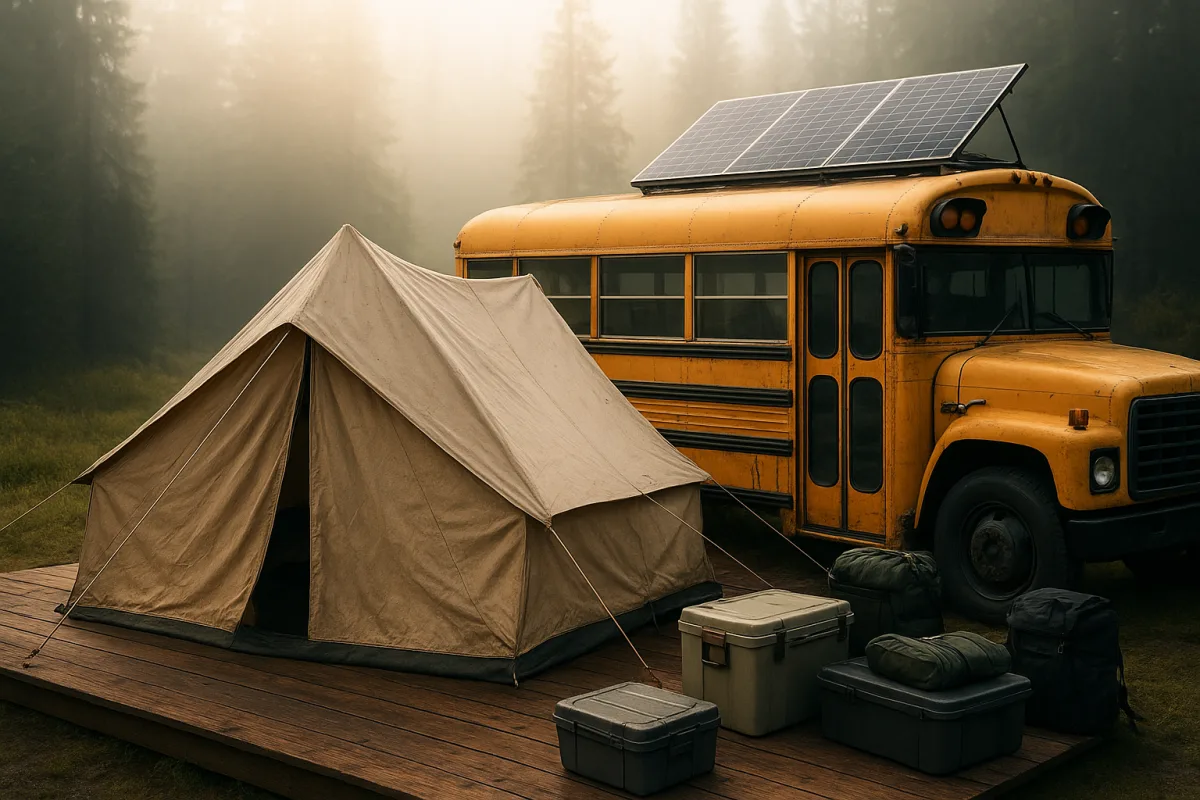
The shift is toward slower, self-built travel bases
Travel content is shifting away from the idea that accommodation is something booked nightly. More travellers are treating a tent, converted vehicle or small rural structure as a base for extended, self-directed travel and seasonal living.
The evidence is not a neat market statistic, and that matters. It is mostly visible in independent creators making materially similar choices, then showing the work behind them: erecting permanent canvas structures, maintaining rural sites and moving oversized vehicles across borders.
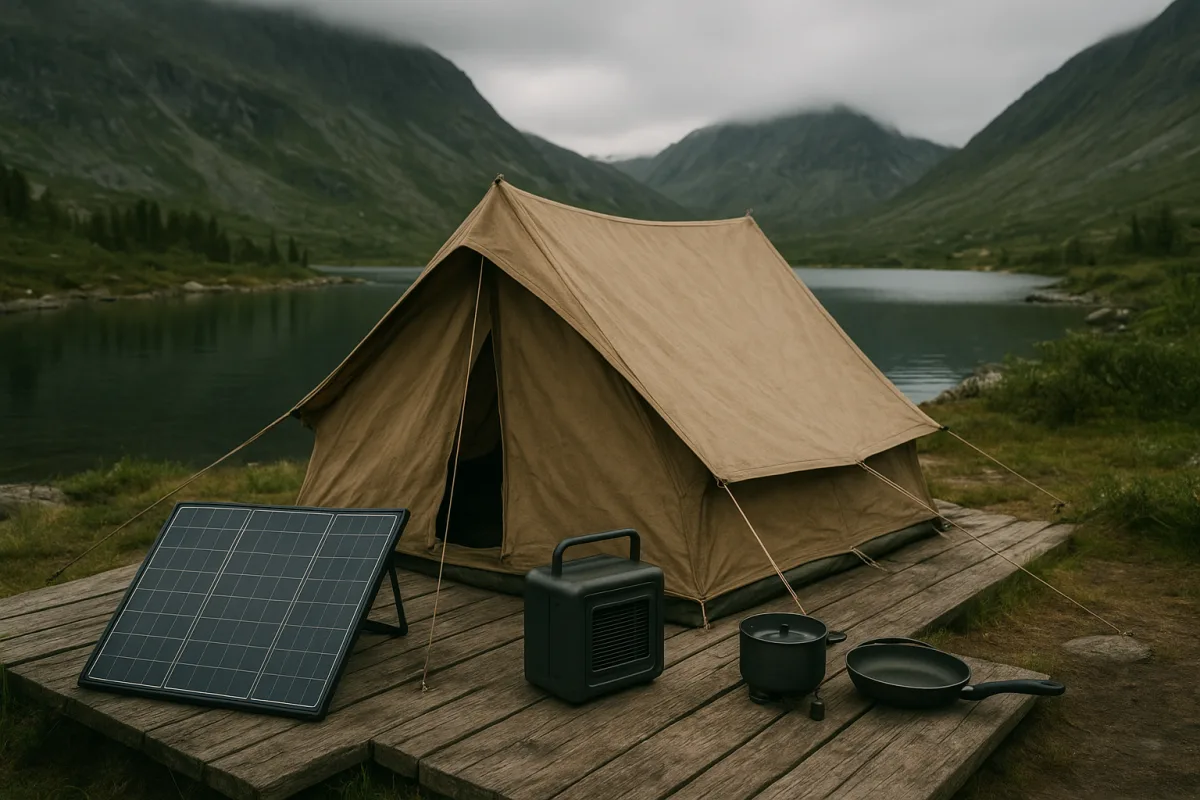
On the Polish countryside plot documented by Eva zu Beck, the goal is not a weekend camping trip. She replaces a bell tent with a roughly 150kg all-season canvas structure large enough for a bed, desk and basic kitchenette.
Kara and Nate’s Mongol Rally project takes the mobile version much further. Their group bought a retired US school bus in Colorado, drove it across the United States, shipped it to Germany and entered it in an unsupported Prague-to-Asia rally.
These projects are radically different in budget and risk, but they share an important change. The accommodation and transport are no longer background logistics. They become the project, and the route is built around their limitations.
That approach appeals partly because it makes travel feel less interchangeable. A hotel room in Sofia or Almaty can be booked in minutes, while maintaining a tent through a wet autumn or getting a bus through a border requires commitment.
It also produces unusually compelling material online, which can make the trend look broader than it is. There is no strong evidence that large numbers of people can or should replace conventional travel with tents and buses.
What is real is the growing visibility of travellers who are willing to trade convenience for control. The useful question for a prospective traveller is not whether the lifestyle is fashionable, but which parts survive contact with weather, regulations and money.
Why this is happening now
Remote work has made longer stays possible for some people, while rising accommodation prices make the idea of owning or building a temporary base look financially rational. That calculation can be correct, but only after counting the non-obvious costs.
The appeal is also a reaction to tightly scheduled travel. Kara and Nate’s rally bus has no official route and no support crew, meaning the group navigates border crossings and mechanical failures themselves rather than buying a packaged itinerary.
That freedom has a limit. Their Romanian, Bulgarian and Turkish route shows why a big vehicle changes every decision, from whether a road tunnel has enough clearance to whether a beach is actually legal or safe for an overnight stop.
Wild camping is often represented as an effortless saving. In Kara and Nate’s Black Sea stop, a runner accidentally entered a military zone after following the beach, a useful reminder that a pin on Google Maps is not permission.
Tent living similarly looks simple from inside a neatly furnished canvas room. Eva zu Beck’s setup includes a pre-existing deck and nearby shepherd’s hut, which are substantial advantages over arriving on raw land with a tent and no services.
The real attraction is not austerity. It is having a space that can be adjusted around your own routine, whether that means a proper desk in a canvas tent or enough seats and beds to carry a nine-person road crew.
A tent is a building project with fabric walls
A substantial canvas tent is a plausible option for seasonal living, particularly where land is already secured and the owner has another place to retreat during severe weather. It is not equivalent to ordinary backpacking gear.
High-quality all-season canvas tents typically cost $700 to $1,400, according to 2026 tent-buying guides from Kodiak Canvas and Tent Spaces. [5][6] That is the tent and frame price range, not an installed, habitable home.
A deck, ground preparation, delivery, stove, ventilation, electrical connection, battery system, furniture, water storage and sanitation can easily matter more than the initial canvas purchase. Exact installed totals vary too widely to quote a dependable average.
The tent shown by Eva zu Beck is marketed through a sponsorship from Canvas Camp, so its presentation should not be mistaken for a neutral price comparison. More importantly, she acknowledges that the heavy canvas was difficult to install alone.
The canopy alone is described as about 50kg, and the entire structure about 150kg. That is a useful practical threshold: once a tent reaches this scale, plan for helpers, tools, a stable platform and time to correct mistakes.
Canvas can last. Commercial-grade canvas, with appropriate care, may last 15 to 20 years, while lower-grade fabric in wet climates may last five to seven years. [7][8] Those longer figures depend on maintenance, not optimism.
Owners need to season some canvas by wetting it so fibres swell and seal, clean it regularly, renew waterproofing and store it dry when it is not erected. Damp fabric invites mould, while ultraviolet exposure steadily weakens it. [7][9]
Temperature is the bigger day-to-day issue. Canvas has little insulation, so a summer tent can overheat and a cold-season tent demands safe heating, ventilation and fuel planning, even before considering wind, condensation and snow loading.
Eva zu Beck describes returning to her shepherd’s hut for winter after using the tent during the last part of summer. That is the sensible model for many temperate climates, rather than promising oneself four comfortable seasons immediately.
A shepherd’s hut is not an automatic answer either. Plankbridge Shepherd’s Huts notes that these structures are compact, and typical examples are around 12 by 6 feet. [10] Small space is manageable for a holiday, harder for full-time work.
Before buying either structure, check planning and land-use rules with the relevant local authority. A portable building can still require permission once it is regularly occupied, connected to services or used as accommodation rather than occasional shelter.
The school-bus route is logistics, not just driving
The bus route is the more expensive expression of the same desire for autonomy. It promises transport, beds and storage in one package, but each benefit introduces another legal, mechanical or financial task.
Kara and Nate’s team could carry nine people in their retired school bus, called Big Bertha, rather than squeeze into the small cars normally associated with the Mongol Rally. That group scale makes the bus understandable, not automatically economical.
For an individual or couple, a large bus brings fuel use, restricted parking, difficult turning circles and a smaller pool of mechanics. The resale market is also niche, particularly if a conversion is highly personalised or not professionally certified.
Financing is harder than many first-time builders expect. Converted buses are generally personal property rather than real estate, and lenders often want RVIA certification that custom school-bus conversions do not have. [4]
That can leave buyers using shorter-term, higher-interest personal loans or seller finance. A project financed this way needs a conservative monthly budget, because the vehicle can be both a depreciating asset and the traveller’s home.
Getting a US bus to Europe has its own misleading headline price. The 2026 shipping research in this reporting brief puts RoRo ocean freight at $850 to $2,000 for an operational vehicle, with a three-to-six-week crossing.
That range is not the cost of importing a bus. Import duty, VAT, registration taxes, customs paperwork, port handling, insurance and modifications for headlights, emissions or local vehicle standards can exceed the freight bill.
Container shipping offers more protection but costs more, and oversized buses may be impractical for standard containers. The research brief recommends professional logistics advice, which is sensible before buying a vehicle specifically for an overseas route.
An overland route to Central Asia also requires route planning that goes beyond a rally map. Kazakhstan and Kyrgyzstan offer visa-free access to many nationalities, while Uzbekistan, Tajikistan and especially Turkmenistan have more restrictive requirements. [2]
The major Kazakhstan-Uzbekistan crossing at Zhibek Zholy and Gisht-Kuprik is under reconstruction until approximately September 2026, according to Safar’s overland guide. [3] Verify that status immediately before departure, rather than designing a schedule around it.
Public transport is a useful fallback when a vehicle route becomes impractical. Safar reports the Tashkent-to-Almaty train takes 16 to 20 hours and costs about 400,000 to 900,000 Uzbek soum, depending on service and booking conditions. [3]
Kyrgyzstan is comparatively accessible on paper, and the US State Department lists it at Level 1, exercise normal precautions, as of February 10, 2026. [1] That advisory is not a guarantee about individual roads or borders.
What to borrow from the trend
The most transferable idea is not buying a bus or moving permanently into canvas. It is designing travel around a base that suits a specific season, region and amount of maintenance you can genuinely carry.
For a first tent project, start with land that has lawful access, drainage, a realistic toilet arrangement and reliable mobile signal. Spend one wet week and one cold night there before committing to decks, furniture or long-term storage.
For a vehicle project, take a domestic test trip long enough to expose fuel costs, repair delays and parking problems. A bus that works on a scenic route near home may be a poor fit for dense European cities.
Build a reserve that is separate from the build budget. Tent dwellers need money for heaters, repairs and alternative accommodation, while bus travellers need funds for breakdowns, border delays, shipping changes and flights home if plans fail.
The creators making these lifestyles visible are useful because they show that unusual travel is possible. Their projects are less useful as templates for cost or ease, because sponsorships, existing land, group size and audience income change the arithmetic.
Frequently Asked Questions
What are the costs and logistics of living in a tent for travel?
High-quality all-season canvas tents typically cost between $700 and $1,400 for the tent and frame alone. However, additional expenses such as decks, ground preparation, heating, furnishings, power, water systems, and land permissions often exceed the initial tent cost. Installing and maintaining a large canvas tent requires helpers, tools, and time, as these tents can weigh around 150 kg and are more akin to seasonal dwellings than simple shelters.
How do you prepare and maintain a canvas tent for seasonal living?
Preparing a canvas tent involves building a stable platform or deck, ensuring proper ventilation, and installing heating and electrical systems as needed. Maintenance includes regular waterproofing, cleaning, and storing the tent dry to prevent mold and fabric degradation. With proper care, commercial-grade canvas tents can last 15 to 20 years, but wet climates may reduce their lifespan to 5 to 7 years.
What are the challenges of traveling long distances in a converted school bus?
Traveling long distances in a converted school bus requires navigating vehicle size limitations such as road and tunnel clearances, and ensuring the bus meets regulatory standards, which often necessitate costly modifications for emissions and lighting. Shipping a bus overseas involves ocean freight costs of $850 to $2,000 by RoRo, but additional expenses include import taxes, registration fees, insurance, and potential repairs. Financing such vehicles is also difficult due to their classification as personal property and lack of RVIA certification.
How do border crossings affect bus road trips across countries?
Border crossings can introduce significant delays and require careful planning, especially in regions like Central Asia where visa requirements vary widely by nationality and country. Some crossings, like the Kazakhstan-Uzbekistan Zhibek Zholy, are under reconstruction until around September 2026, which may disrupt travel plans. Travelers must build slack into their routes to accommodate changing conditions and varying border policies.
What are the practical considerations for combining tent living and bus travel?
Combining tent living and bus travel typically results in a hybrid lifestyle where travelers camp or live simply for part of the year while maintaining a legal address and reliable income. This approach provides a fallback when weather, vehicle issues, or land regulations interfere with travel plans. Both tent living and bus travel require substantial commitment to maintenance, legal compliance, and route planning, making convenience a secondary consideration to control and flexibility.
How we researched this
This article was assembled from 2 video sources across 2 channels, 10 cited references.
Nothing here is based on hands-on testing. Where a figure or finding appears, it belongs to the source cited beside it, and the writing says so rather than implying otherwise. Every source is listed below so you can check it.
Sources
We Drove a School Bus to Asia (Mongol Rally Ep. 5) — Kara and Nate
I'm moving into a tent... (and I rescued a dog) — Eva zu Beck
Best All-Season Canvas Tents for Families (2026) – Kodiak Canvas
Glamping Tents: The Complete 2026 Buying Guide (Types, Prices & Best Options)
Watch Unique Travel Experiences: Living in a Tent and Bus Road Trips on Youtube
Also from the sources
Related Articles
Travel Challenges in Remote Locations
Explore travel challenges in remote locations with tips on logistics, borders, budgets, and weather for self-supported adventure trips.
Luxury vs Budget UK Resorts: Center Parks vs Butlands
Join Travel Beans as they explore Center Parks, the UK's luxurious resort, comparing it to Butlands. From activities to stolen bikes, follow their adventure!
Underrated Travel Destinations 2026
Explore underrated travel destinations in 2026 with tips on logistics, budgeting, and getting around for a smoother off-the-beaten-path trip.
Living Abroad Experiences
Explore living abroad experiences through travel stories, tent living, and working holiday visas. Learn about costs, challenges, and lifestyle trials.