
New Airline and Airport Services for 2026-27: What to Expect
Explore new airline and airport services in 2026-27, including premium suites, app rebooking tools, and private airport options worth paying for.
New Airline and Airport Services for 2026-27: What Is Actually Worth Paying For
The upgrade is moving from the seat to the whole trip
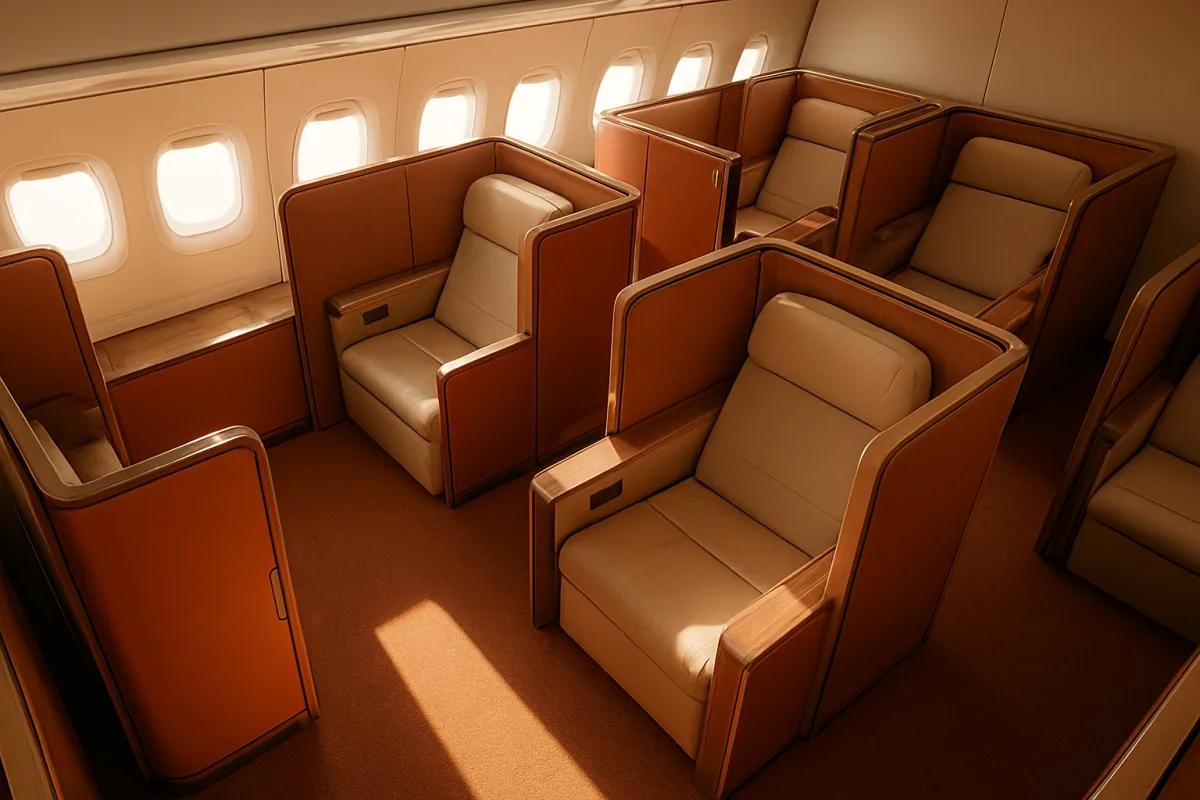
On September 2, 2026, American Airlines began flying retrofitted Boeing 777-300ERs with 70 lie-flat Flagship Suites, putting a more private business-class product on a large long-haul aircraft rather than reserving it for a small first-class cabin. [11]
That aircraft change is part of a wider 2026-27 push. Airlines are adding doors, larger screens, and suite-like privacy at the expensive end, while also spending on the less glamorous part of flying: getting you rebooked without a phone call.
The market case is straightforward. Travelers who will pay several thousand dollars for a long-haul premium seat also expect the airline to handle a misconnection, baggage problem, or lounge transfer with less friction than a generic boarding-pass scan.
Airbnb’s third-quarter revenue grew 19% to $4.9 billion, Skift reported, with nights and seats booked up 16%. Its stated drivers included search, pricing tools, flexible payments, and merchandising, evidence that travel companies see the booking and management experience as a revenue product, not back-office plumbing.
For you, this means the headline upgrade is rarely the whole purchase. A suite can be excellent on an overnight flight, but the better app feature may save more time when a weather delay turns one missed connection into an unplanned hotel night.
Premium suites: better cabins, sharply different prices
American’s Flagship Suite is the comparatively attainable new-suite option in this group. A round-trip business-class itinerary between New York JFK and London Heathrow has been reported at $2,400 to $4,200, depending on dates and availability. [6]
That price buys a long-haul business-class seat with suite-style privacy, not a separate first-class apartment or a private airport transfer. American has not published one universal suite fare because pricing changes by route, date, demand, and the aircraft assigned.
Delta One Suites sit higher on the usual price range. Round-trip Delta One fares to Europe have been reported at $4,500 to $9,000, while Asia-Pacific trips can run $6,500 to $12,000. [7]
Singapore Airlines Suites and Etihad’s Residence show how quickly the word “suite” stops meaning the same thing. Singapore Suites have been reported at $10,000 to $20,000 one way, while Etihad’s Residence can exceed $20,000 one way. [8][9]
Those are not interchangeable products. American and Delta are selling business-class privacy, while Singapore and Etihad have offered much more elaborate first-class accommodations on selected aircraft and routes, with availability that can disappear when equipment changes.
We would compare American’s Flagship Suite against a conventional lie-flat business-class fare on the exact same flight. If the suite premium is modest on an overnight eastbound Atlantic crossing, privacy and sleep can justify it, but we would not pay a large premium for a daytime flight.
The seat map deserves as much attention as the fare calendar. American’s 70-suite 777-300ER retrofit is a specific configuration, so booking an American business-class ticket does not guarantee that you will get the new product if your route uses another aircraft. [11]
Airlines also have a financial reason to make premium cabins dense with amenities. A study modeling premium air travel found that premium cabins can raise per-passenger emissions by up to 21.5%, while moving to all-economy layouts could reduce airline revenue by up to 23.1%. [2]
That tension helps explain the current design: airlines want high-yield seats, but they need enough of them to support the aircraft’s economics. Doors and cabin technology also add maintenance complexity, while engine leasing alone can reach $400,000 a month in some cases. [12]
Do not assume the published fare includes every travel cost around it. Airlines still separate many services into charges and bundles, and United, for example, sells Economy Plus seat upgrades from about $20 to more than $200 depending on the flight. [10]
There is thin public evidence on the total add-on cost attached specifically to premium suites across airlines. The fares above are useful planning ranges, but no carrier-wide data shows a standardized bundle of seat selection, lounge access, baggage, change flexibility, and airport service.
The app is becoming the first rebooking desk
American Airlines’ newest disruption feature addresses a common bad choice: accept a confirmed flight many hours later, or give up that seat to gamble on an earlier one. You can now join standby for an earlier flight in the American app or on its website while retaining the later confirmed booking.
View from the Wing reported that American’s Dynamic Rebooking tool will preserve a confirmed itinerary until the earlier standby request clears. If you clear, the original confirmed flight is replaced, so remove yourself from standby if you cannot take the earlier departure.
That is a meaningful improvement over a general standby button. In the reported example, a traveler facing a seven-hour Dallas to Charlotte delay could obtain a later confirmation but needed an agent to join standby for an earlier flight.
American has offered app-based same-day changes and standby since 2017, but this update puts standby into the disruption flow itself. Its October 26 iPhone app release notes also described the feature, according to View from the Wing.
United has gone further in one respect. Its September disruption feature lets eligible customers choose up to three earlier flights, monitors for newly available seats, and sends a text when one opens, while the customer keeps the confirmed reservation until choosing to switch.
American’s tool permits one standby listing, so United is the better option if your airport has several plausible earlier departures. American still gives you a reason to check the app first, especially if the only confirmed alternative is late that night.
The apps are improving because disruption handling is expensive. An airline can reduce call-center load and airport lines when customers make routine selections themselves, while passengers get a clearer sense of what seats and flights are actually available.
But app convenience is not a legal guarantee. Neither U.S. nor European rules set a specific standard for self-service standby, app rebooking, or how many alternate flights an airline must display.
U.S. Department of Transportation rules do require automatic refunds when a flight is canceled or significantly changed and you do not accept the alternative offered. The rule also covers certain significant delays, changes in airport, added connections, and cabin downgrades. [1]
Those protections are a floor, not a substitute for action. If the app offers an unacceptable itinerary, use it to see the inventory, then ask an agent about partner-airline space, a different routing, or a refund if you decide not to travel.
We would screenshot the original itinerary, every rebooking offer, and any hotel or meal voucher before accepting a change. That takes under a minute and gives you a record if a later refund, expense claim, or baggage dispute requires more than the app history.
Private airport help remains expensive and uneven
At Miami International Airport, Concierge Powered by CLEAR launched in June 2026 as a paid, airport-specific service intended to guide passengers through parts of the airport journey. Miami-Dade Aviation describes it as an effort to provide a more personalized travel experience at MIA. [17]
That local limitation is the first thing to understand. A Miami concierge booking does not help at Atlanta, Chicago O’Hare, or your return airport, so it makes sense only when the time saved at that one terminal has real value to you.
The broader private-airport-service trend has had setbacks. TSA canceled its Gold+ private screening program in August 2026 after operational problems, The New York Times reported, showing that an exclusive service still has to function within a public security system. [16]
Los Angeles has offered its private terminal service since 2017, while Signature Aviation began a phased Signature Access rollout in October 2026. These services target travelers willing to pay for separation from the main terminal, but availability and pricing vary by airport.
Public pricing and comparable usage data remain thin for several of these programs. That makes it hard to say whether a private terminal, concierge escort, or premium screening add-on delivers a repeatable time saving compared with arriving early and using standard security programs.
Airport upgrades also do not solve accessibility gaps by themselves. A review of airport-access studies found recurring physical and service barriers for travelers with disabilities, including inconsistent assistance and navigation challenges across terminals. [3]
We would spend on a private airport service only for a high-stakes departure, such as traveling with a client, managing a tight international connection, or flying with a traveler who needs dedicated assistance. For a normal leisure trip, the value is too dependent on one airport and one day’s queues.
Why airlines are competing on polish, but not always on price
Airlines are investing in nicer suites and smoother disruption tools while also defending their biggest hubs. Those goals can conflict: expanding flights may create more customer choice, but it can also reduce yields and provoke a rival with a stronger network at that airport.
Former American Airlines chief executive Doug Parker said on the Airlines Confidential podcast that carriers use Wall Street analysts to question a competitor’s expansion plans, even as he rejected the idea of direct executive-to-executive signaling. View from the Wing reported his comments. [14]
The mechanism is indirect. An airline can announce an aggressive response to a rival’s new route or hub growth on an earnings call, then analysts can ask whether the rival’s expansion will produce losses, making that investment harder to defend internally.
There is evidence that competition has increased over the past two decades, though lower-cost airlines still face obstacles entering concentrated markets, the Government Accountability Office found. The GAO also found that mergers from 2008 through 2013 led to short-term fare increases and service reductions on some routes. [4][5]
For trip planning, that means do not wait for a premium cabin or a new app to make an uncompetitive route cheaper. Check nearby airports, compare one-stop options, and price the itinerary again after an airline announces new service or a rival responds.
The 2026-27 flying upgrade is real, but it is uneven. We would prioritize a confirmed better seat on the route where you will sleep, an airline app that protects your fallback flight, and a fare you can still cancel or change without destroying the trip budget.
Frequently Asked Questions
What new airline and airport services are available in 2026-27?
Airlines are introducing more private premium cabins with doors and larger screens, such as American Airlines’ Flagship Suites on retrofitted Boeing 777-300ERs. They are also improving disruption management with app features that let passengers stand by for earlier flights while holding confirmed seats. However, private airport services remain limited, and better apps do not eliminate the need for backup plans due to varying airline rules and fare competition.
How do American Airlines Flagship Suites compare to other premium cabins?
American’s Flagship Suite offers business-class privacy with lie-flat seats at a round-trip cost between New York and London of $2,400 to $4,200. This is more attainable than Delta One Suites, which range from $4,500 to $12,000 depending on route, and far less expensive than Singapore Airlines Suites or Etihad’s Residence, which can exceed $10,000 one way. The Flagship Suite is best compared to conventional business class on the same flight and is more justifiable on overnight eastbound Atlantic crossings.
What are the latest app features for airline disruption management?
American Airlines now allows passengers to join standby for earlier flights via its app or website while retaining their confirmed later booking. United Airlines offers up to three earlier-flight standby options in its app. These tools help avoid long waits at airport counters but do not replace the need for backup plans due to inconsistent airline policies and rapidly changing fare availability.
Are private airport services widely available or limited to certain airports?
Private airport services are limited and should be considered local add-ons rather than network-wide benefits. For example, CLEAR’s concierge service is only available at Miami International Airport, and TSA ended its Gold+ private screening program in August 2026. Passengers should not assume private services are accessible at all airports.
When is it worth paying for premium airline suites on long-haul flights?
Paying for premium suites is most worthwhile on overnight long-haul flights where privacy and sleep quality significantly improve the experience. The premium is less justifiable on daytime flights or routes without the specific aircraft featuring the suite product. Confirming the route, aircraft, and fare before purchasing is important since not all flights on a route may have the new suites.
How we researched this
This article was assembled from 3 published articles, 17 cited references.
Nothing here is based on hands-on testing. Where a figure or finding appears, it belongs to the source cited beside it, and the writing says so rather than implying otherwise. Every source is listed below so you can check it.
Sources
Airbnb Outpaces Rivals With Its Fastest Revenue Growth in 3 Years, Skift
American Airlines Adds New App Option When Flights Go Wrong, Try For An Earlier Flight Without Giving Up Your Confirmed Seat, View from the Wing
Former American Airlines CEO Explains How Carriers Use Wall Street Analysts To Pressure Rivals To Stop Growing, View from the Wing
American Airlines Business Class Review 2026: Flagship Suite
Most Expensive Airlines in the World (2026), Ranked | FlightQueue
United Is Selling an Empty Middle Seat. Is It Worth the Upgrade?
Airline competition drives European air fares, study finds | EUBizNews
The T.S.A. Abruptly Scraps Its New Private-Security Model - The New York Times
Concierge Powered by CLEAR launched at MIA to elevate travel experiences
Related Articles
Alaska Airlines Premium Upgrades: Reserve vs Aurora Suites
Explore Alaska Airlines Premium Upgrades, comparing Premium Reserve and Aurora Suites to help choose the best option for your trip.
Hospitality and Airline Experience Innovations in 2026
Explore key innovations in hospitality and airline experience, including AI, capacity challenges, and premium travel improvements in 2026.
Airline Upgrade and Refund Policies
Learn about 2026 airline upgrade and refund policies, including paid upgrades, skipped segments, and elite upgrade changes.
Airline Innovations 2026: Enhancing Passenger Experience
Explore airline innovations in 2026 improving passenger experience, from automatic check-in to biometric travel and better disruption handling.