
Airline Upgrade and Refund Policies
Learn about 2026 airline upgrade and refund policies, including paid upgrades, skipped segments, and elite upgrade changes.
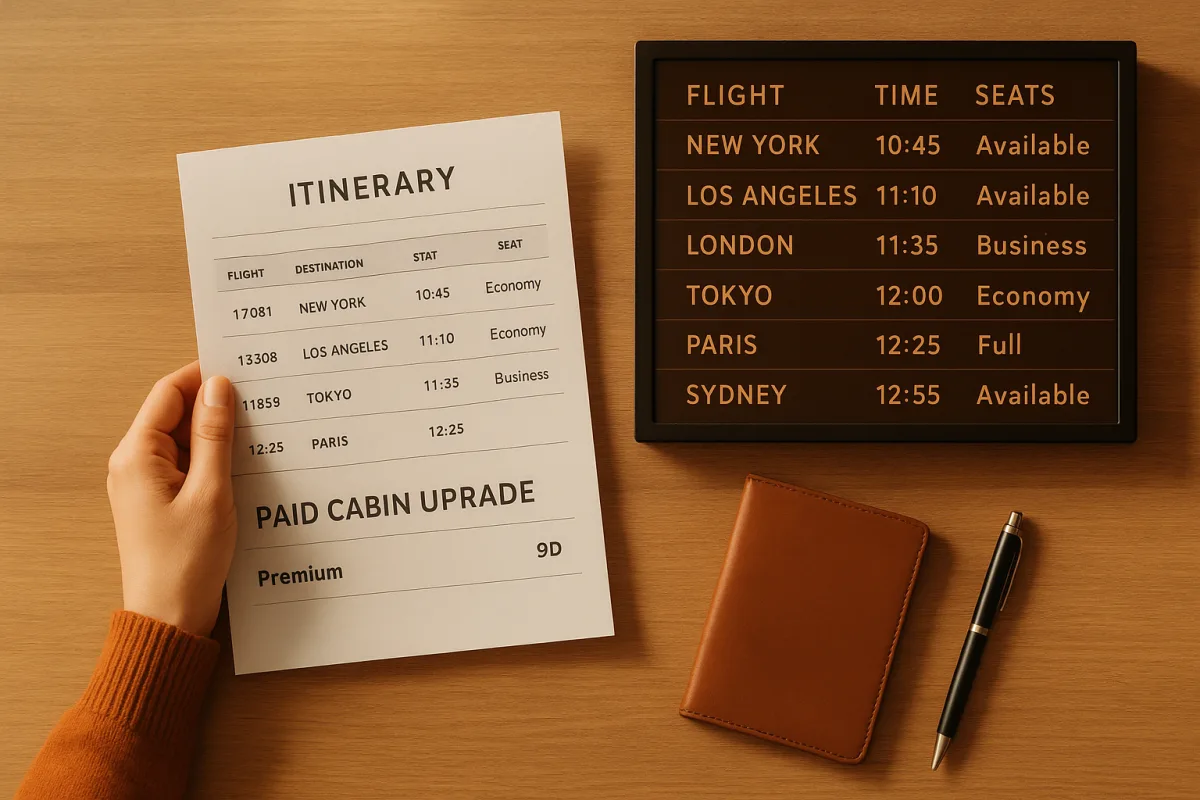
Airlines are selling more flexibility, but only selectively
The current airline trend is straightforward: carriers are expanding paid premium products while drawing firmer lines around what happens when travellers alter their plans. The cheap fare may still get you from A to B, but increasingly it does not buy much room for improvisation.
That is visible in several unrelated decisions. Lufthansa is formalising how it handles skipped segments, United keeps a strict written rule on paid-upgrade refunds despite occasional discretionary exceptions, and American Airlines has narrowed some elite upgrade benefits. [1][5]
At the same time, airlines are adding more ways to pay for comfort. JetBlue is launching a domestic first-class product, Delta is adding seasonal transatlantic capacity from Boston, and JetBlue has begun offering Mint upgrade bids through Plusgrade.
For someone planning a trip, the practical result is less about airline loyalty slogans and more about booking order. Choose the routing first, then decide whether a seat upgrade is worth paying for, and keep records when a change becomes unavoidable.
Lufthansa is not endorsing throwaway ticketing
Throwaway ticketing, also called hidden-city ticketing, means buying an itinerary with a connection and deliberately ending the journey at that connection rather than taking the final flight. It can sometimes cost less than buying the shorter trip directly.
Lufthansa’s position is more nuanced than a simple ban or permission. View from the Wing reported that the Lufthansa Group had introduced a process for travellers who need to deviate from their booked flight sequence after their circumstances change.
The airline’s broader 2026 conditions of carriage do not formally bless throwaway ticketing. They require passengers who depart from the itinerary sequence to notify Lufthansa promptly and provide evidence that the change arose after booking and was justified.
Illness, force majeure and other unforeseen events may be valid reasons. Booking a cheaper Frankfurt connection because you always intended to stop in Frankfurt is not the same thing, even if the fare difference makes the routing tempting.
The distinction matters because the airline can recalculate the fare when a passenger does not fly as ticketed. A traveller may later ask for a review, but that is a dispute-resolution process, not a fare-saving strategy to build into an itinerary.
View from the Wing noted that the relevant Lufthansa provision can apply to German residents, or to passengers whose itinerary starts or ends in Germany. Simply connecting at Frankfurt does not automatically put every itinerary under that particular rule.
The sensible approach is unglamorous but safer. If a genuine change means you cannot take a segment, contact Lufthansa before travel where possible, save medical or disruption documentation, and ask how the remaining flights will be treated.
There is one genuine exception worth understanding. Finnair explicitly permits travellers to miss certain bus links from Tampere or Turku to Helsinki Airport and still board their onward flight, according to View from the Wing.
Those ground segments are bus connections, not flights. The buses take roughly two hours from the city centres to Helsinki Airport, and Finnair says an unused bus portion is not refundable but does not cancel the air itinerary.
That can be useful if a friend drives you to Helsinki Airport or you decide to stay in Helsinki the previous night. It is not permission to skip a Tampere or Turku flight, and it should not be treated as a loophole for ordinary air segments.
A paid upgrade is not the same as a flexible ticket
United’s written policy remains the clearest warning for travellers tempted by a last-minute upgrade offer: paid upgrades are generally nonrefundable. If you voluntarily change or cancel, you may retain some ticket value while losing the money spent on the better seat.
Yet published passenger reports suggest the policy is not always the final outcome. View from the Wing documented customers who requested either a refund or an electronic travel certificate after changing a booking, and sometimes received one. [1]
One August 2025 case involved an award traveller who paid to upgrade a domestic connection, then had to travel earlier for work. United reportedly approved a refund after the passenger explained the change and asked to preserve the unused upgrade value. [1]
That is useful evidence, but it is not a guarantee. The same reporting includes a traveller who lost a $700 upgrade after postponing a trip, despite contacting United’s elite-service desk. [1]
There are no published success-rate figures for these requests. The safe budget assumption is therefore zero recovery, especially when an upgrade is expensive enough that losing it would alter the economics of the trip.
If plans change, contact United rather than simply cancelling online. Ask specifically whether the unused paid upgrade can be refunded, transferred to an electronic travel certificate, or applied to a replacement itinerary, then save the agent’s written response.
This is one area where persistence can have value, but not entitlement. United’s official nonrefundability rule still governs the purchase, and anecdotal customer outcomes do not change that policy. [1]
Elite upgrades are becoming less automatic
American Airlines is moving in the same general direction, though through loyalty benefits rather than cash upgrades. Since Aug. 25, 2026, complimentary elite upgrades on nine transcontinental and Hawaii routes have been capped at premium economy. [5]
That means eligible AAdvantage elites on those routes cannot expect an automatic complimentary move into Flagship Business. Mileage upgrades and systemwide upgrade certificates remain available, but those require a traveller to spend a more limited currency. [5]
For a traveller comparing fares, the lesson is to separate status from cabin certainty. Elite status may still improve boarding order, baggage allowances and upgrade priority, but it is increasingly unreliable as a substitute for buying the cabin you need.
This change also helps explain the broader premium push. Airlines have learned that seats at the front can generate revenue through cash sales, certificates, bids and targeted offers, rather than being held primarily for complimentary upgrades.
JetBlue is creating a domestic first-class ladder
JetBlue’s BlueFirst cabin is the clearest example of a carrier building another paid tier between its standard economy offering and its Mint business-class product. The first scheduled BlueFirst flight is JetBlue Flight 1169 from Boston to Fort Lauderdale on Dec. 8, 2026.
The Points Guy reports that BlueFirst will initially appear on selected Boston Logan to Fort Lauderdale flights, followed by some New York LaGuardia to Fort Lauderdale services. Early availability is limited because the cabin is being installed as aircraft return from retrofit.
BlueFirst seats will be arranged in two-by-two rows, with a 13.3-inch seatback screen, Bluetooth connectivity, five inches of recline and up to seven additional inches of legroom compared with the main cabin, according to The Points Guy.
On flights longer than 899 miles, JetBlue plans enhanced food and drink service. The aircraft will not have ovens, however, so travellers should expect cold premium meals such as the bento-style boxes JetBlue has previously described.
The important booking detail is that BlueFirst does not automatically mean lounge access. The Points Guy says passengers will not receive access to JetBlue’s BlueHouse lounges in Boston or New York JFK unless they qualify separately through a pass or credit card.
JetBlue has also said Mosaic members will receive space-available upgrade opportunities, while Mosaic 3 and Mosaic 4 members can use Move to Mint certificates for BlueFirst at variable redemption rates. Base fares may be excluded from upgrade eligibility.
As of Oct. 18, 2026, there is no passenger feedback on BlueFirst’s real-world performance, nor verified evidence of rollout problems. It is reasonable to expect patchy availability during retrofits, but not reasonable to claim the product has already disappointed travellers.
The practical booking move is simple: do not rely only on the route label. Open the seat map, confirm that BlueFirst is actually displayed, and compare the total fare difference against a standard seat with an extra-legroom option.
Delta’s Iceland route is useful, but check the cabin carefully
Delta is also leaning into premium segmentation from Boston. The Points Guy reported planned daily seasonal Boston Logan to Keflavík service from April 12 through Oct. 30, 2027, flown with a Boeing 757-200 featuring Premium Select recliner seats.
That schedule matters because Iceland is a short transatlantic flight from New England, typically around five hours westbound or eastbound depending on direction and winds. For many travellers, a recliner may be enough, particularly on a daytime flight.
The independent research brief describes Delta Premium Select as a premium-economy product with up to 38 inches of pitch, 19-inch seat width, seven inches of recline, larger screens, priority boarding, upgraded meals and no automatic lounge access. [2][3][4]
Delta One is materially different. It offers a lie-flat bed, higher-end bedding and meals, more personalised service, and access to Delta One lounges, including at Boston Logan where available. It is a business-class product, not simply a better Premium Select seat. [2][3]
There is an inconsistency worth flagging. The Points Guy’s Boston to Iceland route report specifies a 757-200 with Premium Select rather than Delta One, while the research brief describes both premium cabins in connection with Boston-Iceland travel.
Do not assume the route offers Delta One based on a generic Delta cabin comparison. Verify the flight number, operating aircraft and seat map before paying, especially when deciding whether an overnight flight justifies the premium.
Delta’s decision to operate Iceland through late October also reflects a wider shoulder-season strategy. A spring or autumn trip can mean fewer crowds than July and August, but weather, daylight hours and car-rental demand still matter more than airline marketing.
Refund rules now matter more than goodwill
The regulatory backdrop is improving, even as airline fare rules become more complex. Department of Transportation rules finalised in April 2024 require automatic cash refunds when airlines cancel or significantly change flights and passengers reject rebooking or a credit. [6]
Airlines must also disclose ancillary fees more clearly and automatically refund fees for services they fail to provide. Credit-card refunds are generally due within seven business days, while other payment methods have a 20-calendar-day deadline. [6]
Those protections are strongest when the airline fails to deliver what it sold. They do not mean a voluntary change triggers a refund for an optional cabin upgrade, a preferred seat, or a deliberately skipped flight segment.
That is why documentation matters. Save the original itinerary, fare rules, upgrade receipt, seat assignment, cancellation notice and every chat or email. If an airline changes the schedule, those records make it easier to distinguish its disruption from your own change of plan.
Frequently Asked Questions
Are paid airline cabin upgrades refundable if I change my plans?
Officially, airlines like United state that paid upgrades are generally nonrefundable. However, some passengers have successfully obtained refunds or travel credits by promptly requesting them and explaining their changed circumstances. Despite these occasional exceptions, the safest assumption is that paid upgrades are nonrefundable, so travelers should contact the airline immediately if plans change.
What are the latest airline policies on skipping flight segments?
Lufthansa requires passengers who skip segments to notify the airline promptly and provide evidence that the change was due to unforeseen circumstances arising after booking, such as illness or force majeure. Simply booking a cheaper itinerary with the intent to skip a segment is not permitted and may lead to fare recalculation. Finnair allows missing certain bus connections to Helsinki Airport without canceling the air itinerary, but this does not apply to actual flights.
How is Lufthansa handling throwaway ticketing in 2026?
Lufthansa’s 2026 conditions of carriage do not formally allow throwaway ticketing. Passengers who deviate from their booked itinerary must notify Lufthansa and justify the change with valid reasons occurring after booking. The airline may recalculate the fare if the passenger does not follow the ticketed sequence, and any disputes are handled through a review process rather than acceptance of throwaway ticketing as a fare strategy.
What changes have American Airlines made to elite complimentary upgrades?
As of August 25, 2026, American Airlines capped complimentary upgrades at premium economy on nine transcontinental and Hawaii routes. This change means AAdvantage elites no longer receive automatic complimentary upgrades to Flagship Business on these routes. Mileage-based and systemwide upgrade certificates remain unaffected by this policy change.
How should travelers approach booking and upgrading flights in 2026?
Travelers should first choose their routing carefully before deciding whether to pay for a seat upgrade. It is important to keep detailed records when changes become necessary, as paid upgrades are often treated as separate, nonrefundable purchases. Being proactive in communicating with airlines about itinerary changes can sometimes help recover upgrade costs or avoid penalties.
How we researched this
This article was assembled from 7 published articles, 6 cited references.
Nothing here is based on hands-on testing. Where a figure or finding appears, it belongs to the source cited beside it, and the writing says so rather than implying otherwise. Every source is listed below so you can check it.
Sources
The Plaza is closing, Dallas will welcome a beautiful new hotel and other hospitality news from this week — The Points Guy
The 'deadly' drink that symbolises New Orleans — BBC Travel
Lufthansa’s Approved Way To Skip A Flight: Throwaway Ticketing Now Requires Proof Your Plans Changed — View from the Wing
Delta Air Lines adds Iceland nonstops from Boston hub — The Points Guy
United Says Paid Upgrades Are Nonrefundable—Travelers Keep Getting Cash Or Credit Back By Asking — View from the Wing
JetBlue's first-class 'BlueFirst' will launch in December, is now on sale — The Points Guy
When You Can You Skip Your First Segment And Still Fly — Two Bus Codes To Know To Save Money On Airfare — View from the Wing
United Says Paid Upgrades Are Nonrefundable—Travelers Keep Getting Cash Or Credit Back By Asking
Delta Premium Select vs Delta One: Which is worth it for your trip? - The Manual
New Airline Rules: What’s in Effect and What’s Been Blocked - LegalClarity
Related Articles
Airline Loyalty Program Changes and Updates in 2026
Explore 2026 airline loyalty program changes, status updates, and how fare choices impact upgrades and benefits across major US airlines.
Hospitality and Airline Experience Innovations in 2026
Explore key innovations in hospitality and airline experience, including AI, capacity challenges, and premium travel improvements in 2026.
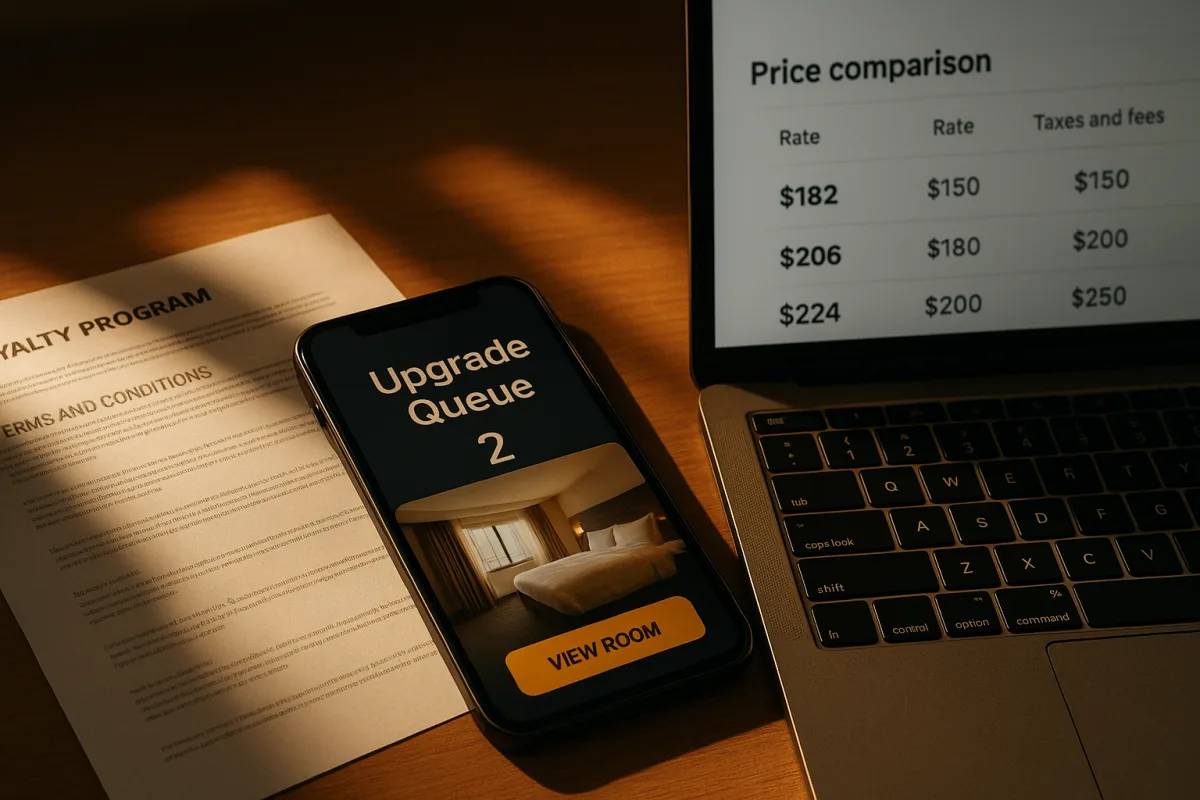
Hotel Booking and Upgrade Innovations
Explore hotel booking and upgrade innovations, including Marriott's upgrade queue and price transparency tips for smarter bookings.
New Airline Routes and Travel Credit Card Updates for 2026
Explore new airline routes and travel credit card updates for 2026 to find the best options for flights and rewards.