
Airline and Airport Service Improvements Enhancing Passenger
Explore airline and airport service improvements that enhance passenger experience, from Wi-Fi upgrades to faster airport processes and cabin comfort.
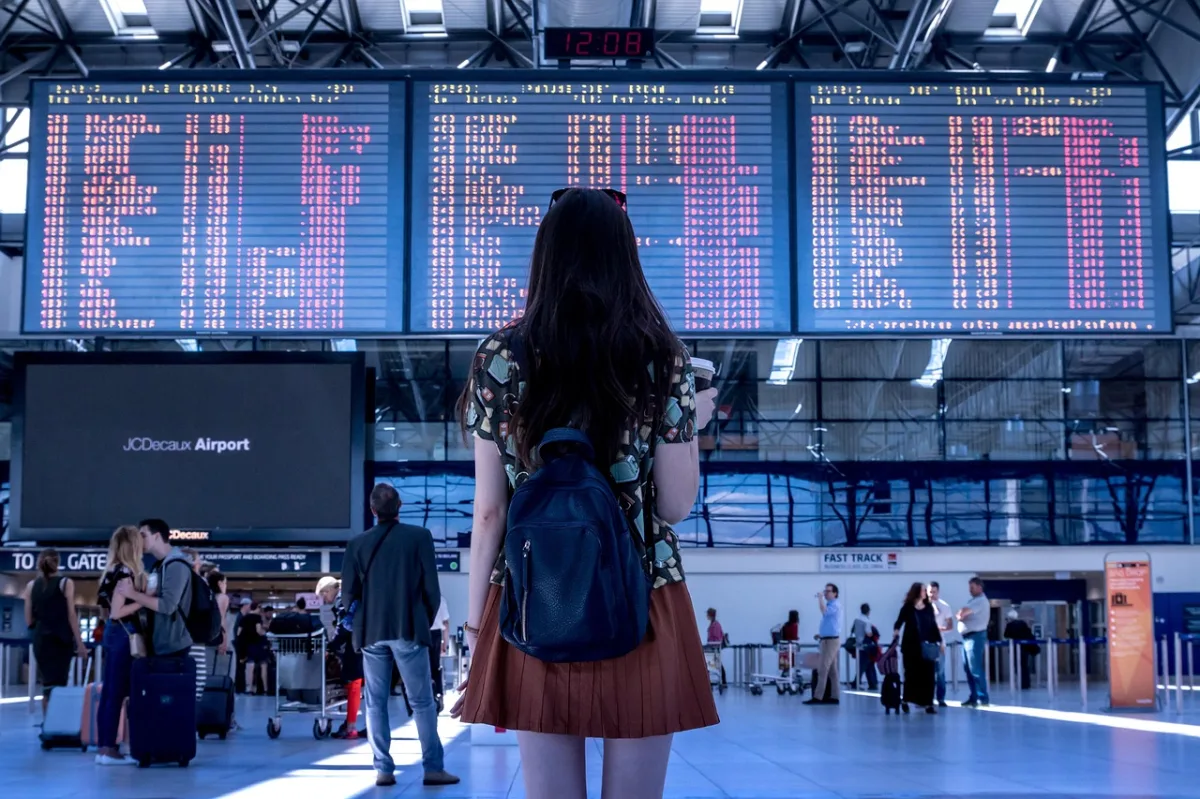
Photo: JESHOOTS-com via Pixabay
The boarding pass, the terminal, and the real choice
A seatback screen with Bluetooth, a free Wi-Fi login, and a snack pantry can make a six-hour economy flight easier. They do not help much if you spend two hours in a crowded terminal before boarding.
For many domestic travelers, the meaningful comparison is now between a conventional economy ticket on a major airline and JSX, the public-charter operator using small terminals and 30-seat regional jets. The first gives you reach. The second sells time.
JSX has acquired New Pacific Airlines and intends to use 42-seat Embraer ERJ145-LR aircraft under the acquired carrier’s Part 121 certificate, although it has not announced routes, schedules, fares, or an integration timetable. [5] That makes JSX’s expansion promising, but not bookable yet.
| Criteria | Major-airline economy | JSX |
|---|---|---|
| Wi-Fi and entertainment | Free Wi-Fi is increasingly available to loyalty members, plus seatback screens on several carriers, but aircraft equipment varies. | Starlink Wi-Fi is installed across JSX’s current fleet, according to View from the Wing’s reported onboard experience. |
| Seat and cabin | Standard economy seats remain narrow, but some airlines are adding headrests, snack bars, couch-style rows, and better entertainment. | Current aircraft use a one-by-one layout with a seat on each side of the aisle, plus a side table. |
| Airport time | Plan for the normal airport process, security, gate areas, and possible terminal changes. | Small terminals can mean much shorter arrival and exit times where JSX operates. |
| Route network and connections | Far stronger: domestic networks, international service, alliances, and recovery options when a flight cancels. | Limited city pairs and frequencies. New Pacific’s larger-aircraft plans remain unannounced. |
| Fare information | Fares vary by route and date, but major airlines compete widely and offer points redemptions. | JSX generally costs more than a basic major-airline ticket, but it has not published a systemwide fare comparison. |
| When plans go wrong | More flights and partners can help, though rules and gate processes remain rigid. | Fewer departures can leave you with fewer same-day alternatives if a flight is disrupted. |
1. Wi-Fi and entertainment
Major-airline economy wins on breadth, provided you enroll in the airline’s free loyalty program before travel. Delta offers free Wi-Fi to SkyMiles members on nearly all flights, Southwest offers it to Rapid Rewards members, and American rolled out free high-speed Wi-Fi for AAdvantage members on nearly all narrowbodies and dual-class regional aircraft by spring 2026. [3][9][10]
JetBlue remains the outlier because it provides free Wi-Fi to everyone, not only loyalty members. United and Alaska limit their free access to aircraft equipped with Starlink, so do not assume a free connection merely because your boarding pass carries their logo. [3][10]
Starlink is a meaningful improvement where installed. On one British Airways flight, it delivered downloads above 200 Mbps and uploads around 17 Mbps, enough for streaming and ordinary work, though speed and availability vary by airline, airplane, and route. [10]
JSX has an advantage if it flies your exact route. View from the Wing reported that JSX became the first carrier to complete Starlink installation across its full fleet, following an earlier period when its lack of internet was a notable shortcoming.
Entertainment is much stronger on the major carriers. The Points Guy reports that United, Delta, and JetBlue already have seatback screens widely installed, while American is returning to screens after stripping many from its aircraft years ago.
United is adding Bluetooth pairing so you can connect your own AirPods or similar headphones, and its Spotify partnership lets you use your account through the seatback system. Delta has added YouTube content and plans next-generation screens with further onboard features, according to The Points Guy.
We would not pay a large fare premium for this category alone. But if you need to work, download what you need before departure, join the loyalty program, and check the specific aircraft when possible.
2. Seat, sleep, and cabin comfort
Neither option transforms an economy ticket into business class. The Points Guy’s central caution is the right one: economy seats are not suddenly wider and legroom is not magically increasing.
Major airlines are instead adding small features around the same basic seat. Emirates has introduced its U-Dream economy headrest, with side wings intended to cradle your neck, a welcome detail on a long overnight flight to Dubai.
United is taking a different approach with its planned Relax Row, a paid add-on that turns three economy seats into a shared flat surface on selected Boeing 777 and 787 long-haul aircraft. Air New Zealand has long offered a similar Skycouch product on transpacific routes.
Air New Zealand is also preparing Skynest, a separate bunk-bed area in economy. A four-hour nap slot will cost an additional $495, which buys sleep time only, not a better fare class or a private room. The Points Guy reported the planned price.
United’s new Airbus A321XLR will use its last row for a walk-up snack bar, an area that gives passengers somewhere to stretch on a long single-aisle flight. JetBlue has offered a similar pantry concept on long-range aircraft for years.
JSX’s existing cabin proposition is less about sleep products and more about personal space. A View from the Wing reviewer described one seat on each side of the aisle and a side table, a layout far less dense than typical regional economy.
That said, JSX’s planned 42-seat Embraer operation may not feel identical. The ERJ145-LR expansion involves larger aircraft, a different regulatory structure, and potentially a different cabin layout, while JSX has not published the final product details. [5]
3. Airport time
This is where JSX can justify its higher fare. View from the Wing reported arriving at a JSX terminal 19 minutes before departure, then reaching a Lyft in Austin less than 10 minutes after touchdown.
That experience is not a promise for every JSX airport, but it describes the reason the carrier exists. Its use of private-style terminals cuts out much of the large-airport routine, including long walks, crowded gate areas, and the buffer time you build into a conventional flight.
A major airline remains the better option if you need a morning departure, an evening backup, or a connection. JSX’s model depends on limited airport real estate and specific city pairs, and its thin schedules can turn a delay into an overnight problem.
The New Pacific acquisition could broaden its reach because Part 121 certification permits scheduled aircraft operations beyond the 30-seat ceiling of JSX’s current Part 135 public-charter model. It also brings stricter operating, staffing, and cost requirements. [5]
We would choose JSX for a nonstop trip when it saves a substantial amount of door-to-door time, especially for a short business trip or a weekend where hours matter. We would skip it for an itinerary where a missed flight would leave you stranded.
4. Routes and connections
Conventional economy wins clearly on network. This becomes especially important on international trips, where a flashy onboard feature matters less than one ticket, through-checked bags, and a workable connection.
American Airlines and Israir signed interline and codeshare agreements on November 19, with initial implementation targeted by the end of 2026, subject to regulatory approvals, technology work, and operational readiness. [6] Israir currently flies five weekly JFK-Tel Aviv services.
The immediate benefit is for an Israir passenger continuing beyond New York on American. Israir operates from American’s Terminal 8 at JFK, so an eligible connecting itinerary avoids a terminal transfer, an important benefit because JFK terminals are not connected airside.
There are limits. Arriving passengers from Israel must still clear U.S. immigration and customs, collect checked bags, and recheck them before a domestic connection. The agreement does not yet provide AAdvantage miles, Loyalty Points, award tickets, or reciprocal elite benefits on Israir.
American plans to resume daily JFK-Tel Aviv service on March 27, 2027, using Boeing 777-200ERs. Israir projects the partnership can expand its potential customer base by 20% to 25% and generate $20 million to $40 million in annual revenue, though that is the airline’s projection, not a guaranteed passenger benefit. [7]
For ultra-long-haul travelers, Qantas plans to begin Sydney-London Project Sunrise flights in October 2027, followed by Sydney-New York. The Airbus A350-1000 cabins will include a well-being zone for stretching and movement during flights approaching a full day airborne, The Points Guy reports.
5. Rules, disruptions, and behavior
Better cabins do not soften airline rules. Southwest’s Companion Pass lets a designated companion fly for taxes and fees starting at $5.60 each way when traveling with the passholder, but the companion reservation is canceled if the passholder does not travel. [8]
View from the Wing reported one Las Vegas passenger’s account of being removed from a roughly 9 p.m. Southwest flight to Boise after her husband, the Companion Pass holder, did not board. She said she offered to buy her own ticket at the gate but was removed and quoted about $400 for travel the next morning.
Southwest has not published evidence on how often a last-minute conversion from companion ticket to paid ticket can be processed at the gate. Treat the rule as absolute: if the passholder is not flying, fix the reservation before boarding begins.
The same applies to conduct in an airport or cabin. The FAA’s permanent zero-tolerance policy permits civil penalties up to $43,658 per violation, with multiple violations possible during one incident. Serious cases can also face criminal prosecution. [1]
View from the Wing reported that Tampa police arrested a passenger after American Airlines denied her boarding on November 8, alleging intoxication, resistance, kicking an officer, and spitting. Those are police allegations, and American did not respond to the publication’s request for comment.
United’s policy effective February 27, 2026 requires headphones for audio and video content and prohibits voice and video calls from door closure through the flight. Violations can lead to removal or a future travel ban. [4]
Who each option suits
Choose major-airline economy if you need the lowest realistic fare, multiple departures, connections, international reach, loyalty benefits, or recovery options after a cancellation. We would pick it for nearly every trip involving a connection, a checked bag, or an itinerary where missing one flight ruins the whole journey.
Choose JSX if it operates a nonstop flight between your actual origin and destination, and avoiding a large terminal is worth paying extra. It best suits travelers who can be flexible with limited schedules and place a high value on arriving close to departure and leaving the airport quickly.
They are not close on network breadth, international service, or backup options. They are closer on onboard connectivity, where major airlines are finally making free Wi-Fi common, while JSX remains compelling for the traveler whose biggest complaint is the airport itself.
Frequently Asked Questions
What are the latest airline and airport service improvements?
Major airlines are expanding free in-flight Wi-Fi access to loyalty program members, with American, Delta, Southwest, and others rolling out high-speed connectivity on nearly all narrowbody and regional aircraft. JSX has installed Starlink internet fleetwide, offering strong Wi-Fi speeds on its smaller jets. Airport service improvements focus on reducing time spent in terminals, with JSX using small terminals to shorten arrival and exit times compared to major airlines’ larger, busier airports.
How does JSX compare to major airlines in passenger experience?
JSX offers a different value proposition by saving airport time through small terminals and quicker boarding, using 30-seat regional jets with a one-by-one seating layout and side tables. Major airlines provide broader route networks, more frequent schedules, and international connections but involve longer terminal times. JSX’s in-flight Wi-Fi is strong due to Starlink, but its route options and flight frequencies are limited compared to major carriers.
Which airlines offer free in-flight Wi-Fi and entertainment?
JetBlue provides free Wi-Fi to all passengers, while Delta, Southwest, and American offer free Wi-Fi primarily to loyalty program members on most flights. United and Alaska Airlines limit free Wi-Fi to aircraft equipped with Starlink technology. Major airlines like United, Delta, and JetBlue have widespread seatback entertainment screens, often with Bluetooth headphone support and partnerships for streaming content, whereas JSX relies on Starlink Wi-Fi but does not have extensive seatback entertainment.
How do airport terminal processes affect total travel time?
Airport terminal processes significantly impact total travel time, often more than the flight itself. Major airlines operate from large, crowded terminals requiring longer security and boarding times. JSX uses small private terminals, which can greatly reduce time spent arriving, checking in, and exiting, making it a better option for travelers prioritizing speed over fare or route options.
What cabin comfort improvements are available in economy class?
Economy seats remain narrow with limited legroom across airlines, but some carriers are adding features like adjustable headrests, snack bars, and couch-style rows for added comfort. United is introducing a paid Relax Row that converts three seats into a shared flat surface on select long-haul aircraft. Air New Zealand offers a Skycouch product and plans a paid Skynest bunk-bed area for naps, though these are additional-cost options rather than standard economy upgrades.
How we researched this
This article was assembled from 5 published articles, 10 cited references.
Nothing here is based on hands-on testing. Where a figure or finding appears, it belongs to the source cited beside it, and the writing says so rather than implying otherwise. Every source is listed below so you can check it.
Sources
7 ways airlines are upgrading the flying experience in economy, The Points Guy
Florida Passenger Barred By American Airlines, She Kicks Police, Spits In An Officer’s Face, View from the Wing
JSX Buys New Pacific Airlines, 42 Seat Jets Could Bring Its Private Terminal Flights To More Travelers, View from the Wing
American Airlines Hasn’t Flown To Israel Since October 7, Now It’s Partnering With The Airline Flying Its Old Jets, View from the Wing
Southwest Airlines Passenger Was Kicked Off When Her Husband Didn’t Board The Plane, Even Though She Offered To Pay, View from the Wing
FAA: Zero-Tolerance Policy Against Unruly Passengers Here to Stay | Federal Aviation Administration
The FAA will consider tighter regulation of charter flights that look more like airline service
United Airlines' New Policy Could Get Passengers Permanently Banned
JSX buys New Pacific to fly 42-seat Embraer ERJ145s · The Travel Signal
ISRAEL: Israir And American Airlines Sign Codeshare And Interline Agreements, Target End-2026 Start
Israir signs American Airlines pact, projecting $20-40 million a year | Israel.com
Free Wi-Fi on Planes 2026: Delta, United, Southwest, American, JetBlue
Related Articles
Airline Service Enhancements and New Flight Routes in 2026
Discover upcoming airline service enhancements and new flight routes, including seatback screens and premium cabin upgrades for 2026.
Airline Innovations 2026: Enhancing Passenger Experience
Explore airline innovations in 2026 improving passenger experience, from automatic check-in to biometric travel and better disruption handling.
New Airline and Airport Services for 2026-27: What to Expect
Explore new airline and airport services in 2026-27, including premium suites, app rebooking tools, and private airport options worth paying for.
Hospitality and Airline Experience Innovations in 2026
Explore key innovations in hospitality and airline experience, including AI, capacity challenges, and premium travel improvements in 2026.