
Foraging, Hunting, and Fishing Travel Experiences Guide
Explore foraging, hunting, and fishing travel experiences with tips on costs, logistics, legal rules, and what to expect on guided trips.
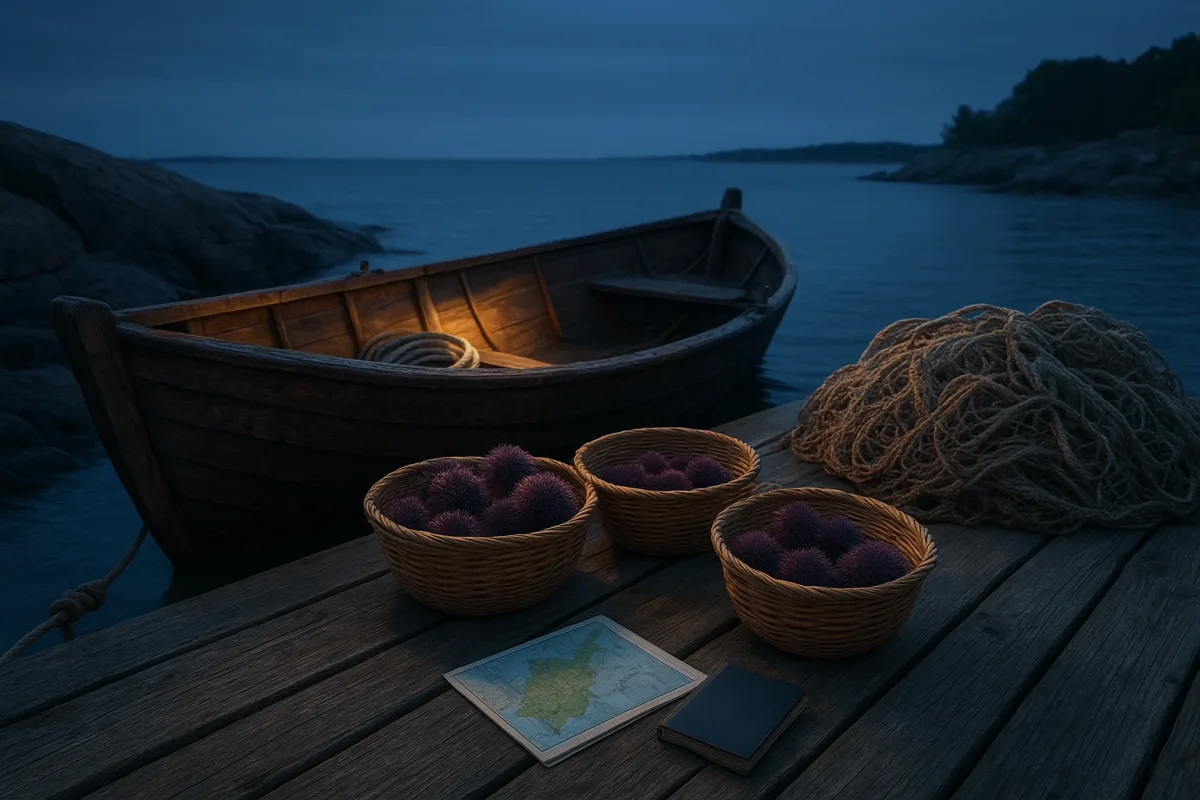
The shift: travellers are paying to source dinner
Foraging, fishing, and hunting are moving from specialist pastimes into bookable travel experiences. The new version is usually not a survival course or a rugged DIY expedition. It is guided, food-led, safety-managed, and often paired with a lodge, chef, or restaurant.
Condé Nast Traveler’s recent North American reporting places purple sea urchin gathering on Sonoma’s coast, octopus fishing with Yucatán fishers, and a women-only pheasant retreat in South Dakota within the same travel category. Its broader trend reporting identifies hotels, independent guides, chefs, and outdoor educators all packaging participation rather than simply serving local food.
That matters because these are different businesses arriving at the same proposition. A coastal guide can sell tide-pool instruction, a pheasant lodge can add firearm training and bird processing, and a hotel chef can turn a catch into dinner. The common product is access to food knowledge.
There is also a practical change in the traveller’s role. Farm-to-table once meant reading a menu note about a nearby grower. This newer version asks visitors to pick, pull, cast, clean, butcher, or cook, with the activity becoming the reason for the trip.
Still, it is important not to overstate the evidence. The supplied reporting is rich in examples but does not provide national booking totals, year-on-year sales, or proof that these trips have displaced conventional fishing charters, culinary tours, or hunting holidays.
The more defensible conclusion is that providers are converging on a marketable format: a structured outdoor experience, local food at the end, and an environmental explanation in the middle. That is a real supply-side trend, even if the size of its audience remains unclear.
Why this is happening now
Part of the appeal is straightforward: many travellers want a closer account of where dinner came from. Condé Nast Traveler quotes Bucknell University food-and-tourism anthropologist Clare Sammells on travel’s capacity to make unfamiliar activities feel possible, including tasks that would not fit ordinary urban routines.
The format also answers a problem with passive food tourism. A tasting menu can tell a visitor that something is local, but it cannot teach the constraints behind that word. Tides, weather, habitat, licensing rules, closed seasons, and a poor catch day make provenance more concrete.
The strongest operators turn those constraints into the experience rather than hiding them. The Sonoma sea-urchin outing described by Condé Nast Traveler is tied to low tide, slippery rocks, kelp ecology, and the region’s purple-urchin overabundance, not just an opportunity to eat uni.
Likewise, its South Dakota pheasant report centres training, firearm handling, habitat, processing, and the emotional reality of killing an animal. That is notably different from selling a shooting weekend with a chef’s dinner attached.
There is also a demographic opening. Condé Nast Traveler cites a 2022 federal survey finding that women account for roughly 22 percent of American hunters, or about 3.7 million people, and describes women as hunting’s fastest-growing demographic. [6]
That does not prove every women-focused retreat will thrive, but it explains why programmes designed for first-time hunters exist. A group with instruction, guides, shared lodging, and processing can reduce the intimidation of entering an activity long marketed to experienced participants.
Sonoma sea urchin: the easiest entry point, with legal limits
For a traveller who wants to try wild-food travel without firearms or offshore boats, Sonoma Coast sea urchin foraging is the most approachable example in the available reporting. Sonoma.com advertised a May 2026 sunrise uni-foraging outing, evidence that the activity is becoming a scheduled visitor experience rather than solely an informal local practice. [2]
The useful planning detail is that this is not a free-for-all. California requires a valid recreational ocean fishing licence for recreational sea-urchin gathering, and the state’s rules govern species, methods, locations, and take limits. [1]
The headline allowance can sound generous. California regulations allow a daily limit of 40 gallons of purple sea urchin for divers, but that should not be read as a sensible target for a visitor on a food-focused walk. [1]
Marine Protected Areas are the bigger trap for a casual traveller. Collection can be prohibited within particular protected waters, so a licence alone does not make a shoreline legal. Check California Department of Fish and Wildlife regulations and current MPA maps for the exact cove before packing tongs. [1]
The best time is dictated by tide tables rather than a scenic season. Plan around a low tide after dawn, leave a weather buffer, and wear footwear suitable for wet rock. Condé Nast Traveler’s Sonoma reporting stresses that falling is a more immediate concern than locating urchins.
Costs are the weak point. The research brief found little reliable, comparable data on guided U.S. foraging prices or equipment rental, so travellers should not assume a standard rate. Ask whether the fee includes a guide, harvesting tools, cleaning instruction, licence, transport, and a legal take-home container.
Fishing trips sell uncertainty, not just a catch
Fishing has long been travel’s most developed version of this category, from half-day inshore charters to expensive offshore private boats. What is changing is the culinary framing: guests increasingly want to understand a fishery and eat, preserve, or cook what is landed.
Budgeting needs more care than the headline charter fare suggests. A shared half-day charter can begin around $150 per person, while a private full-day offshore trip can exceed $2,500, with permits, rental equipment, gratuities, fuel surcharges, and transport sometimes extra. [11][12]
For a self-booked trip, car hire can add roughly $45 to $80 a day before insurance and fuel, according to 2026 U.S. travel-cost guides. Resort fees, parking, sales tax, and guide tips can raise a nominal activity budget by 25 to 40 percent. [13][14]
The Yucatán octopus story is useful precisely because it reveals a limit to trend coverage. Condé Nast Traveler documented a day with an artisanal fisher near Río Lagartos, but current research did not identify prominently marketed octopus-fishing tours that a visitor can simply reserve.
Do not book flights assuming this specific experience is available. Río Lagartos operators instead advertise tarpon fly fishing and deep-sea trips, with quoted 2026 trips around $210 to $550, plus a 125 Mexican peso federal reserve fee per person per day. [3][4]
That gap is a warning for this entire category. A magazine feature may show access through professional relationships, while a normal traveller faces a different booking market. Contact local operators directly, ask what species are in season, and accept that a fishing trip may produce learning but no harvest.
Hunting is the clearest case for structured training
Hunting is where the “participatory food travel” label has the most limits. The activity involves weapons, animal welfare, state rules, land access, and processing. A responsible first trip needs more preparation than a foraging walk or a guided angling session.
Condé Nast Traveler’s report on Hunt Like a Girl describes a three-day, women-only first-time hunting retreat at A1 Al’s Pheasant Ranch near Emery, roughly 45 minutes from Sioux Falls. The programme combines safety instruction, guided pheasant hunting, habitat discussion, and bird processing. [6]
The location matters because private-land access is central in South Dakota. Travellers cannot treat fields as open recreational space, and permission is required to hunt private property. State rules also set legal shooting hours and season dates. [5]
For the 2026 to 2027 South Dakota pheasant season, hunting runs October 17 through January 31, from 10 a.m. until sunset. A small-game licence is required, and the exact rules, licence type, and nonresident requirements should be confirmed through official state channels before booking. [5]
There is no evidence in the research brief of unusual incident rates or special legal liabilities at women-only retreats, so there is no basis for implying they are inherently risky. The sensible concerns are the ordinary ones: firearm safety, uneven ground, cold weather, fatigue, legal compliance, and clear guide supervision.
Price is equally variable. U.S. guided hunts typically run from about $300 to $1,700 per person, averaging roughly $1,000 in the cited cost guides, before permits or licences costing about $15 to $250 and transport that can range from $100 to $2,000. [9][10]
Ask what the hunt fee actually covers. Lodging, meals, ammunition, gun rental, guide gratuity, bird cleaning, vacuum sealing, shipping frozen meat, and airport transfers may all be separate. A listed per-person rate is not necessarily the cost of getting edible birds home.
Regulations are becoming part of trip planning
Travellers should expect licenses to cost more and rules to be more specific than a few years ago. A 2026 fee roundup identifies increases in Oregon, Maine, North Dakota, New Mexico, Nebraska, and Missouri, affecting resident and nonresident anglers differently. [7]
The increases are not trivial for visitors. Maine’s nonresident fishing licence rose from $64 to $83, North Dakota’s from $45 to $60, and New Mexico’s from $56 to $90, according to the same compilation. [7]
Hunter education is another administrative obstacle that cannot be solved at the trailhead. New Jersey, for example, requires first-time hunting applicants to complete its Hunter Education course and no longer accepts out-of-state hunting licences in its place. [8]
This is why a food-and-nature trip needs to be planned in reverse. Start with the legal season, species rules, licence lead time, land access, and transport. Only then choose the lodge, guide, or restaurant that turns the activity into a holiday.
The strongest reason to book one of these experiences is not a promise of self-sufficiency or conservation heroics. One morning of gathering urchins will not restore a kelp forest, and one guided hunt will not explain an entire wildlife-management system.
What it can do is make a destination legible through its working constraints: Sonoma’s tides and protected waters, South Dakota’s pheasant habitat and private land, or a fishing town’s weather-dependent catch. That is a more useful travel experience than a staged local-food story, provided the operator is candid about what visitors can and cannot expect.
Frequently Asked Questions
What should I know before booking a foraging, hunting, or fishing travel experience?
These trips should be booked as guided food and wildlife education experiences rather than guaranteed harvests, since factors like weather, tides, animal movement, and seasonal closures can result in no catch. The focus is often on learning about local ecology, safety, and food processing rather than just the harvest itself. First-time participants may also need to complete safety training and secure appropriate licenses.
How much does a guided hunting or fishing trip typically cost?
Guided U.S. hunting trips generally cost between $300 and $1,700 per person, but this price usually excludes licenses, transportation, tips, and accommodation. It is important to budget for these additional expenses rather than treating the advertised hunt price as the total cost.
What are the legal requirements for sea urchin foraging in California?
In California, recreational sea urchin foraging requires a valid fishing license. Collectors must also check Marine Protected Area (MPA) maps carefully, as harvesting is prohibited in these zones. While the daily limit for purple sea urchin is 40 gallons for divers, this is not necessarily a sensible target for casual visitors.
How do guided hunting trips differ from traditional hunting holidays?
Guided hunting trips focus on structured outdoor experiences that include safety training, firearm handling, habitat education, and animal processing. They often cater to first-time hunters and may include shared lodging and group instruction, making them different from traditional hunting holidays that may emphasize just the hunt and a chef-prepared meal.
What are the best seasons and locations for hunting and fishing travel?
For example, South Dakota’s 2026 pheasant season runs from October 17 through January 31, with shooting allowed from 10 a.m. to sunset. Locations like Sonoma Coast in California offer sea urchin foraging, which can be done year-round but requires attention to tides and protected areas. Always check local regulations and seasonal closures before planning.
How we researched this
This article was assembled from 5 published articles, 14 cited references.
Nothing here is based on hands-on testing. Where a figure or finding appears, it belongs to the source cited beside it, and the writing says so rather than implying otherwise. Every source is listed below so you can check it.
Sources
Waymo Picks Ramp for Its First Business Travel Expense Partner: Exclusive — Skift
Foraging for Purple Sea Urchins Along California's Sonoma Coast — CN Traveler
A Day at Sea With the Octopus Fisherman of the Yucatán — CN Traveler
Why You Might Find Yourself Fishing, Foraging—Or Even Hunting—On Your Next Vacation — CN Traveler
Learning to Hunt Pheasant at an All-Women Retreat in South Dakota — CN Traveler
Sunrise Urchin (Uni) Foraging on Sonoma Coast – 05/17/2026 | Sonoma
Professional Sport Fishing Tour | Deep Sea Fishing in Río Lagartos
Learning to Hunt Pheasant at an All-Women Retreat in South Dakota | Condé Nast Traveler
Fishing License Fee Changes 2026: Every State That Raised Prices
Licenses, Permits & Fees - New Jersey Hunting | eRegulations
Fishing Charters & Guides: Costs, What's Included & How to Book (2026) — Big Big Game Fishing Co.
Fishing Cost Guide — Average Prices, Ranges & Full Breakdown
Related Articles

Unique Travel Experiences and Cultural Insights in Bhutan
Explore unique travel experiences and cultural insights in Bhutan and Sudan, including Bhutan tour costs and Sudan travel safety updates.
European City Travel Insights: Venice, Budapest, and Paris
Get practical insights on traveling to Venice, Budapest, and Paris including budgets, logistics, and how to get around each city.

Portugal Day Trips from Lisbon: Highlights, Costs & Tips
Discover top Portugal day trips from Lisbon with costs, transport, and highlights for Évora, Sintra, and more. Plan your perfect day trip easily.
Underrated Travel Destinations Logistics and Budget Tips
Explore underrated travel destinations in 2026 with practical logistics, budget advice, and transport tips for a smooth trip.