
Unique Travel Experiences and Cultural Insights in Bhutan
Explore unique travel experiences and cultural insights in Bhutan and Sudan, including Bhutan tour costs and Sudan travel safety updates.
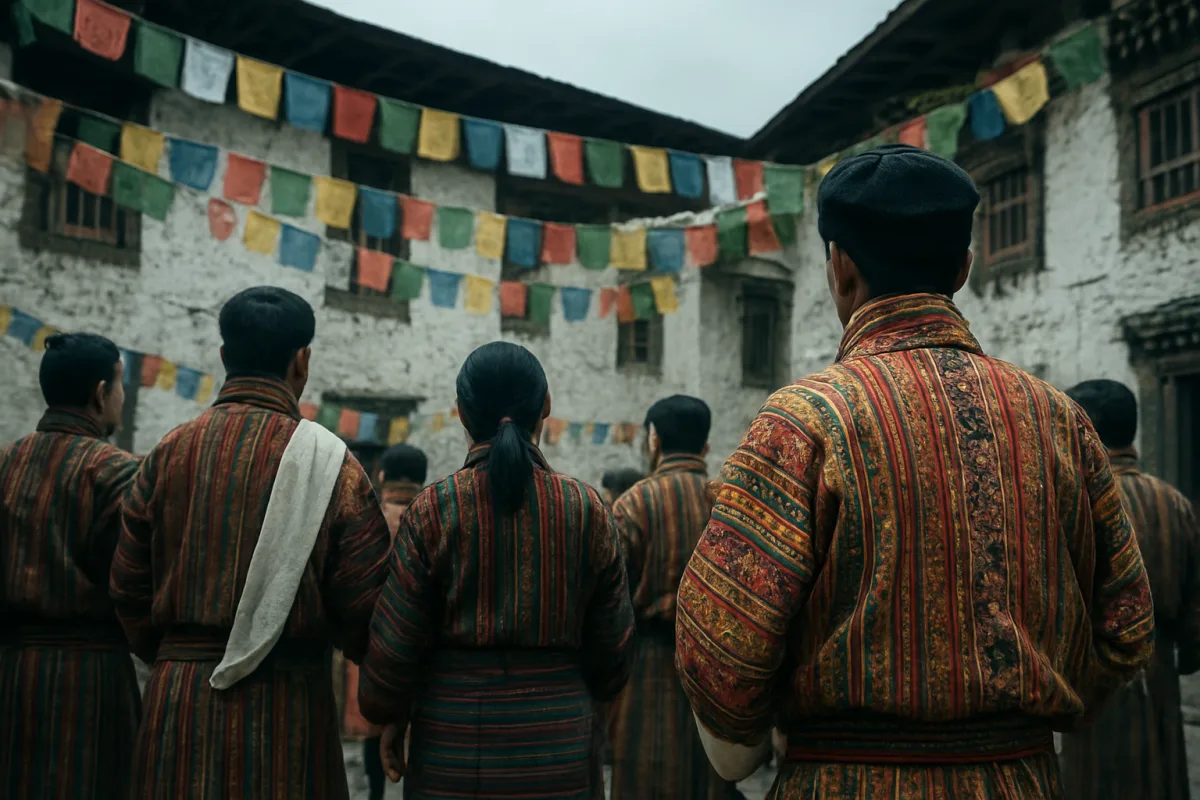
The important number is not Bhutan’s daily price, it is the real cost of a guided week
Bhutan is often sold through a vague idea of exclusivity. The practical reality is simpler: foreign visitors generally buy a structured itinerary, usually through a Bhutanese operator or an international company working with one.
That structure shapes what you see, who arranges it and what the trip costs. It also makes Bhutan fundamentally different from Sudan’s borderlands, where no comparable visitor system exists and attempting independent travel is not a sensible option.
A published Bhutan cultural-tour guide puts a seven-day trip at about US$1,700 to US$2,500 per person, excluding international flights.[6] That range is more useful than a headline daily rate because it reflects the package travellers actually purchase.
The lower end generally assumes a group tour, standard accommodation and a tightly planned route. The higher end can reflect a smaller group, upgraded hotels, a private vehicle, festival dates or a more elaborate itinerary.
For a realistic benchmark, Himalayan Windows advertises an eight-day Thimphu Tshechu festival trip at around US$2,000 per person for a group of at least eight, according to Bhutan Travel’s festival-tour listings.[7] A solo traveller should not assume that price applies.
Group size matters because the vehicle, guide and driver costs are shared. A party of eight can spread fixed logistics across eight people, while two people booking privately may receive a very similar itinerary for a substantially higher per-person bill.
Most Bhutan packages in this price bracket include accommodation, transport within Bhutan, a licensed guide, driver, meals and sightseeing. The research brief notes that the mandatory Sustainable Development Fee, or SDF, and visa fees are included in most packages, but travellers should ask explicitly before paying.
International flights are normally extra. So are personal purchases, alcoholic drinks, tips, travel insurance and any unusually expensive hotel upgrade. Cordyceps-infused whisky, for example, is not a small incidental cost: Luke Martin’s Bhutan film reports paying US$120 for one bottle.
The practical lesson is to compare inclusion lists, not just advertised totals. A US$1,900 tour that includes the SDF, visa processing and meals can be cheaper than a lower-looking quote which excludes mandatory charges or treats festival tickets as extras.
Why Thimphu Tshechu is worth scheduling around
If the aim is cultural access rather than ticking off Himalayan views, Thimphu Tshechu is a strong reason to choose a particular week. It is a major religious festival in the capital, bringing together ceremonial masked dances, monastery rituals and Bhutanese families in formal dress.
Luke Martin’s report from the festival shows men in the gho, Bhutan’s wrapped knee-length national dress, and women in the kira. Those clothes can appear staged in tourism photographs, but a festival is when they function as social attire rather than costume.
The useful part of a guide here is not simply explanation. A guide can tell you what is religious observance, what visitors may photograph, where to stand without obstructing worshippers, and when a seemingly casual food or drink ritual has a formal context.
This is also where Bhutan’s managed-tourism model earns its cost. You are not buying an unmediated encounter, and anyone promising that is overselling. You are buying organised access to places and occasions where independent visitors may not understand the rules.
Book accommodation in Thimphu early if the festival is central to the trip. Festival weeks concentrate demand in the capital, and the savings from a cheaper hotel can disappear if the only remaining rooms require costly transfers or compromise the itinerary.
Doma explains more about Bhutan than a generic “happiest country” label
One small object, the areca nut known locally as doma, is a better cultural lens than the familiar claim that Bhutan is the world’s happiest country. It connects hospitality, stimulants, public health and the ordinary practicalities of attending a long festival day.
Doma is typically areca nut combined with betel leaf and lime. In Luke Martin’s report, Bhutanese participants explain its place as a social offering and a stimulant, while the filming makes clear why it is hard to romanticise: it produces red saliva and stains teeth.
The lime is not decorative. It helps release compounds from the nut, which is why chewing can create a tingling, stimulating sensation. The cultural form matters: a traveller offered doma is being included in a social practice, not handed an exotic snack.
That does not make it harmless. BhutanWiki notes that betel-nut chewing carries risks including oral cancer, periodontal disease and oral submucous fibrosis, a condition that restricts mouth opening.[8] Visitors do not need to try it to understand its role.
There is no specific Bhutanese national framework regulating doma consumption, according to the research brief. Bhutan’s tobacco legislation addresses tobacco rather than betel nut, while some local cleanliness rules target public spitting, an obvious issue with doma’s red residue.[8][9]
That regulatory gap is worth understanding. Legal and culturally normal are not the same as healthy. Treat doma as you would a locally customary tobacco product: observe, ask before accepting, and decline politely if you do not want it.
A guide can translate the etiquette, but no guide can make the health risk disappear. For travellers with mouth sores, dental problems or an aversion to chewing stimulants, saying no is the uncomplicated and sensible choice.
Food and drink: understand the supply chain, not just the menu
Bhutan’s Buddhist character is sometimes simplified into an assumption that the country is vegetarian. Luke Martin’s report from Thimphu’s Centenary Market corrects that neatly: meat is widely eaten, but slaughter is prohibited within Bhutan, so much of it is imported from India.
That is why dishes such as dried pork ribs with chilli, beef with cheese and dried beef appear alongside strongly Buddhist public culture. The food is not a contradiction, it is the outcome of a particular religious rule and a cross-border supply chain.
For a traveller, this means menus can be heavily meat-and-dairy based. The more urgent dietary question may be lactose tolerance rather than whether meat is available, particularly when cheese appears in dishes including ema datshi and vegetable preparations.
Ara, a locally distilled spirit, is another example where process matters. Luke Martin’s Bhutan film records wheat being fermented, heated over a wood fire and condensed beneath a cold-water vessel, then offered first to deities before guests drink.
That is a cultural ritual, not a reason to overdo it. Ara strength varies, and “moderate” is a better plan than treating a home-distilled spirit as a novelty. Keep alcohol purchases outside the core trip budget because inclusions rarely cover them.
Cordyceps are similarly easy to oversell. In the same report, a Bhutanese seller describes the fungus, which grows from an infected caterpillar, as harvested at high altitude and quotes premium material at roughly US$50,000 to US$60,000 per kilogram.
Those claims explain why cordyceps are expensive, not why a visitor should buy them for health effects. Treat products infused with cordyceps as costly souvenirs or drinks, not medicine, and do not build a Bhutan itinerary around speculative wellness promises.
Sudan’s borderlands are not the other half of an adventurous itinerary
The contrast with Bhutan must be stated plainly. Sudan’s borderlands are not a difficult destination requiring a bigger budget, a better fixer or more confidence. They are places governments advise travellers not to enter at all.[1][3][13]
The U.S. State Department warns against travel to Sudan because of armed conflict, crime, terrorism, kidnapping and health risks.[1] The U.K. Foreign, Commonwealth and Development Office similarly advises against all travel, including border areas.[13]
The situation is not static. Reporting on drone strikes in October 2026 described hundreds killed amid intensified violence, underlining why a travel plan based on last year’s security map or an old overland report is unreliable.[4]
Indigo Traveller’s reporting from neighbouring South Sudan provides a useful logistical explanation, though it should not be read as a route guide. The film follows aid-linked flights from Juba towards Malakal and the Sudan border, not ordinary tourism.
A pilot interviewed by Indigo Traveller describes a country where road travel can mean mud, armed checkpoints and banditry, while aviation itself is constrained by weak infrastructure, limited radar coverage and GPS interference near conflict zones.
That is the central distinction. Aid workers sometimes move because they have security protocols, organisational backing, aviation arrangements and a humanitarian purpose. Their ability to enter an area is not evidence that independent travellers can or should follow.
Roads outside Juba are largely unpaved and can become impassable during the wet season, while transport is informal and unregulated.[10] Border crossings are restricted and are not a normal tourist transit option, regardless of what a map suggests.
Sudanese cultural heritage deserves attention, not tourist consumption
Sudan’s history is not erased by the fact that it cannot currently be visited safely. The Meroe pyramids, part of a UNESCO World Heritage landscape, face deteriorating preservation conditions as conflict disrupts conservation and environmental pressures continue.[2]
The cost is wider than one archaeological site. UNESCO has documented work to counter illicit trafficking of Sudanese cultural property, while reporting on museum looting describes extensive losses from collections during the war.[11][12]
The Sudan National Museum in Khartoum was occupied by paramilitary forces for nearly two years, according to reporting cited in the research brief. More than 4,000 artefacts, including Kushite material, were reportedly lost or damaged.
That makes “immersive travel” the wrong framing for Sudan in 2026. The responsible response is to follow Sudanese cultural institutions, support legitimate heritage-protection work where possible, and avoid social-media narratives that turn displacement and destruction into adventure.
Bhutan rewards planning with a controlled, expensive but workable cultural trip. Sudan’s borderlands demand the opposite decision: do not try to convert humanitarian corridors, ruined infrastructure and endangered heritage into a personal travel experience.
Frequently Asked Questions
What are unique cultural experiences to have in Bhutan?
Unique cultural experiences in Bhutan include attending the Thimphu Tshechu festival, where visitors can see traditional masked dances, monastery rituals, and Bhutanese families dressed in formal national attire such as the gho and kira. Another distinctive cultural practice is the social chewing of doma (areca nut), which plays a significant role in hospitality and festival life despite its health risks.
How much does a guided cultural tour in Bhutan cost?
A seven-day guided cultural tour in Bhutan typically costs between US$1,700 and US$2,500 per person, excluding international flights. This price usually includes accommodation, transport within Bhutan, a licensed guide, meals, sightseeing, the Sustainable Development Fee, and visa processing, though travelers should confirm inclusions before booking.
Why is Thimphu Tshechu festival important for travelers?
Thimphu Tshechu is a major religious festival that offers organized access to Bhutanese cultural and religious life, including ceremonial dances and traditional dress worn as everyday social attire. Guided tours during the festival help visitors understand the significance of rituals, appropriate behavior, and photography rules, making it a key reason to plan travel around the festival dates.
What are the travel safety concerns for Sudan in 2026?
Travel to Sudan, especially borderlands, is strongly advised against due to ongoing armed conflict, terrorism, kidnapping, landmines, and rapidly changing violence. Infrastructure is poor and unsafe, border crossings are closed to tourists, and areas like the Renk-Jebelin crossing remain active conflict zones, making independent or tourist travel highly dangerous.
How do Bhutan and Sudan differ in managing tourism?
Bhutan manages tourism through a structured, paid, guided system that controls visitor access and offers organized cultural experiences. In contrast, Sudan’s borderlands lack any comparable visitor infrastructure, with travel restricted to humanitarian movement due to conflict and security risks, making independent tourism effectively impossible.
How we researched this
This article was assembled from 2 video sources across 2 channels, 13 cited references.
Nothing here is based on hands-on testing. Where a figure or finding appears, it belongs to the source cited beside it, and the writing says so rather than implying otherwise. Every source is listed below so you can check it.
Sources
72 Hours Covering the Sudan War (I have no words) — Indigo Traveller
I Tried the Happiest Country's Guilty Pleasures! 🇧🇹 — Luke Martin
War and accumulating sand threaten Sudan's Meroe pyramids, in photos
Bhutan: Snus, Nicotine Pouches & Tobacco Laws | NicotineAtlas
Strengthening Sudan’s Response to Illicit Trafficking of Cultural
El museo convertido en cuartel de guerra: el saqueo que arrasó con siglos de historia de Sudán
Watch Unique Travel Experiences and Cultural Insights in Bhutan and Sudan on Youtube
Also from the sources
Related Articles

Unique Unusual Travel Experiences
Explore unique unusual travel experiences with practical tips on costs, logistics, and destinations like Cappadocia, Bangkok, and Wrocław.
Cultural Experiences in Indonesia and Scotland
Discover cultural experiences in Indonesia and Scotland, exploring local traditions and unique activities for immersive travel.
European City Travel Insights: Venice, Budapest, and Paris
Get practical insights on traveling to Venice, Budapest, and Paris including budgets, logistics, and how to get around each city.
Off-Grid Travel Experiences: Cultural and Practical Insights
Explore off-grid travel experiences with tips on tent living, boat living, and visiting unique cultural communities.