
Travel Credit Card Changes in 2027: What to Expect
Discover key travel credit card changes in 2027, including Bilt and Citi updates, fees, and loyalty program shifts to plan your travel spending wisely.
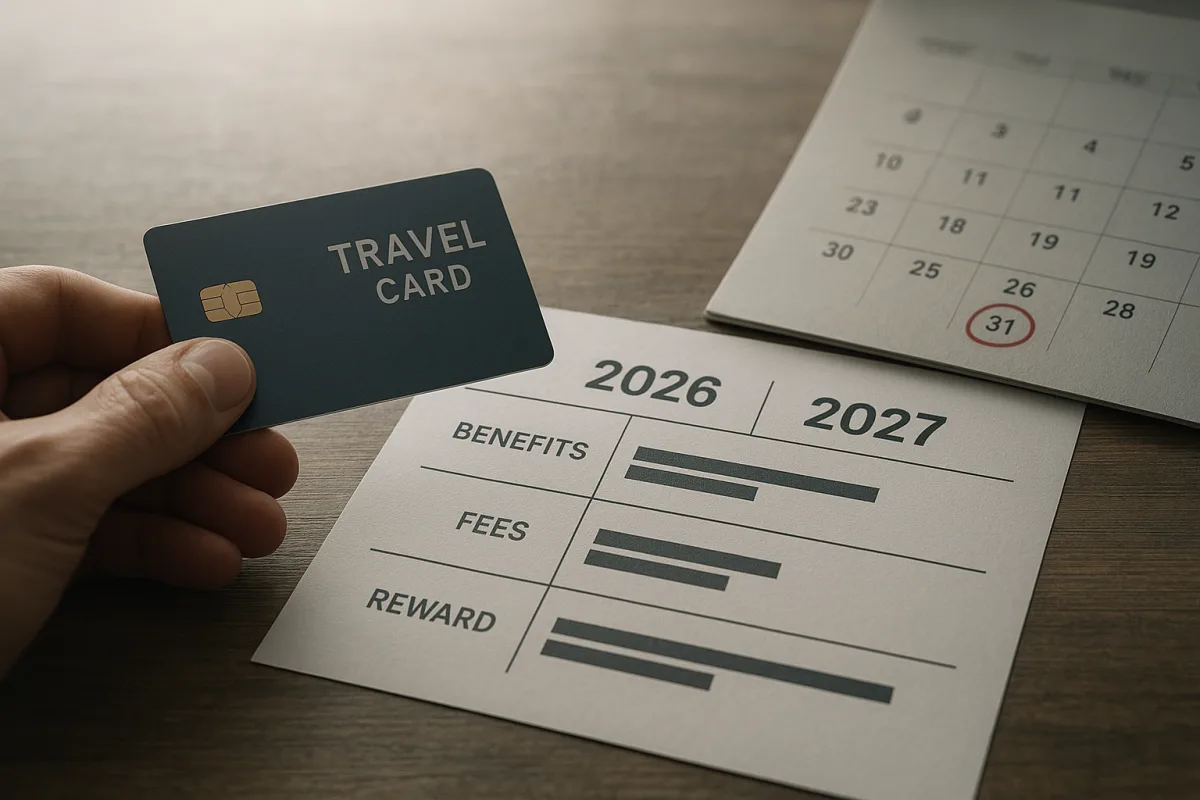
The shift is toward controlled value, not richer loyalty
Travel credit cards and loyalty programs are becoming less like simple earn-and-burn products. In 2027, the visible direction is more annual fees, more named credits, more conditions and fewer broadly flexible redemption opportunities.
Bilt, Citi and American Airlines are taking different routes, but the commercial logic is recognisable. Bilt is simplifying a rewards system that many members found difficult to navigate, while also restricting some hotel use. Citi and American are increasing fees while steering spending into airline-controlled channels. [4][7]
That is a real trend rather than a single issuer changing its mind. The changes arrive across a housing-payment rewards program and airline cobranded cards, two products aimed at different travellers but both competing for everyday spending.
For someone planning flights, hotel nights and cash costs in 2027, the useful response is not to chase every new benefit. It is to price each credit as you would a nonrefundable hotel rate: at what you would otherwise have paid.
Bilt makes its expiry rule kinder, then narrows the choices
The cleanest genuinely consumer-friendly Bilt change is the new expiry timetable for Bilt Cash. Rather than losing most Bilt Cash on Dec. 31, each amount will expire at the end of the month 12 months after it was earned. [2][3]
For example, Bilt Cash earned in November 2026 should expire on Nov. 30, 2027. The app is expected to show individual expiry dates, which is considerably easier to plan around than an end-of-year cliff. [2][3]
The detail worth noticing is that the change is retroactive. That means existing balances move to the rolling-expiry system too. It should give most members more time, but it also means checking the app matters, especially for anyone who assumed a prior balance followed the old calendar-year schedule. [3]
Bilt’s previous rule allowed only $100 to roll into the next year, with the rest expiring at year end. A 12-month runway is an improvement for a traveller assembling points for a specific booking, perhaps a summer flight or a school-holiday hotel stay. [2][3]
The less generous change concerns how new cardholders earn Bilt Cash. From Jan. 1, 2027, new cardholders will no longer have the 4% Bilt Cash option. They will instead enter the housing-focused reward structure. [4]
Existing members are not automatically protected simply because they had the option before. Reporting cited by Doctor Of Credit says they need to opt in or make the relevant election before their account anniversary to retain flexible Bilt Cash rewards. [4]
That creates a familiar loyalty-program divide. Earlier members can preserve a more flexible arrangement if they actively manage their accounts, while new members get a simpler but less optional system. It is not necessarily bad, but it makes joining date part of the product.
Hotel credits become less useful for frequent short breaks
Bilt is also putting firmer boundaries around hotel-related Bilt Cash use. From 2027, hotel redemption use is limited to two redemptions per year, rather than a monthly opportunity under the prior approach. [4][6]
The caps reported for those two redemptions are $100 for Blue and Silver members, $200 for Gold and Platinum members, and $400 for Palladium members. The practical impact depends on status, but the direction is plainly toward less frequent hotel subsidy. [4]
This matters most for travellers who use hotel credits to make ordinary two-night city breaks cheaper. A traveller booking a February weekend in Chicago and another in September in New Orleans may find two uses enough. Someone booking monthly work trips will not.
Bilt’s new Daily Rewards feature, scheduled for Jan. 15, 2027, may eventually offset some of that lost flexibility. It is tied to on-time housing payments and eligible neighbourhood-partner spending, but the company has not yet published enough operational detail to value it confidently. [4]
That is where caution is warranted. A chance-based or gamified reward is not equivalent to a statement credit you can apply to a known hotel bill. Until the reward amounts, eligible merchants and redemption terms are clear, count Daily Rewards as possible upside, not annual value.
For a traveller who rents or pays a mortgage through Bilt, the sensible 2027 plan is administrative. Save the expiry dates, decide whether the legacy 4% option is useful, and target Bilt Cash at a specific purchase before it expires.
American and Citi raise the holding cost by $51
Citi and American Airlines are refreshing both the consumer Citi / AAdvantage Platinum Select World Elite Mastercard and the Citi / AAdvantage Business World Elite Mastercard. From Jan. 24, 2027, each annual fee rises from $99 to $150 after the first-year waiver. [7]
A $51 increase does not turn these into ultra-premium cards. It does, however, mean a cardholder needs to use at least $150 of real value each year, rather than mentally pricing the card at the old $99 renewal cost.
Both cards add up to $100 in annual statement credits for eligible inflight food, beverages and paid Wi-Fi. They also add a credit of up to $120 for Global Entry or TSA PreCheck every four years. [7]
Do not count the Global Entry or TSA PreCheck benefit as $120 each year. Spread over four years, its maximum headline value is $30 annually, and only if you would otherwise pay the application fee with cash.
The inflight credit is more useful than the old percentage discount for a passenger who spends around $100 each year on Wi-Fi or food. It is much less useful for a traveller who generally flies in a cabin where food and drinks are included.
American has been expanding complimentary Wi-Fi, which is good for passengers but complicates the credit’s value. A benefit that covers paid Wi-Fi has less cash value if your usual domestic route already provides it without charge.
Better earnings, but mostly where American wants the booking
The refreshed cards will earn 3 AAdvantage miles per dollar on eligible AAdvantage Hotels and AAdvantage Cars bookings. The Platinum Select also adds 2 miles per dollar in categories including gas, EV charging, streaming, rides and rail, alongside its existing airline and restaurant rewards. [7]
The business card will offer 2 miles per dollar in one selected category, U.S. shipping, office supplies or U.S. advertising, as well as its existing American Airlines, car-rental, gas and telecommunications categories. [7]
Those are not worthless improvements, but travellers should compare the final booking price before using an airline portal. A 3-mile earning rate does not repair a hotel rate that is $40 higher than a refundable rate booked directly.
Both cards retain key airline-specific reasons to keep them, including a free first checked bag on eligible domestic American itineraries and preferred boarding for the primary cardholder and companions on the same reservation. [7]
For a family of four checking bags on a domestic trip, those benefits can cover the fee quickly. For a traveller flying carry-on only, using other airlines, or booking international itineraries, they may have little practical value.
The business card retains its companion certificate after $30,000 in card spending and renewal. It applies to an eligible domestic Main Cabin round trip for $99 plus taxes and fees, so it is valuable only if the routes, fare rules and spending requirement fit. [7]
Travel protections are welcome, but read the eventual guide
Citi and American are also promoting new travel protections on the refreshed cards. That addresses a real weakness in the previous versions, particularly for travellers who want to put an American ticket on an American card without giving up basic trip coverage. [7]
But the public information supplied so far does not provide complete 2027 terms for trip-delay insurance, including firm coverage limits, exclusions, claim procedures or definitive treatment of award bookings with only nominal taxes paid. [7]
That gap matters. A traveller booking four AAdvantage award seats may charge only the taxes and fees, perhaps a small amount compared with the hotel costs exposed by a missed connection. Do not assume a benefit covers that trip until the guide confirms it.
Before relying on any card for delay coverage, download the benefit guide after Jan. 24, 2027. Check the qualifying delay length, covered reasons, per-person and per-trip maximums, receipts required, and whether the full fare or only taxes must be charged to the card.
Lounge access remains a separate purchase decision
The $150 Citi / AAdvantage cards are not being turned into lounge cards. Their new credits and earnings may work for a regular American Airlines flyer, but neither refreshed product is presented as providing Admirals Club access. [7]
That distinction is important because airport lounges are becoming more central to card marketing. American expects 18 million lounge visits in 2026, up from 10 million in 2016, even while passenger traffic rose far less sharply, according to View from the Wing.
More travellers now plan airport time around food, workspace and a reliable seat, so banks can justify expensive annual fees with lounge networks. But paying $150 for a checked-bag and boarding card is a different calculation from paying several hundred dollars for lounge access.
For a traveller based near an American hub such as Dallas Fort Worth, Charlotte or Miami, separating those decisions avoids wasted fees. Keep the lower-fee card for bags and Loyalty Point earning if useful, then buy lounge access only when your actual airport routine justifies it.
Best Western is the watchlist item, not the actionable change
Best Western belongs in any broad 2027 loyalty watchlist because hotel programs have been steadily moving toward more dynamic pricing, targeted promotions and app-based member engagement. Yet the material available here does not establish a specific Best Western 2027 overhaul.
That absence is worth stating plainly. There is no sourced announcement in the supplied reporting that identifies a new Best Western Rewards earning chart, elite threshold, points-expiry rule, award pricing change or cobranded-card revision taking effect in 2027.
Do not manufacture urgency around a rumoured change. If a Best Western stay is right for the route and rate, book it on its cancellation terms and compare the member price against alternatives. Do not buy points or add unnecessary nights to chase an unannounced benefit.
Scams make account management part of travel planning
More complicated loyalty systems create another practical risk: travellers needing help quickly can be easy targets for fake customer-service operations. The Associated Press reports that travel scams are becoming harder to identify and advises verifying contacts through official channels. [1]
That is particularly relevant in 2027, when Bilt members may need to make elections and Citi cardholders may be evaluating new credits. Search-result phone numbers and AI-generated answer panels are not reliable proof that you have reached the real company.
Use the phone number printed on the back of the card, the secure message function in the issuer’s app, or the contact page reached directly from a saved official website. Do not provide a one-time code, account password or card authorisation form to an unsolicited agent.
The larger 2027 lesson is mundane but useful. Travel rewards are moving away from simple, broadly valuable benefits and toward terms that reward attention. The traveller who calendars deadlines, prices credits honestly and verifies contacts will get more value than the traveller collecting cards on headline numbers alone.
Frequently Asked Questions
What are the major travel credit card changes in 2027?
In 2027, travel credit cards are shifting toward more controlled value with higher annual fees, more specific credits, and fewer flexible redemption options. Bilt is limiting hotel-credit use and discontinuing the 4% Bilt Cash option for new applicants, while Citi and American Airlines are raising annual fees from $99 to $150 and adding travel-related credits. Overall, the trend is toward managing rewards more tightly rather than offering richer loyalty benefits.
How is Bilt changing its credit card rewards in 2027?
Bilt is simplifying its rewards system by closing the 4% Bilt Cash earning option to new applicants starting January 1, 2027, and limiting some hotel credit uses. Existing cardholders must opt in to keep the 4% option before their account anniversary. Additionally, Bilt is implementing a rolling 12-month expiration on Bilt Cash, replacing the previous calendar-year expiration.
Will the 4% Bilt Cash option still be available in 2027?
The 4% Bilt Cash option will no longer be available to new applicants after December 31, 2026. Current cardholders who want to retain this option must make the required election before their account anniversary. Otherwise, the card will default to the newer housing-focused rewards structure.
What new fees are Citi and American Airlines charging in 2027?
Starting January 24, 2027, Citi and American Airlines will increase the annual fee on their Citi AAdvantage Platinum Select World Elite Mastercard and Citi AAdvantage Business World Elite Mastercard from $99 to $150. The first year’s fee will be waived. These cards will also offer new travel benefits like a $100 annual inflight purchase credit and a $120 Global Entry/TSA PreCheck credit every four years.
How does the new Bilt Cash expiration policy work in 2027?
Bilt Cash will now expire 12 months after it is earned, at the end of the earned month, instead of expiring at the end of the calendar year with only $100 rolling over. For example, Bilt Cash earned in November 2026 will expire on November 30, 2027. This rolling expiration applies retroactively to existing balances, so cardholders should check their app for specific expiration dates and plan redemptions accordingly.
How we researched this
This article was assembled from 6 published articles, 7 cited references.
Nothing here is based on hands-on testing. Where a figure or finding appears, it belongs to the source cited beside it, and the writing says so rather than implying otherwise. Every source is listed below so you can check it.
Sources
The surprising new way scammers are fooling Google and cheating travelers out of thousands of dollars — The Points Guy
18 Million People Will Visit American Airlines Airport Lounges This Year, Up 80% From A Decade Ago — View from the Wing
Bilt switching up rewards structure, making other changes in 2027 — here's what you need to know — The Points Guy
American Raises Citi Platinum Select Fee To $150—Adds Walmart+ Benefit And Travel Protections — View from the Wing
Citi and American Airlines refresh 2 credit cards with new perks, higher annual fees — The Points Guy
American’s Citibank Business Card Annual Fee Goes To $150—But Two People Can Earn Elite Status From One Card’s Spending — View from the Wing
Travel scams are getting harder to spot. Here's how to stay safe
Bilt Improves Bilt Cash, but Keeping 4% Back Takes Action - NerdWallet
Bilt Cash Gets Rolling Expiration in 2027 Overhaul | Travelbinger | Travelbinger
Is Your Company Missing Out on This 35% Airline Points Rebate?
Related Articles

Airline Loyalty Program Changes and Updates in 2026
Explore 2026 airline loyalty program changes, status updates, and how fare choices impact upgrades and benefits across major US airlines.

Travel Credit Card Perks
Explore travel credit card perks, airline benefits, and tips to choose the best card for your travel needs and maximize rewards.
American Airlines First Class Upgrade Policy Explained
Learn how American Airlines prioritizes first class upgrades, including deadheading pilot policies and impact on elite travelers.

New Airline Routes and Travel Credit Card Updates for 2026
Explore new airline routes and travel credit card updates for 2026 to find the best options for flights and rewards.