
Airline Passenger Experiences: Boarding Rules and Bag Fees
Learn how airline passenger experiences are shaped by boarding rules and bag fees, including disruptive passenger impacts and timing of bag payments.
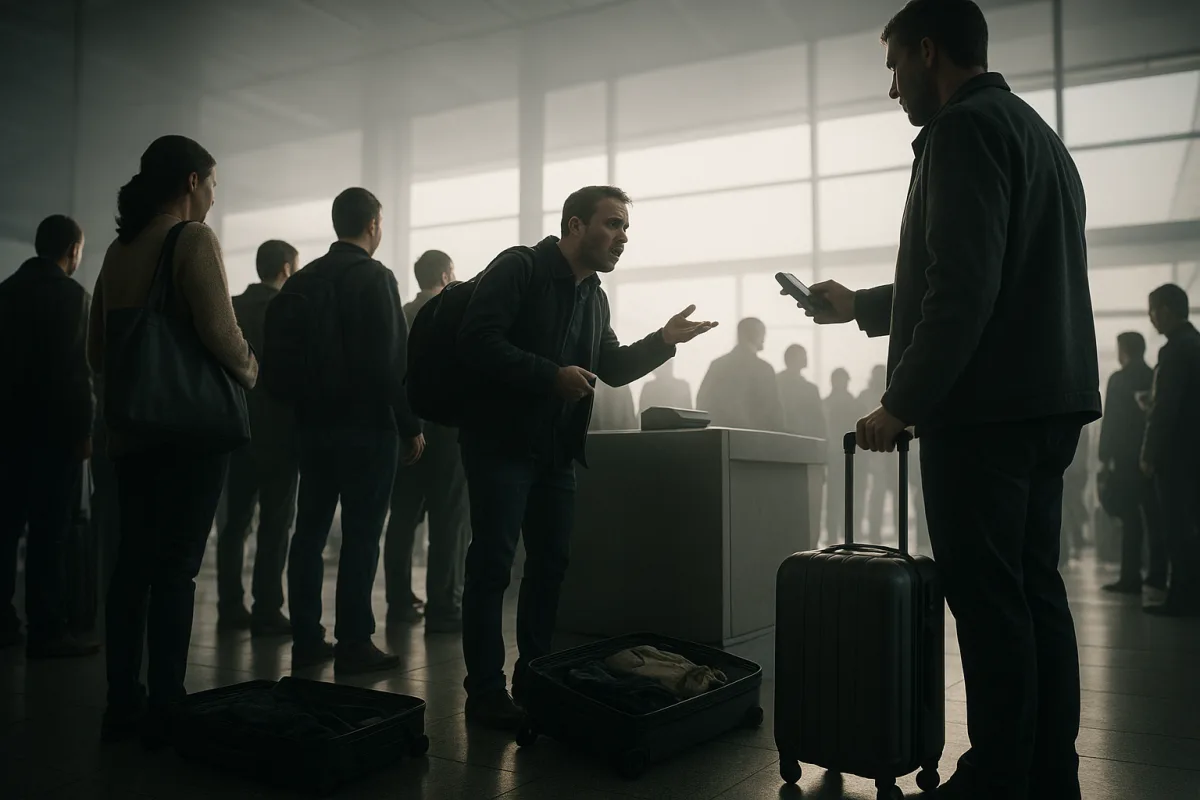
The Airport Decision Point: Why Your Bag Price and Boarding Rights Can Change at the Gate
The gate is where an airfare becomes your actual trip price
You may have already paid for a ticket, chosen a seat, and arrived at the airport on time. At the gate, though, the airline still controls two expensive parts of your trip: whether you board and what your luggage costs.
That is why recent events involving Delta Air Lines and JetBlue belong in the same travel calculation. One concerns a disruptive passenger removed at New York JFK. The other concerns a checked-bag price that can double depending on when you pay.
The common system is airline discretion at the airport. A carrier can decide that a passenger cannot travel for safety reasons, while its fare rules decide whether a suitcase costs $45, $50, $55, or $70 each way.
For you, the key is timing. Pay attention before you leave home, because the airline has more room to impose a fee, deny a request, or remove a passenger once everybody is standing at the gate.
What happened on Delta flight 2342 at JFK
On October 22, Delta flight 2342 was scheduled to fly from New York JFK to Atlanta. The aircraft was still at the gate when Port Authority police removed a Brooklyn passenger who officers said appeared intoxicated, View from the Wing reported.
Passenger video published by View from the Wing showed the man being escorted through the cabin while shouting, swearing, using racial slurs, and urging other travelers to post the removal on Instagram. The report said passengers moved seats while they waited.
Authorities charged the passenger with assault, disorderly conduct, resisting arrest, and obstructing governmental administration, according to View from the Wing. Those are allegations, not a finding of guilt, but the episode shows why a problem caught at the gate affects every traveler nearby.
Delta apologized to customers and said it has zero tolerance for disruptive behavior, View from the Wing reported. Removing somebody before pushback is still disruptive, but it avoids the larger operational problem of an incident in the air.
A diversion can mean an unplanned landing, missed connections, crew-duty complications, and a late arrival for every passenger. A May 2026 United Airlines flight reportedly diverted after a passenger tried to open a door at 36,000 feet. [6]
An airline does not need a breathalyzer result
Federal aviation rules prohibit an airline from allowing a person who appears intoxicated to board. The standard is deliberately broad: crew and gate staff act on behavior they can observe, such as slurred speech, trouble walking, aggressive conduct, or belligerence. [4]
There is no published blood-alcohol concentration that gives you a right to board a commercial flight. If an employee believes you appear intoxicated, the decision is based on what is happening in front of them at that moment.
Airlines also have broad authority under federal law to refuse transportation when they decide a passenger may present a safety risk. The carrier, its gate staff, crew, and airport law enforcement can all become involved, depending on the behavior and where it occurs. [3]
This power can feel subjective because it is. Two travelers may have consumed the same amount of alcohol, but the person who becomes loud, unstable, threatening, or uncooperative is far more likely to be stopped.
The outcome is usually determined before the cabin door closes. Once you are offloaded, the airline may rebook you, but a safety-based refusal is not the same thing as a normal voluntary change or a missed flight.
We would skip airport drinking if your trip depends on catching a specific flight, especially after a delay or during a tight connection. A drink is cheap compared with losing a nonrefundable hotel night, a cruise departure, or an onward international ticket.
Why one disruptive passenger affects the whole cabin
Airlines and regulators treat disorderly behavior as a safety issue because crew members cannot do their normal jobs while managing one person who is threatening, intoxicated, or refusing instructions. That includes preparing the aircraft for departure or an emergency.
The FAA’s zero-tolerance policy for unruly passengers became permanent in 2022. Civil penalties can reach $43,658 per violation, separate from possible criminal charges brought by local or federal authorities. [2]
The problem is not limited to a few viral clips. IATA reported one unruly-passenger incident for every 480 flights in 2023, compared with one for every 568 flights in 2022. [5]
Alcohol is frequently identified as a trigger, but travelers should not assume alcohol is required. Refusing crew instructions, verbally abusing other passengers, or interfering with safety duties can also put a flight at risk.
For other passengers, there is no fee chart or guarantee that tells you how long a gate removal will take. You may wait in your seat, move to another seat, miss a connection, or face a delayed departure while police and airline staff finish their work.
If you have a short connection, choose a longer layover where possible and put essentials in your personal item. A delay caused by another passenger is precisely the kind of disruption that makes a checked suitcase harder to recover quickly.
Bag fees use the same pressure point: pay now or pay more later
JetBlue’s new bag pricing applies to bookings made November 3 onward. Its first checked bag on domestic flights costs at least $50 each way, and rises to $70 when paid within 24 hours of departure on designated peak travel dates, View from the Wing reported.
That means a single roundtrip checked bag can cost $100 if bought early or $140 if you pay late during a peak period. The advertised airfare may look unchanged, even though your actual trip cost is substantially higher.
JetBlue identifies November 19 through 30, December 17 through January 18, and May 20 through September 8 as peak periods. Those dates cover Thanksgiving, winter holidays, and much of the summer travel season, when many travelers are least able to change plans.
A family of four checking one bag each pays $440 roundtrip on JetBlue peak dates if it prepays, according to View from the Wing. Wait until the late-payment window and the same four bags cost $560 roundtrip.
JetBlue’s increase follows an earlier 2026 hike. Its cheapest first-bag price rose from $35 to $39 in March, then to the current $50 minimum, View from the Wing reported.
The airline’s structure rewards early certainty. If you know you will check a bag, prepaying is the cheaper move. If you are unsure, buying the option early can become wasted money.
JetBlue says bag fees are refundable when you cancel the entire booking before departure. If you travel but decide not to check the bag you prepaid for, the fee is not refundable, according to View from the Wing.
How JetBlue compares with Delta and American
JetBlue’s $50 minimum is not the only number to put into your trip budget. Delta charges $45 each way for a first domestic checked bag and $55 for a second bag for many Main Cabin and Comfort passengers without an exemption. [1]
American Airlines charges $50 online for a first checked bag on many flights within the United States, Canada, Mexico, the Caribbean, Central America, Guyana, Puerto Rico, and the U.S. Virgin Islands. Pay at the airport and that first bag costs $55. [11]
American’s second bag costs $60 online or $65 at the airport on those routes. Those charges do not necessarily apply to every ticket, because cabin, route, elite status, military status, and airline credit-card benefits can change the allowance. [11]
For a roundtrip with one checked bag, Delta’s published $45 each-way charge makes the bag $90. American’s online $50 fee makes it $100, or $110 if you pay at the airport. [1][11]
JetBlue’s price is $100 roundtrip at its $50 minimum, matching American’s online first-bag total. But its peak late-payment price pushes the same bag to $140 roundtrip, $50 more than Delta’s standard first-bag total.
Mosaic status and JetBlue Plus or Premier card benefits can waive some JetBlue baggage charges. Standard Main and EvenMore transatlantic fares still include a first checked bag, while Main Base and EvenMore Base transatlantic fares can require a separate payment.
American accepts refund requests online when it charged you incorrectly, while airport-paid bag charges are nonrefundable under its published policy. [11] Delta’s publicly stated baggage information does not set out an equally specific general refund rule for an unused domestic bag fee.
Why airlines like fees instead of higher fares
A bag fee is a form of unbundling. The airline sells a base seat, then charges separately for services some travelers use and others avoid, including checked luggage, seats, priority boarding, and change-related services.
That model lets a carrier advertise a lower starting fare, even if many passengers will pay more by the time they finish booking. It also makes comparison harder when one airline includes a bag and another leaves it out.
View from the Wing noted another financial incentive: domestic airfare is generally subject to a 7.5 percent federal excise tax, while separate baggage fees are excluded. Moving part of the trip price from fare to fee can therefore reduce the airline’s tax cost.
We would compare flights with bags added before choosing the cheapest fare. A $169 ticket with a $100 roundtrip bag can be worse value than a $235 ticket that includes a checked bag, especially if you would otherwise pay to select a seat too.
Protecting the part of the trip you can control
Start with the fare rules, not the headline price. Check whether your booking includes a bag, what the price becomes if you pay later, and whether your credit card or elite status actually applies to that specific itinerary.
Then separate your essentials from your checked luggage. Keep medication, a charger, documents, a change of clothes, and anything needed for the first night in a personal item that stays with you.
If a gate incident strands you in New York, use the delay as a reason to stay flexible, not to chase an overplanned itinerary. CN Traveler found that Ben Gollan’s two-hour A Man and His Sandwich tours run in the East Village and Williamsburg, though not on Tuesdays or Wednesdays.
The East Village route includes stops such as Via Della Scrofa, Pakistani street-food spot Nishaan, and the 24-hour sandwich counter Sunny and Annie’s, according to CN Traveler. It is a better backup plan than sitting at JFK without food, but it is no substitute for travel insurance or a realistic connection.
The larger lesson is blunt: your flight is a chain of decisions made by you, the airline, and airport staff. Pay bag fees early when you know you need them, follow crew instructions, and leave enough money and time for the airport to disrupt your plan.
Frequently Asked Questions
Why can airlines refuse boarding at the gate?
Airlines can refuse boarding if a passenger appears intoxicated or disruptive based on observable behavior such as slurred speech, aggressive conduct, or belligerence. Federal rules allow carriers to deny boarding for safety reasons without requiring a breathalyzer test. This authority extends to gate staff, crew, and law enforcement to prevent safety risks before the flight departs.
How do checked bag fees vary by airline and timing?
Checked bag fees differ by airline and when you pay. For example, Delta charges $45 for the first domestic checked bag each way, while American Airlines charges $50 online or $55 at the airport. JetBlue’s first bag fee can reach $70 each way on peak dates if paid within 24 hours of departure, so paying earlier usually saves money.
What happens when a disruptive passenger is removed at the gate?
Removing a disruptive passenger at the gate can delay the flight as police and airline staff handle the situation. Passengers may need to wait in their seats or move while the removal is completed, which can cause missed connections or late departures. This process avoids more serious in-flight incidents but still disrupts all travelers onboard.
Can airlines deny boarding based on intoxication without a breathalyzer?
Yes, airlines rely on observed behavior rather than a blood-alcohol test to determine intoxication. Federal regulations define intoxication broadly and allow refusal of boarding if a passenger appears impaired through actions like difficulty walking or aggressive behavior. This decision is subjective and made at the moment by airline employees.
How do passenger disruptions affect flight departure times?
Disruptive passengers can cause significant delays before departure as crew and law enforcement address the issue. Such incidents may delay pushback, cause missed connections, or even result in flight diversions if problems occur in the air. Airlines treat disorderly behavior as a safety risk, which can affect the entire flight’s schedule.
How we researched this
This article was assembled from 3 published articles, 11 cited references.
Nothing here is based on hands-on testing. Where a figure or finding appears, it belongs to the source cited beside it, and the writing says so rather than implying otherwise. Every source is listed below so you can check it.
Sources
Getting to Know New York Through Its Sandwiches, CN Traveler
Delta Air Lines Passenger Shouts “I Love Myself” As Police Haul Him Off, New Video Shows JFK Airport Arrest, View from the Wing
JetBlue Raises Bag Fees Again, One Checked Bag Can Cost $140 Roundtrip, Other Airlines Likely To Follow, View from the Wing
Delta joins the growing list of US airlines raising checked bag fees as jet fuel costs soar
49 U.S.C. § 44902: Airline Authority to Refuse Transport - LegalClarity
Rowdy United Airlines Passenger Tries to Open Plane Door at 36,000 Feet
Major U.S. airlines increase baggage fees: A detailed breakdown for 2026
PAX - Canada logged 114 disruptive passenger reports in 2025; 60% occurred on WestJet flights
Related Articles
Airline Hotel Voucher Policies: What Passengers Should Know
Learn how airline hotel voucher policies work, when airlines pay for hotels, and what changes affect delay classifications starting in 2026.
Airline Service Enhancements and New Flight Routes in 2026
Discover upcoming airline service enhancements and new flight routes, including seatback screens and premium cabin upgrades for 2026.
AI Impact on Travel Booking and Industry Updates 2026-2027
Explore AI's role in travel booking, airline baggage fees, and industry updates for 2026-2027 to plan smarter trips and understand market shifts.

New Hotel and Resort Experiences: Pattaya Now, NYC Future
Explore new hotel and resort experiences with family-friendly Pattaya stays now and The StandardX Times Square opening in 2028.