
AI Impact on Travel Booking and Industry Updates 2026-2027
Explore AI's role in travel booking, airline baggage fees, and industry updates for 2026-2027 to plan smarter trips and understand market shifts.
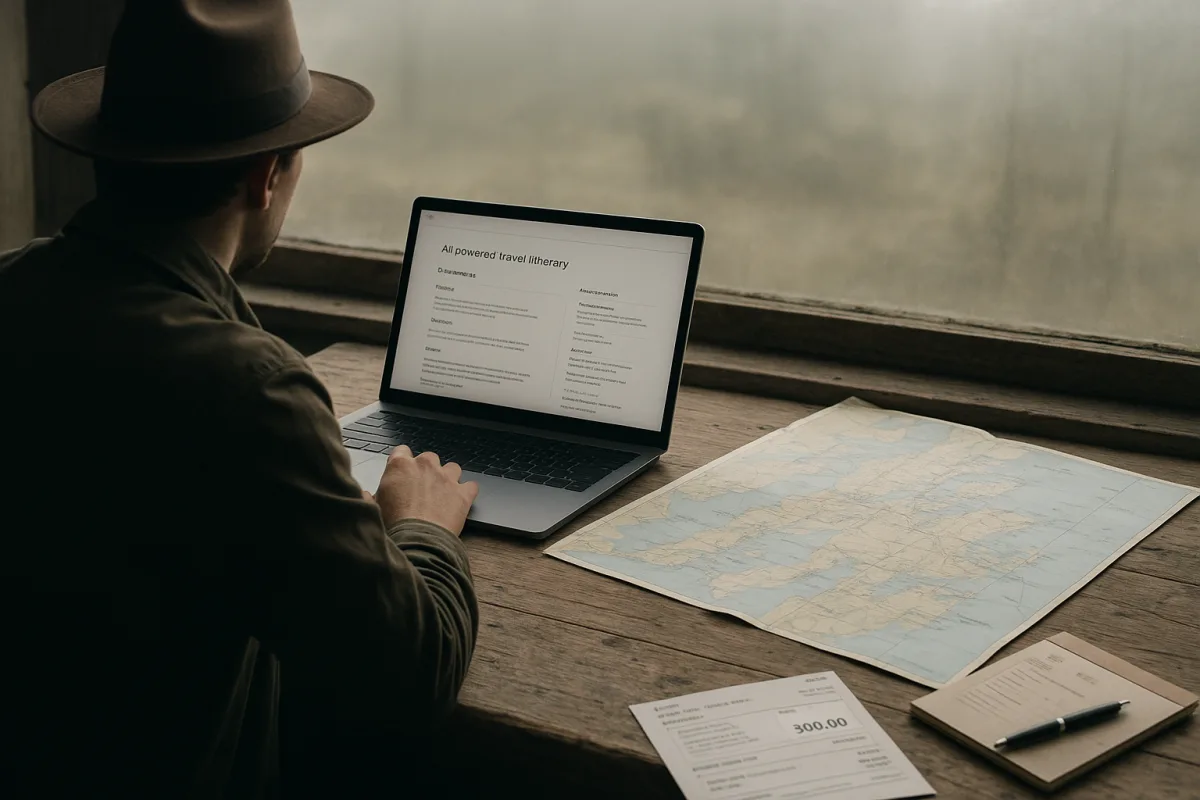
AI is becoming the trip-planning front door, not the checkout counter
In Asia, 53% of travelers say they use AI for trip planning in 2027, up from 33% in 2026, according to Agoda’s Asia Travel Pulse survey. That is a striking one-year increase, but it describes planning, not payment. [2]
Booking.com sees the same divide in its own Asia-Pacific business. Laura Houldsworth, Booking.com’s Asia-Pacific vice president, told Skift that travelers may compare ideas in Claude, ChatGPT, Gemini, and Google before returning directly to Booking.com to reserve. [5]
The booking numbers remain small. Booking Holdings has said room nights referred directly by large language models represent well under 1% of its total, despite Booking.com’s survey finding 64% of Asia-Pacific travelers use AI while planning. [5]
Expedia’s consumer findings point in the same direction: nearly 70% of travelers prefer established travel brands over AI chatbots when it is time to book. [4] You may ask a chatbot where to stay in Tokyo, but many travelers still want a known platform handling the payment, cancellation terms, and support.
This is happening now because generative AI has made broad trip research fast. A traveler can ask for a 10-day rail route through Japan, a rainy-day plan for Paris, or family hotels near a specific beach in seconds.
Booking is harder. Hotel inventory changes by the minute, low fares carry restrictions, and a wrong date can turn an apparent deal into a nonrefundable mistake. AI tools are improving at presenting options, but they still struggle to provide dependable, current transaction details.
The accuracy evidence is thin and uneven, with much of it coming from small tests and travel-technology commentary rather than large independent audits. Still, one review found roughly 90% of AI-generated itineraries contained at least one factual error. [7]
Those errors can be expensive. Syslabs AI Insights flags common failures including stale opening hours, invented businesses, misleading route advice, and price estimates that omit baggage, local taxes, transfers, or mandatory booking fees. [7]
A chatbot can also produce an itinerary that looks tailored because it uses your prompt, while still delivering the familiar list of headline attractions. TravelersCopilot advises checking every venue, rail connection, and reservation requirement against the operator’s own site. [8]
We would use AI early, when you are comparing possible trips, and stop using it as the sole authority once money is involved. Copy its suggestions into a spreadsheet, then check direct airline, railway, hotel, museum, and local transit pages.
The online booking business is under pressure from both sides
The fight between hotel brands and online travel agencies has often been framed as Marriott and Hilton pushing direct bookings against Booking.com and Expedia competing for the same guest. Skift argues that hotel owners carry much of the underlying cost.
An owner may pay a hotel brand for its loyalty program, reservation system, and distribution network, then pay an online travel agency commission when that channel supplies the guest. That can make a full hotel look less profitable than a traveler might assume.
AI agents could intensify the issue in 2027. If an AI assistant sends travelers toward whichever inventory is easiest to access or best compensated, the hotel owner may have even less control over how a guest arrives.
Regulation is also becoming part of the booking calculation. Booking Holdings disclosed on November 4, 2026, that it had recorded a $900 million revenue reduction and a $100 million accrued loss related to a possible Federal Trade Commission complaint involving Priceline. [6]
The $1 billion provision does not mean a settlement has been finalized. Booking Holdings said the FTC could seek restitution and penalties exceeding $1 billion, while Priceline remained in discussions with the agency. [6]
For you, this is a reminder to read the seller name and the cancellation rules, particularly when an unusually cheap hotel rate appears through an unfamiliar booking path. A low room price can come with a slower refund process or tighter conditions.
The larger market signal is mixed, not collapsing. Booking Holdings cited conflict in the Middle East and higher airfares as headwinds, and its third-quarter revenue declined 1% year over year after the potential FTC-related accounting charge. [6]
Checked-bag fees are now part of the fare
JetBlue raised checked-bag fees for the second time in 2026, with the new prices applying to flights booked from November 3. The carrier’s first checked bag costs $50 when bought more than 24 hours before departure. [1]
Wait until within 24 hours of departure and JetBlue charges $60 for that first bag. On peak travel dates, the fee rises to $55 if prepaid early or $70 when paid late, according to The Points Guy. [1]
That is not a minor add-on for a two-person trip. Two checked bags on a round trip can add $200 at JetBlue’s standard advance price, or $280 if both travelers pay the peak-period fee close to departure.
JetBlue’s March increase had already brought peak-day first-bag fees to $49. Its November increase raised them to $55, while the second checked bag moved from $69 to $75 on peak dates. [1]
Other airlines have not moved in perfect lockstep. Delta raised its first checked-bag fee from $35 to $45 in April 2026, while Southwest, which ended its Bags Fly Free policy in May 2025, now charges $45 for a first bag. [13]
The reason airlines give is straightforward: fuel and operating costs are higher, and unbundled fees allow carriers to advertise a lower base fare. JetBlue said its change helps keep base fares competitive for travelers who do not check luggage.
The catch is that a low fare is no longer a complete price. The Week recommends comparing fares after adding bags, seat selection, carry-on restrictions, and the cost of buying those items later, when airline fees are often higher. [1]
We would compare the total at the same moment: airfare, seats if you need them, a checked bag each way, and the cost of a backup flight if your ticket is restrictive. Do that before you transfer Chase points or book a basic economy fare.
JetBlue still allows Blue Basic passengers to bring a full-size carry-on, unlike some basic economy products, and Mint passengers, Mosaic members, certain cardholders, and BlueFirst customers receive bag benefits. Those inclusions can change the math.
The broader fee trend is real, but the evidence does not support assuming every U.S. airline will charge the same amount or use the same peak dates. Check the airline’s own baggage page before booking, then save a screenshot of the quoted terms.
Tourism recovery is increasingly uneven and screen-driven
Tourism demand is returning through specific stories and places, not as one uniform worldwide recovery. Coastal Newfoundland is a current example after Netflix’s six-episode thriller Below reached No. 1 in Netflix’s global rankings, according to Condé Nast Traveler.
Booking.com data reported by Condé Nast Traveler showed American searches for St. John’s up 16.9% year over year. Searches for Twillingate, a town associated with Iceberg Alley, rose 123.7%. Those are search figures, not confirmed arrivals.
The distinction affects your planning. Twillingate is roughly 275 miles northwest of St. John’s, and its appeal is real: icebergs pass along the coast from late April through July, when broken glaciers drift through Iceberg Alley.
But the television version is not a ready-made itinerary. The fictional town of Snook’s Arm was largely represented by Brigus South, and production built about 80% of the apparent town, including its fish plant, wharf, and Fishermen’s Hall.
There are real places worth building a trip around. Bay Bulls is known for whale watching and North America’s largest Atlantic puffin colony, while Little Pot Rock can be reached on a 4.3-mile East Coast Trail hike from the Pouch Cove area.
The warning is access. Newfoundland weather can turn quickly, many communities are far apart, and the series itself relied on St. John’s hotels and home rentals as a production base because working in remote areas was difficult.
Screen travel can also drive demand within an already busy city. In New York, Ben Gollan, the Australian-born sandwich reviewer behind A Man and His Sandwich, runs two-hour food walks through the East Village and Williamsburg.
His East Village route samples three sandwiches and ends at a bar. It includes Via Della Scrofa, Nishaan, and Sunny and Annie’s, a 24-hour neighborhood store with 92 sandwich options, according to Condé Nast Traveler.
That kind of small-group, neighborhood-specific experience is where tourism recovery can be felt most directly. You are not buying a generic “New York food tour,” you are paying for a guide’s local framing and a route through businesses you may not find alone.
Trade events and the 2027 agenda
The travel industry’s 2026 and 2027 agenda is coalescing around three subjects: AI distribution, airline ancillary revenue, and hotel customer-acquisition costs. Those subjects appear repeatedly in Skift’s aviation and commerce coverage, even when the consumer effects differ.
Travel trade events matter because airlines, hotel groups, online agencies, technology vendors, and investors use them to announce partnerships, new booking tools, and loyalty changes. The announcements can move quickly from trade-floor demonstration to app update or fare rule.
Still, do not plan a trip around a promised AI feature or a rumored airline policy. Published evidence on which platforms will dominate AI bookings in Asia, or how accurate AI agents will become by 2027, remains limited. [2]
Capital is also flowing toward travel technology, distribution, and platform businesses, but a funding announcement does not guarantee a traveler-ready product. Booking tools frequently launch first in limited markets, with selected loyalty members, or only in one language.
For your own 2027 trip, we would make the boring decisions first: choose dates, build in a fare buffer, reserve refundable lodging where the destination is remote, and calculate baggage costs before comparing airline headlines.
Then use AI for the part it already does well, generating possibilities. Let a verified booking page, a clear cancellation policy, and a total trip price make the final decision.
Frequently Asked Questions
How is AI changing travel planning and booking in 2026 and 2027?
AI is increasingly used for trip planning, with 53% of travelers in Asia using it in 2027, up from 33% in 2026. However, AI is mainly a tool for researching and comparing options rather than completing bookings. Most travelers still prefer established travel platforms to finalize reservations due to concerns about accuracy and support.
What are the common errors AI makes in travel itineraries?
About 90% of AI-generated itineraries contain at least one factual error. Common mistakes include outdated opening hours, invented businesses, misleading route advice, and price estimates that omit baggage fees, taxes, or mandatory booking charges. These errors can lead to costly or inconvenient travel experiences.
Why do travelers prefer traditional booking platforms over AI?
Travelers trust established brands for booking because AI tools often struggle with real-time inventory, fare restrictions, and cancellation policies. Traditional platforms provide clearer payment processes, reliable support, and verified booking details, which helps travelers avoid mistakes and ensures better customer service.
How have airline checked bag fees changed in 2026?
Checked bag fees increased notably in 2026, with JetBlue raising first checked bag prices from $35 to between $50 and $70 depending on timing and travel dates. Other airlines like Delta also increased fees, reflecting operational cost pressures. These fee hikes vary by airline and are sometimes dynamic based on peak travel periods.
What regulatory challenges are online travel agencies facing in 2027?
Online travel agencies face significant regulatory scrutiny, exemplified by Booking Holdings’ $1 billion provision for a possible Federal Trade Commission complaint related to Priceline. This includes a $900 million revenue reduction and ongoing discussions with the FTC. Such regulatory pressures contribute to a cautious and mixed outlook for the online booking market.
How we researched this
This article was assembled from 8 published articles, 13 cited references.
Nothing here is based on hands-on testing. Where a figure or finding appears, it belongs to the source cited beside it, and the writing says so rather than implying otherwise. Every source is listed below so you can check it.
Sources
Booking.com Bets Travelers Will Research With AI but Book With It, Skift
On Location: How Coastal Newfoundland Set the Scene for Netflix's No. 1 Series ‘Below’, CN Traveler
JetBlue just raised bag fees for the 2nd time this year. Will other airlines follow ... again?, The Points Guy
Booking Takes $1 Billion Hit Over Possible FTC Settlement, Sees ‘Mixed’ Travel Market, Skift
Getting to Know New York Through Its Sandwiches, CN Traveler
JetBlue Raises Bag Fees for the Second Time This Year, Skift
Why We’ve Been Looking at the Hotel Brands vs. OTAs War All Wrong, Skift
Asia's travel platforms are building AI agents that stop short of the last click, Opentechwire
Booking Takes $1 Billion Hit Over Possible FTC Settlement, Sees 'Mixed' Travel Market
Where AI Trip Planning Works, and Where It Fails Travelers | Syslabs AI Insights
Common Mistakes In AI Travel Planning (And How To Catch Them), TravelersCopilot
AI Trip Planning: The Hidden Cons Of Using AI To Plan Your Trips (And How To Deal With Them)
Disadvantages of Using a Travel Agent & AI's Travel Planning | ReelMind
How AI Travel Planners Fail in 2026: 25 Real Errors That Would Ruin a Trip - Travel Tribe Explorers
Related Articles

Travel Trends 2026: Industry Insights and Future Outlook
Explore travel trends 2026 with insights on AI planning, sustainability, traveler behavior, and industry forecasts for future travel.
Hospitality and Airline Experience Innovations in 2026
Explore key innovations in hospitality and airline experience, including AI, capacity challenges, and premium travel improvements in 2026.

Travel Costs and Airfare Trends 2026: What to Expect
Explore travel costs and airfare trends for 2026-2027, including fuel impact and budget airline fees to help plan your trip budget.
AI Innovations in Travel: Planning, Booking, and Hotel Tech
Explore AI innovations in travel, from planning and booking challenges to hotel tech and compliance costs in the evolving travel industry.