Berlin Travel Essentials: Neighborhoods, Transit & Museums
Discover Berlin travel essentials including best neighborhoods, transit tips, and museum highlights for an efficient and enjoyable visit.
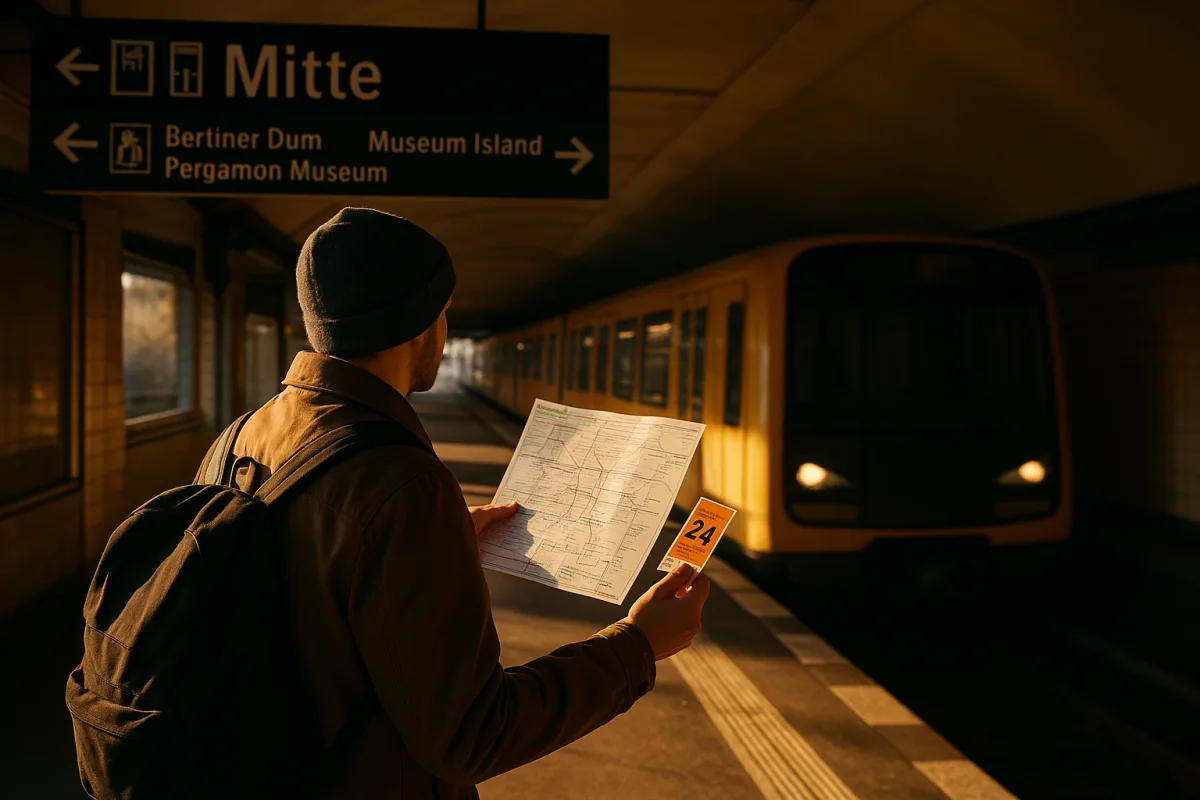
Book a base near the train, not just a famous address
The S-Bahn map is the first thing to open before reserving a room. A hotel that looks central on a booking site can still leave you with a 20-minute walk before every train ride.
For a first visit, we would book Mitte, near Museum Island, Hackescher Markt, or another strong transit connection. Travels Unfiltered recommends the district for its access to Museum Island, Berlin Cathedral, the government quarter, restaurants, and central historical sights.
Mitte is broad, though, and a Mitte postal address alone proves little. Check the walking route to the nearest U-Bahn or S-Bahn station, especially if you plan to return to the hotel between museum sessions.
Choose Charlottenburg if you want a polished West Berlin stay, shopping around Kurfürstendamm, and Charlottenburg Palace nearby. Travels Unfiltered suggests Roomers Berlin Steinplatz, Autograph Collection, for a higher-end stay and numa Berlin Savi for a cheaper City West base.
Pick Kreuzberg when restaurants, bars, street life, and an alternative atmosphere rank above landmark convenience. Hotel am Hermannplatz is Travels Unfiltered’s hotel pick there, while Minimal Hostel No. 41 is its budget recommendation.
Friedrichshain works for the East Side Gallery, nightlife, and creative spaces. Its tradeoff is real: Berlin Escape reports weekend noise around Warschauer Straße and RAW-Gelände can continue into early morning, while Nomadr reports delays, construction, and occasional 48-hour strikes on local transit. [8][9]
Prenzlauer Berg is the quieter residential alternative, with leafy streets, cafes, and independent stores. Travels Unfiltered recommends Hotel Myer’s Berlin for a quieter hotel and Pfefferbett Hostel for a budget stay, but would not use it for a rushed two-night landmark trip.
Buy transit for the days you will actually ride
Most visitor sights sit in fare zones A and B, and tickets cover the S-Bahn, U-Bahn, buses, trams, and ferries within the zones purchased. A zone AB single ticket is €4 and permits transfers for 120 minutes. [3]
A €2.80 short-trip ticket covers up to three S-Bahn or U-Bahn stops, or six stops by bus or tram. It is handy for one short hop, but it stops being a bargain quickly once you are crossing the city. [3]
For a full sightseeing day, the zone AB 24-hour ticket costs €11.20. A small-group 24-hour ticket costs €35.30 for up to five people, so it becomes cheaper than five individual day passes for a group traveling together. [3]
The Berlin WelcomeCard is for travelers who will use transit and also pay for several attractions. The 48-hour AB card costs €28.50 and the 72-hour AB version costs €39.50, including unlimited travel and participating-attraction discounts, not blanket free museum admission. [4]
Camden David found an unlimited pass reduced the repeated stress of ticket validation. If you use paper single tickets, validate them in the yellow machine before travel, then keep them through the journey.
Download the BVG app for live routes and disruptions. Around 90% of S-Bahn stations are accessible with features such as elevators, ramps, and tactile paving, while about 80% of U-Bahn stations are step-free, so check the specific stations on your route. [6][7]
Give Berlin enough days to stop feeling like a checklist
Berlin rewards four days better than two. Camden David found the city’s scale and varied neighborhoods took time to understand, and that early impressions changed once he stopped treating it as a compact European city.
Use the first day for central landmarks and one major museum. Put one history-heavy institution on each subsequent day, with a park, neighborhood walk, cafe, or gallery afterward instead of stacking emotionally demanding exhibitions back to back.
From June through October, Travels Unfiltered recommends checking for the free riverside film and light show near the Reichstag. The Reichstag itself is free, but advance online registration is required and popular time slots can disappear weeks ahead.
For an inexpensive outdoor break, walk the East Side Gallery. This 1.3-kilometer Wall section, painted with murals after 1989, is free and takes roughly 15 minutes between Warschauer Straße and Ostbahnhof, according to Travels Unfiltered.
Berlin can look rougher around the edges than postcard capitals, with graffiti and litter in some districts. Do not mistake that for a reason to remain around Brandenburg Gate and Museum Island, but keep mobile data for navigation when exploring at night.
Start your museum plan with the one collection you actually want
Neues Museum is our one-museum pick for a first trip. It combines Egyptian antiquities, prehistoric artifacts, classical collections, and the bust of Nefertiti, inside David Chipperfield’s restoration that retains visible wartime damage.
Travels Unfiltered advises following the museum’s route from beginning to end, since Nefertiti is upstairs and easy to miss if you rush around looking for her. Give it at least two hours, not a gap between lunch and a reservation.
The Alte Nationalgalerie is for 19th-century painting, with Caspar David Friedrich, Monet, Manet, German Romanticism, and Impressionism. It is the right choice for painting fans, and Camden David considers it outstanding enough to prioritize if you can visit only one art museum.
The Bode Museum suits visitors who want European sculpture, Byzantine art, coins, and medals. Its collection ranges from the Middle Ages to the Renaissance and Baroque, while the domed building itself is a large part of the appeal.
Choose the Altes Museum for Greek, Etruscan, and Roman antiquities, including sculpture, mosaics, and ancient coins. It is a strong fit for classical-history travelers, but not the first stop we would make if Nefertiti or modern Berlin history is your priority.
Buy the Museum Pass only after doing the math
The Museum Pass Berlin costs €32 for three consecutive calendar days and admits you to more than 30 museums. Eligible reduced-price visitors pay €16, and the non-transferable pass begins on its first day of use. [1][2]
It covers permanent exhibitions, not necessarily temporary shows or timed special exhibitions. The “Cassirer and the Breakthrough of Impressionism” exhibition, running May 22 through September 27, 2026, required a separate timed ticket even for pass holders. [1]
That detail backs up Travels Unfiltered’s experience of paying an additional €6 for a temporary exhibition at Alte Nationalgalerie despite holding a museum pass. Check each museum’s exhibition page before assuming your pass covers everything.
The pass makes sense if you will visit several included institutions over three calendar days. If you only want Neues Museum and one more Museum Island collection, price individual tickets first, then keep your schedule flexible.
Do not confuse the Museum Pass with the Berlin WelcomeCard. The WelcomeCard includes transit and attraction discounts, while the Museum Pass provides museum admission but does not include transit. [1][4]
Make the Nazi-era sites a full part of the day
Topography of Terror stands on the former Gestapo and SS headquarters, with exhibitions on the Nazi regime, its institutions, persecution, and crimes across Europe. Admission is free, and Travels Unfiltered spent about two hours there.
This is not an attraction to skim between photo stops. The material is text-heavy and confronting, so schedule a slower afternoon afterward, perhaps a walk through Tiergarten or a meal in Kreuzberg.
Camden David also found Topography of Terror powerful but easy to underrate if rushed. Give yourself time to read, and use the audio guide recommended by Travels Unfiltered if you want added context.
Nearby, the Memorial Church in West Berlin offers a shorter, free war-history stop. Its damaged tower was deliberately retained after World War II, and Travels Unfiltered recommends it as a quick visit near shopping and U-Bahn connections.
Understand the Wall beyond the mural photographs
Start at the Berlin Wall Documentation Center, where a preserved 70-meter section of the border system includes a watchtower, former border strip, open-air displays, and an observation platform. Entry is free, according to Travels Unfiltered.
Begin indoors before walking outside. The explanation of escape attempts, forced relocations, and the border’s physical layout makes the surviving walls around Berlin far easier to interpret.
Then add Tränenpalast, the former border-crossing hall at Friedrichstraße station. Its original passport booths, customs barriers, objects, photographs, and eyewitness accounts show why it became known as the Palace of Tears, a place of farewells between East and West.
Travels Unfiltered estimates 20 to 30 minutes for Tränenpalast, and it is free. Put it into a Friedrichstraße transit stop rather than building an entire morning around it.
The DDR Museum approaches East German life differently, through interactive displays and reconstructed everyday settings. Camden David calls it among the world’s most interactive museums, but found crowd management poor when tour groups filled the rooms.
Go at opening if it is high on your list. Otherwise, the Wall Documentation Center and Tränenpalast offer more space, are free, and may give your day a clearer historical throughline.
Add one museum built for visual impact or kids
Museum für Naturkunde, Berlin’s natural history museum, is the best break from politics and dense historical reading. Its Brachiosaurus skeleton rises more than 13 meters, alongside T-Rex Tristan, Archaeopteryx, fossils, minerals, taxidermy, and biodiversity displays.
Adult admission is €11, with €5 tickets for children age six and older and concessions. The museum is open Tuesday through Sunday, 9:30 a.m. to 6 p.m., with last admission at 5:30 p.m., and online timed tickets are recommended. [11]
The German Museum of Technology is the bigger choice for trains, aircraft, ships, cars, communications, and computers. Travels Unfiltered reports adult entry at €15, with a 50% Berlin WelcomeCard discount, plus interactive science exhibits and hands-on activities.
Photography fans should make time for the Museum of Photography. Camden David found its storytelling and displayed work exceptional, but recommends skipping it when photography is not already an interest or when traveling with children on a tight schedule.
Use food and nightlife to see the city beyond the monuments
For coffee, Camden David recommends Bonanza, a roaster with experimental coffee and in-house production. For a bakery destination, he rates Albatross highly, especially its Queen of Mons pastry, though it requires leaving the tourist center.
Kitten Deli is his unpretentious lunch pick, with the feel of a flavorful home-cooked meal. For dinner, Camden David recommends Frida for bistro cooking and bold flavor combinations, while Otto is the traditional, intimate choice that needs a reservation.
Walk neighborhood streets after dinner instead of retreating to the hotel. Camden David found locals out talking and socializing at night, and felt comfortable walking with his wife, but recommends keeping working phone data so you can navigate confidently.
We would spend the final evening in Kreuzberg or Friedrichshain, then take transit back rather than booking every night around the center. Berlin’s art, listening bars, street expression, and everyday street life are part of the trip, not filler between museums.
Frequently Asked Questions
What are the best neighborhoods to stay in Berlin for tourists?
For first-time visitors focused on landmarks and museums, Mitte is recommended due to its proximity to Museum Island, Berlin Cathedral, and the government quarter. Kreuzberg and Friedrichshain are better choices for those interested in food, bars, and neighborhood life, while Charlottenburg offers a polished West Berlin experience with shopping and palace visits. Prenzlauer Berg is a quieter, residential area suitable for a more relaxed stay but less ideal for a short, landmark-focused trip.
How do I buy and use public transit tickets in Berlin?
Most sightseeing occurs in fare zones A and B, where a single ticket costs €4 and is valid for 120 minutes with transfers allowed. Short-trip tickets cost €2.80 but are only practical for very short journeys. For full-day travel, a 24-hour zone AB ticket costs €11.20, and group tickets are available for up to five people. Tickets must be validated in yellow machines before travel, and the BVG app provides live route and disruption information.
Which museums should I prioritize visiting in Berlin?
Visitors should choose museums based on their interests rather than trying to see all at once. The Neues Museum on Museum Island is a strong single choice, featuring Egyptian antiquities and the bust of Nefertiti. For history related to Berlin’s division, the Wall Documentation Center and Tränenpalast offer more direct experiences. The Topography of Terror and DDR Museum are also recommended for history enthusiasts.
Is the Berlin Museum Pass worth buying for a short trip?
The Berlin Museum Pass costs €32 for three consecutive days and grants admission to over 30 museums’ permanent exhibitions. However, it does not cover temporary or special exhibitions, which often require additional tickets. Visitors should consider whether they plan to visit multiple museums with permanent collections within three days to determine if the pass offers good value.
How many days should I spend in Berlin to see major sights?
Four days is a better amount of time than two to appreciate Berlin’s scale and diverse neighborhoods. It allows visitors to spread out visits to central landmarks and museums, mixing in parks, neighborhood walks, and cafes to avoid museum fatigue. This approach helps gain a fuller understanding of the city beyond a checklist of sights.
How we researched this
This article was assembled from 3 video sources across 2 channels, 13 cited references.
Nothing here is based on hands-on testing. Where a figure or finding appears, it belongs to the source cited beside it, and the writing says so rather than implying otherwise. Every source is listed below so you can check it.
Sources
31 Tips I Wish I Knew Before Visiting Berlin, Camden David
The ONLY Berlin Travel Guide You Actually Need, Travels Unfiltered
10 Berlin Museums You NEED To Visit!, Travels Unfiltered
Berlin WelcomeCard prices - zone AB & ABC, 48 hours to 6 days
Falling tourist numbers: Why Berlin is losing its appeal | Euronews
Plan your visit - Experience, Explore, Preserve, Your Visit to the Museum für Naturkunde Berlin
Watch Berlin Travel Essentials and Museums on Youtube
Also from the sources
Related Articles
Cultural and Culinary Travel Experiences in Europe
Explore top cultural and culinary travel experiences in Europe and the US, including the Camino Francés, New York Koreatown, and Berlin museums.
New Travel Experiences in Europe
Discover new travel experiences in Europe with tips on destinations, transport, budgets, and timing for Amsterdam, Salzburg, Galway, and the Highlands.
Fall and Winter Travel Tips for USA and Europe 2026
Get practical tips for fall and winter travel in the USA and Europe, including routes, budgets, car rentals, and ski resort advice.
Travel to Restricted Destinations: Tips for 2026 Trips
Learn how to plan travel to restricted destinations like Turkmenistan with budgets, logistics, and current restrictions for 2026 trips.